Keller Kaylee M, Eleveld Thomas F, Schild Linda, van den Handel Kim, van den Boogaard Marlinde, Amo-Addae Vicky, Eising Selma, Ober Kimberley, Koopmans Bianca, Looijenga Leendert, Tytgat Godelieve A M, Ylstra Bauke, Molenaar Jan J, Dolman M Emmy M, van Hooff Sander R
Department of Research, Princess Máxima Center for Pediatric Oncology, Utrecht, Netherlands.
Department of Pathology, Cancer Center Amsterdam, Amsterdam UMC, Vrije Universiteit, Amsterdam, Netherlands.
Front Oncol. 2022 Sep 27;12:929123. doi: 10.3389/fonc.2022.929123. eCollection 2022.
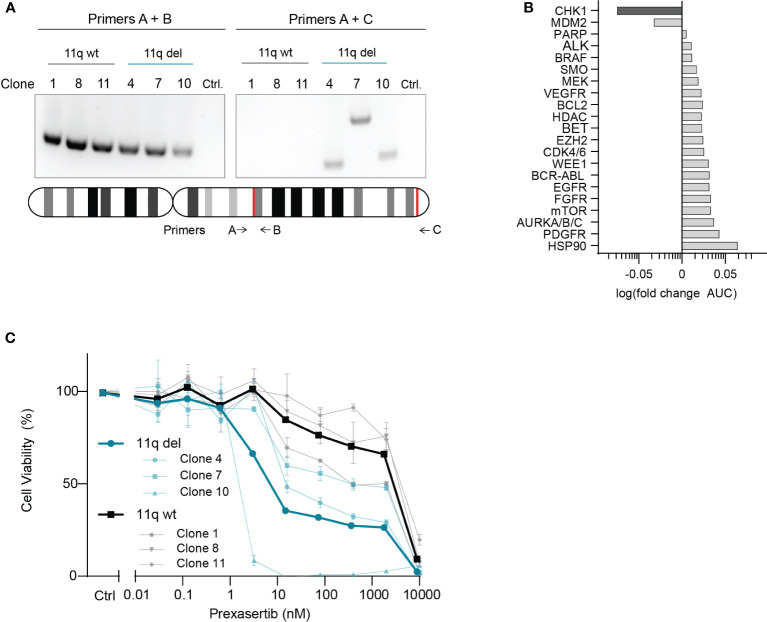
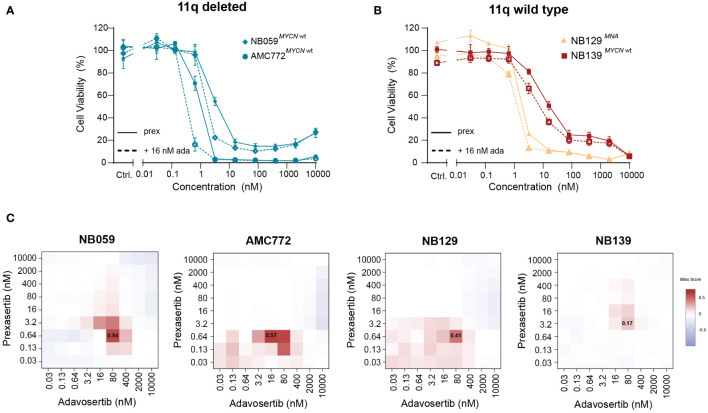
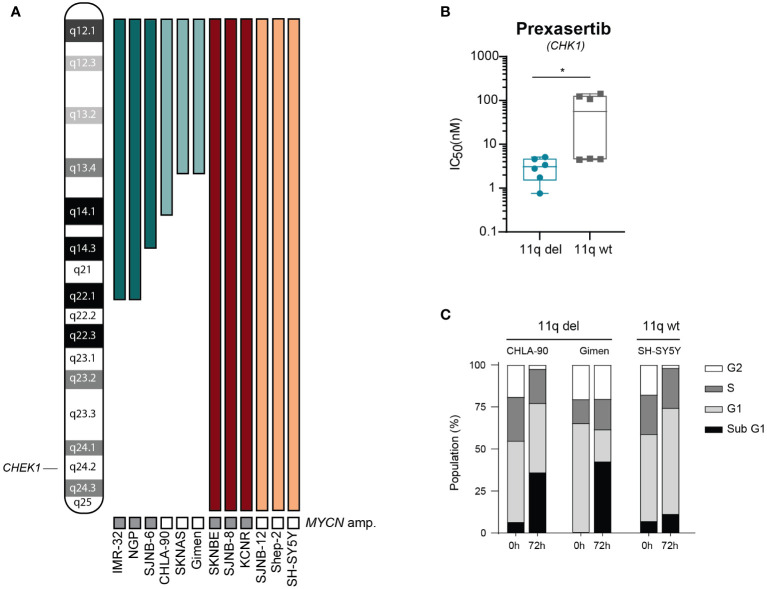
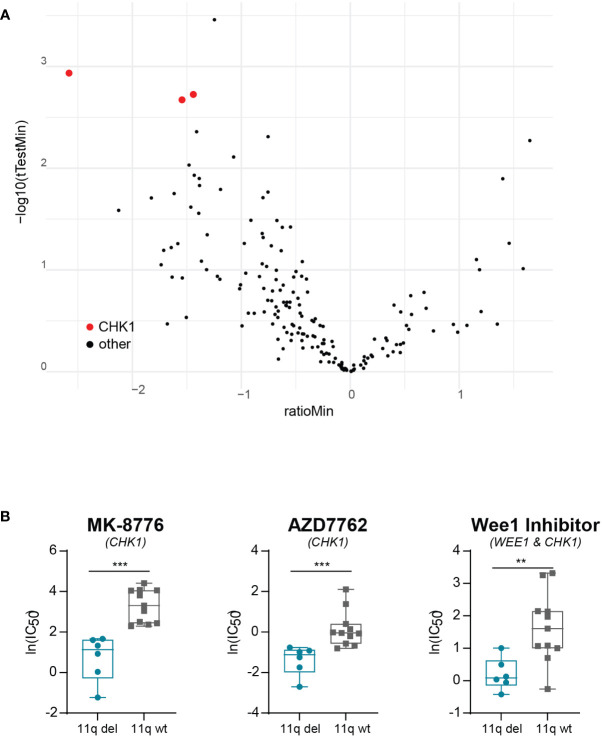
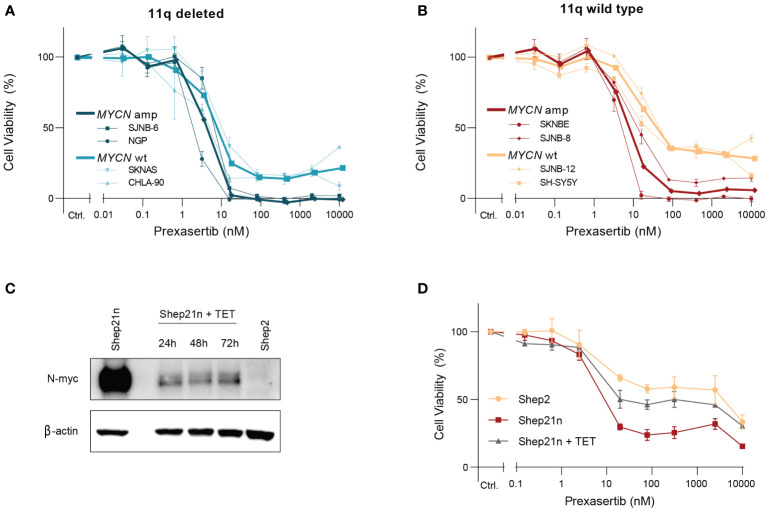
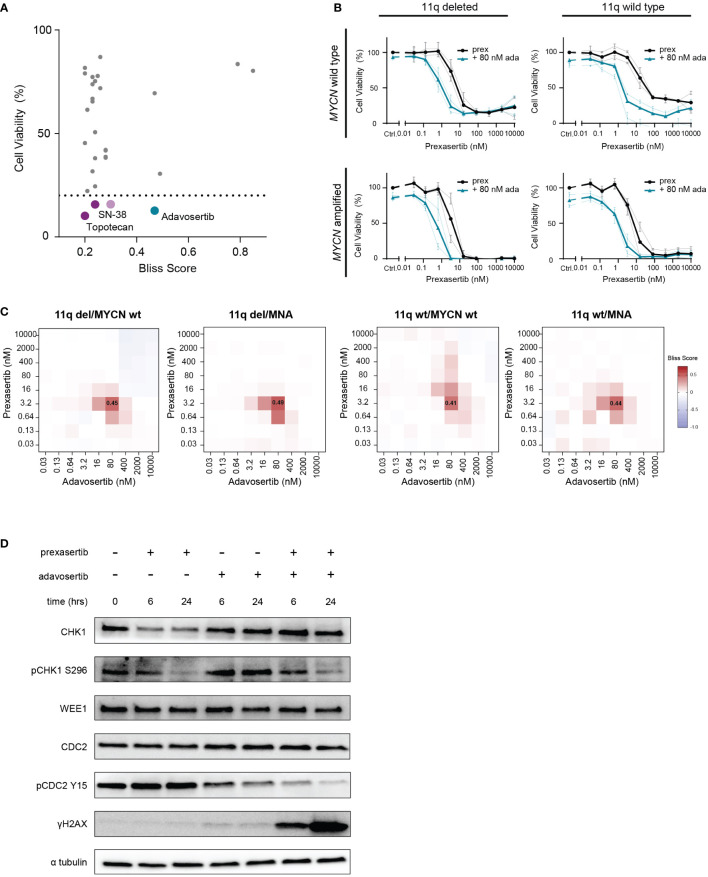
Neuroblastoma is the most common extracranial solid tumor found in children and despite intense multi-modal therapeutic approaches, low overall survival rates of high-risk patients persist. Tumors with heterozygous loss of chromosome 11q and amplification are two genetically distinct subsets of neuroblastoma that are associated with poor patient outcome. Using an isogenic 11q deleted model system and high-throughput drug screening, we identify checkpoint kinase 1 (CHK1) as a potential therapeutic target for 11q deleted neuroblastoma. Further investigation reveals amplification as a possible additional biomarker for CHK1 inhibition, independent of 11q loss. Overall, our study highlights the potential power of studying chromosomal aberrations to guide preclinical development of novel drug targets and combinations. Additionally, our study builds on the growing evidence that DNA damage repair and replication stress response pathways offer therapeutic vulnerabilities for the treatment of neuroblastoma.
神经母细胞瘤是儿童中最常见的颅外实体瘤,尽管采用了强化多模式治疗方法,但高危患者的总体生存率仍然较低。11号染色体长臂杂合缺失和MYCN扩增的肿瘤是神经母细胞瘤的两个基因不同的亚组,与患者预后不良相关。使用同基因11q缺失模型系统和高通量药物筛选,我们确定了检查点激酶1(CHK1)作为11q缺失神经母细胞瘤的潜在治疗靶点。进一步研究发现,MYCN扩增可能是CHK1抑制的另一个生物标志物,与11q缺失无关。总体而言,我们的研究突出了研究染色体畸变以指导新型药物靶点和联合疗法临床前开发的潜在作用。此外,我们的研究基于越来越多的证据,即DNA损伤修复和复制应激反应途径为神经母细胞瘤的治疗提供了治疗弱点。