Yamada Takashi, Katsutani Naruo, Maruyama Taeko, Kawamura Tomoko, Yamazaki Hiroshi, Murayama Norie, Tong Weida, Yamazoe Yasushi, Hirose Akihiko
Division of Risk Assessment, Center for Biological Safety Research, National Institute of Health Sciences, 3-25-26 Tonomachi, Kawasaki-ku, Kawasaki 210-9501, Japan.
Showa Pharmaceutical University, Machida, Tokyo 194-8543, Japan.
Food Saf (Tokyo). 2022 Sep 23;10(3):73-82. doi: 10.14252/foodsafetyfscj.D-21-00015. eCollection 2022 Sep.
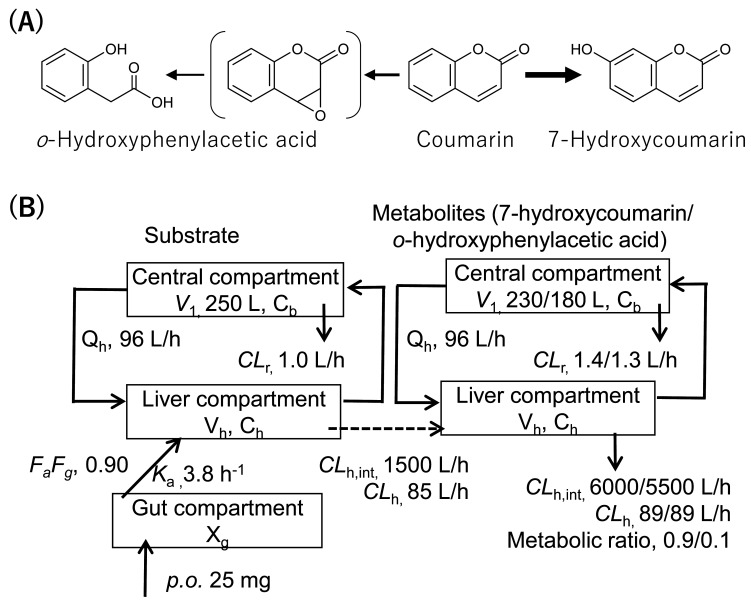
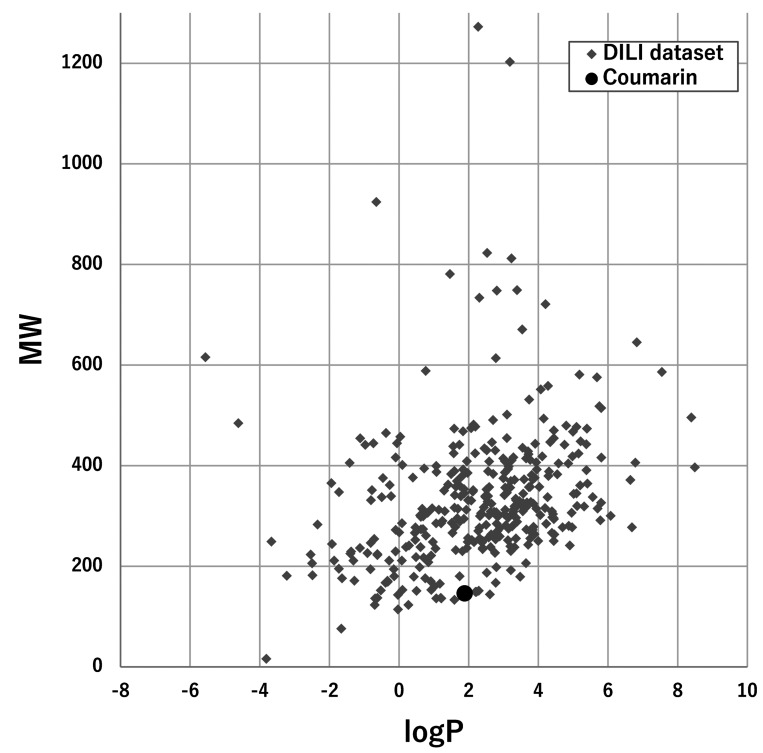
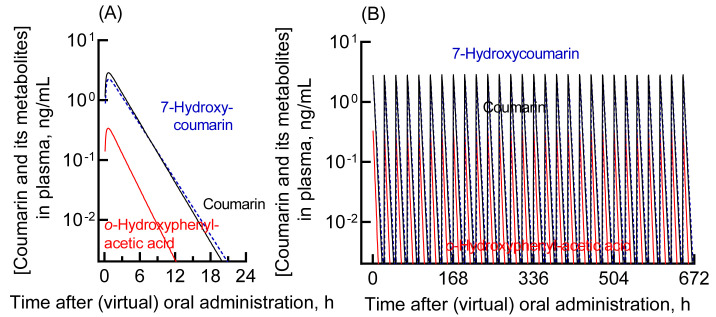
Hepatotoxicity associated with food-derived coumarin occurs occasionally in humans. We have, herein, assessed the data of existing clinical and nonclinical studies as well as those of models for humans in order to shed more light on this association. The average intakes of food-derived coumarin are estimated to be 1-3 mg/day, while a ten-times higher level is expected in the worst-case scenarios. These levels are close to or above the tolerable daily intake suggested by a chronic study in dogs. The human internal exposure levels were estimated by a physiologically-based pharmacokinetic model with the use of virtual doses of coumarin in the amounts expected to derive from foods. Our results suggest that: (i) coumarin can be cleared rapidly 7-hydroxylation in humans, and (ii) the plasma levels of coumarin and of its metabolite, -hydroxyphenylacetic acid associated with hepatotoxicity, are considerably lower than those yielding hepatotoxicity in rats. Pharmacokinetic data suggest a low or negligible concern regarding a coumarin-induced hepatotoxicity in humans exposed to an average intake from foods. Detoxification of coumarin through the 7-hydroxylation, however, might vary among individuals due to genetic polymorphisms in CYP2A6 enzyme. In addition, the CYP1A2- and CYP2E1-mediated activation of coumarin can fluctuate as a result of induction caused by environmental factors. Furthermore, the daily consumption of food-contained coumarin was implicated in the potential risk of hepatotoxicity by the drug-induced liver injury score model developed by the US Food and Drug Administration. These results support the idea of the existence of human subpopulations that are highly sensitive to coumarin; therefore, a more precise risk assessment is needed. The present study also highlights the usefulness of approaches of pharmacokinetics with the liver injury score model as battery components of a risk assessment.
与食物来源香豆素相关的肝毒性在人类中偶尔会发生。在此,我们评估了现有临床和非临床研究的数据以及人体模型的数据,以便更清楚地了解这种关联。据估计,食物来源香豆素的平均摄入量为每天1 - 3毫克,而在最坏情况下预计会高出十倍。这些水平接近或高于犬类慢性研究提出的每日可耐受摄入量。通过基于生理的药代动力学模型,利用预期来自食物的香豆素虚拟剂量来估计人体内部暴露水平。我们的结果表明:(i)香豆素在人体内可通过7 - 羟基化快速清除;(ii)与肝毒性相关的香豆素及其代谢物7 - 羟基苯乙酸的血浆水平,远低于在大鼠中产生肝毒性的水平。药代动力学数据表明,对于从食物中平均摄入香豆素的人群,香豆素诱导的肝毒性引起的担忧较低或可忽略不计。然而,由于CYP2A6酶的基因多态性,香豆素通过7 - 羟基化的解毒作用可能因人而异。此外,由于环境因素诱导,CYP1A2和CYP2E1介导的香豆素活化可能会波动。此外,美国食品药品监督管理局开发的药物性肝损伤评分模型表明,日常食用含香豆素的食物存在肝毒性潜在风险。这些结果支持存在对香豆素高度敏感的人类亚群这一观点;因此,需要更精确的风险评估。本研究还强调了药代动力学方法与肝损伤评分模型作为风险评估电池组件的有用性。