Kedarisetti Kiran Chandra, Narayanan Raja, Stewart Michael W, Reddy Gurram Nikitha, Khanani Arshad M
Anant Bajaj Retina Institute, LV Prasad Eye Institute, Hyderabad, Telangana, India.
Indian Health Outcomes, Public Health and Economics Research Centre (IHOPE), Hyderabad, Telangana, India.
Clin Ophthalmol. 2022 Oct 10;16:3297-3309. doi: 10.2147/OPTH.S373538. eCollection 2022.
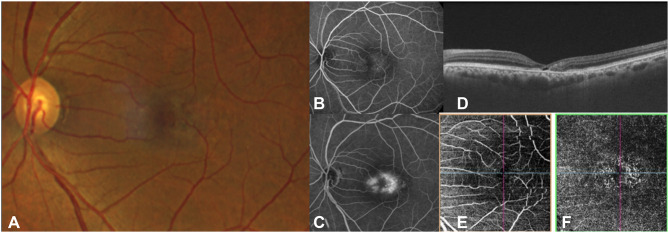
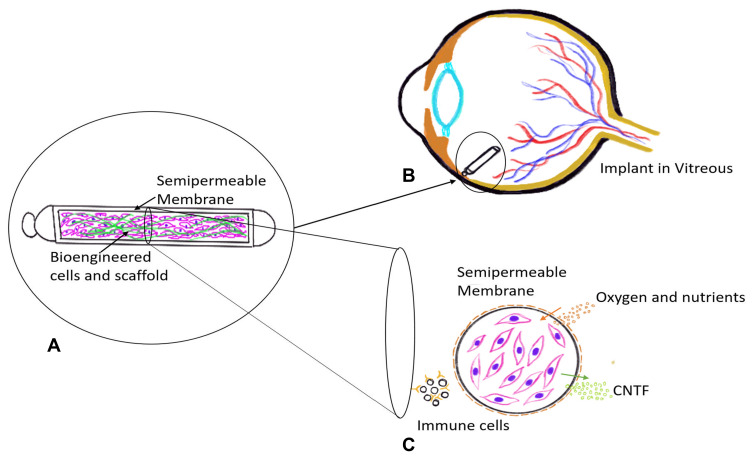
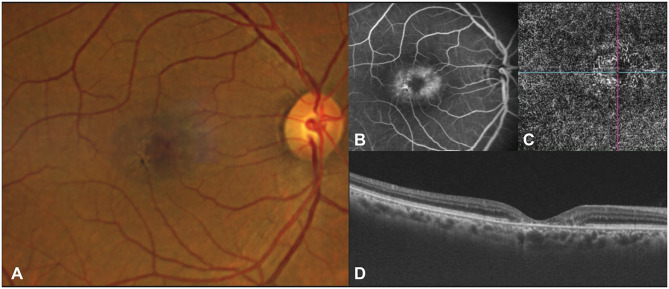
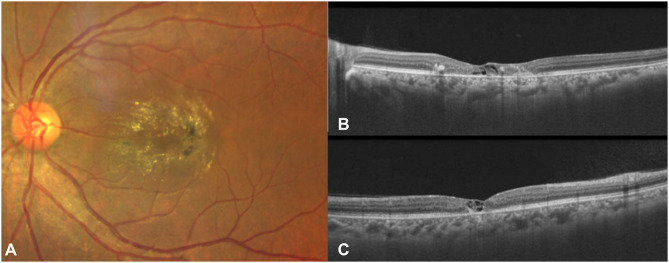
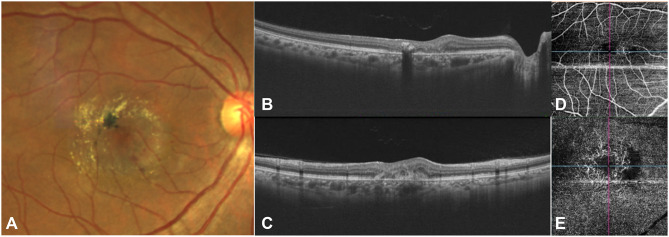
Macular telangiectasia Type 2 (MacTel) is a gradually progressive disease that affects the quality of life by impairing both distant and near vision. It had previously been considered a vascular condition, but recent evidence suggests a neurodegenerative etiology, with primary involvement of Muller cells. Retinal pigment epithelium (RPE) hyperplasia and subretinal neovascularization (SNV) are responsible for most of the vision loss in advanced cases. Neurotrophic factors in the non-proliferative phase and intravitreal anti-Vascular Endothelial growth factor (VEGF) in the proliferative phase have shown to retard the progression of the disease. This review will discuss the pathophysiology, clinical features, important diagnostic imaging studies and available treatment options for MacTel.
2型黄斑毛细血管扩张症(MacTel)是一种渐进性疾病,会损害远视力和近视力,从而影响生活质量。它以前被认为是一种血管疾病,但最近的证据表明其病因是神经退行性变,主要累及米勒细胞。视网膜色素上皮(RPE)增生和视网膜下新生血管形成(SNV)是晚期病例中大部分视力丧失的原因。非增殖期的神经营养因子和增殖期的玻璃体内抗血管内皮生长因子(VEGF)已显示出可延缓疾病进展。本综述将讨论MacTel的病理生理学、临床特征、重要的诊断影像学研究和可用的治疗选择。