Laboratorio Nacional de Genómica para la Biodiversidad-Unidad de Genómica Avanzada, Cinvestav. Km 9.6 Libramiento Norte Carretera Irapuato-León, 36824, Irapuato, Gto, Mexico.
Present address: Facultad de Químico Farmacobiología, Universidad Michoacana de San Nicolás de Hidalgo, C.P. 58030 Morelia, Michoacán, Mexico.
Microb Genom. 2022 Oct;8(10). doi: 10.1099/mgen.0.000869.
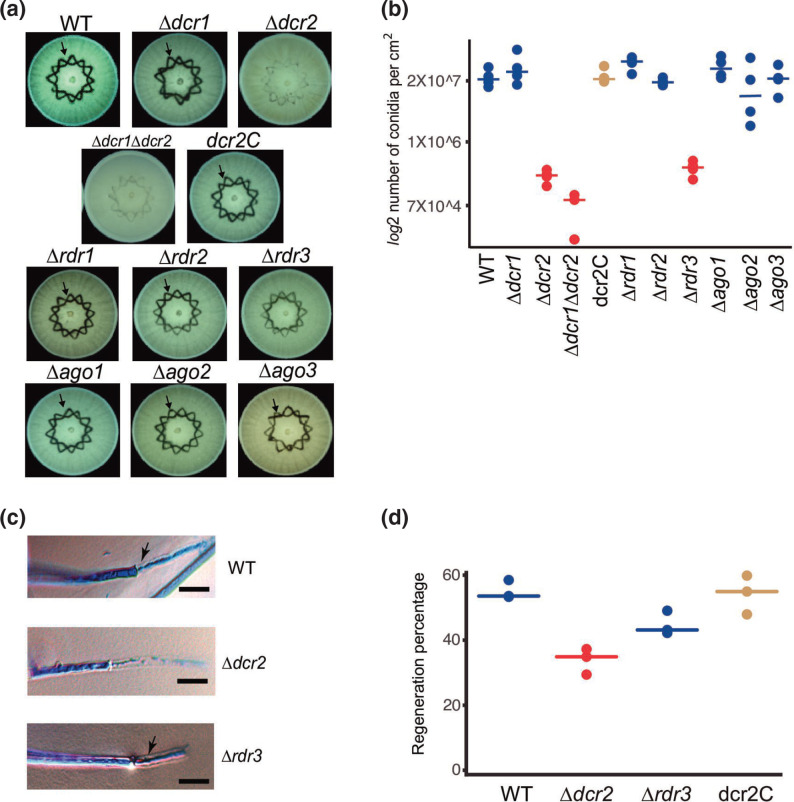
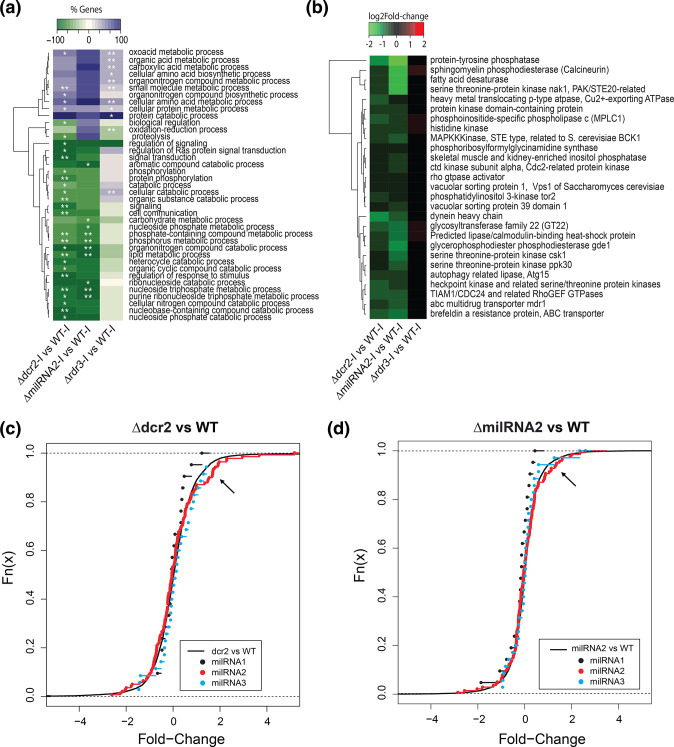
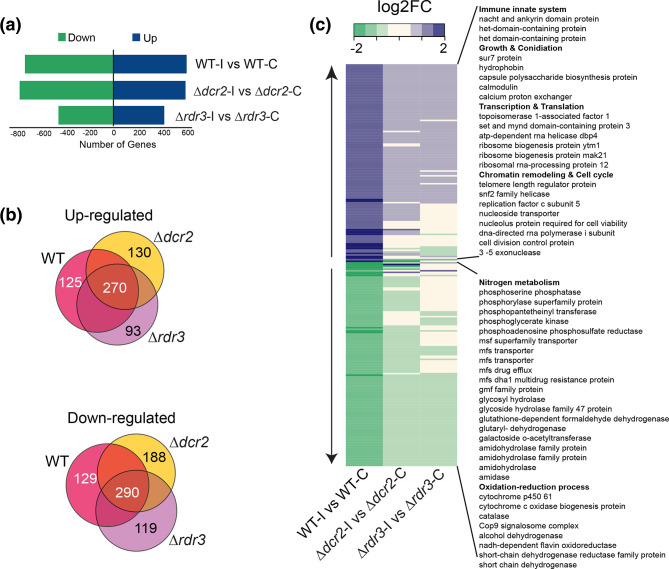
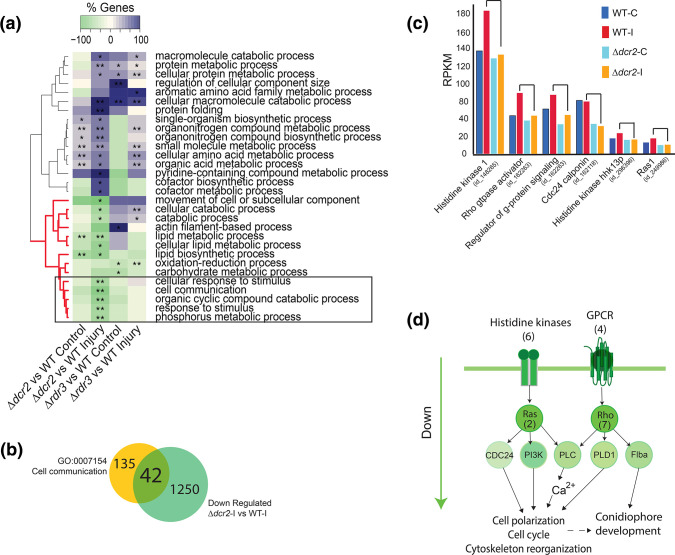
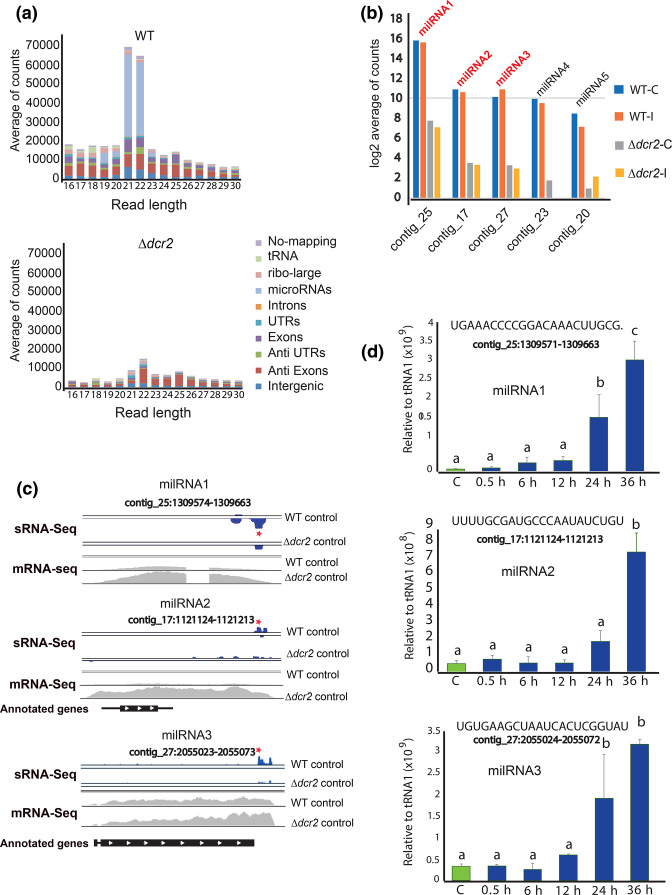
The ability to respond to injury is essential for the survival of an organism and involves analogous mechanisms in animals and plants. Such mechanisms integrate coordinated genetic and metabolic reprogramming events requiring regulation by small RNAs for adequate healing of the wounded area. We have previously reported that the response to injury of the filamentous fungus involves molecular mechanisms closely resembling those of plants and animals that lead to the formation of new hyphae (regeneration) and the development of asexual reproduction structures (conidiophores). However, the involvement of microRNAs in this process has not been investigated in fungi. In this work, we explore the participation of microRNA-like RNAs (milRNAs) molecules by sequencing messenger and small RNAs during the injury response of the WT strain and RNAi mutants. We found that Dcr2 appears to play an important role in hyphal regeneration and is required to produce the majority of sRNAs in . We also determined that the three main milRNAs produced via Dcr2 are induced during the damage-triggered developmental process. Importantly, elimination of a single milRNA phenocopied the main defects observed in the mutant. Our results demonstrate the essential role of milRNAs in hyphal regeneration and asexual development by post-transcriptionally regulating cellular signalling processes involving phosphorylation events. These observations allow us to conclude that fungi, like plants and animals, in response to damage activate fine-tuning regulatory mechanisms.
生物体对损伤的反应能力是其生存的关键,这涉及到动物和植物中类似的机制。这些机制整合了协调的遗传和代谢重编程事件,需要通过小 RNA 进行调节,以充分愈合受伤区域。我们之前曾报道过,丝状真菌 的损伤反应涉及与动植物非常相似的分子机制,这些机制导致新菌丝(再生)和无性生殖结构(分生孢子梗)的形成。然而,在这个过程中小 RNA 的参与在真菌中尚未得到研究。在这项工作中,我们通过对 WT 菌株和 RNAi 突变体在损伤反应期间的信使 RNA 和小 RNA 进行测序,探索了 microRNA 样 RNA(milRNA)分子的参与。我们发现 Dcr2 似乎在菌丝再生中发挥重要作用,并且是 中产生大多数 sRNA 所必需的。我们还确定,通过 Dcr2 产生的三种主要的 milRNA 在损伤触发的发育过程中被诱导。重要的是,消除单个 milRNA 表型类似于 突变体中观察到的主要缺陷。我们的研究结果表明,milRNA 通过对涉及磷酸化事件的细胞信号转导过程进行转录后调控,在菌丝再生和无性发育中发挥着重要作用。这些观察结果使我们能够得出结论,即真菌与植物和动物一样,在受到损伤时会激活精细调控的机制。