
PI3K/AKT 和 RHO/RAC/PAK 信号通路在 CHK1 抑制剂耐药的 Eµ-Myc 淋巴瘤细胞中的上调。
Up-regulation of the PI3K/AKT and RHO/RAC/PAK signalling pathways in CHK1 inhibitor resistant Eµ-Myc lymphoma cells.
机构信息
Newcastle University Biosciences Institute, Wolfson Childhood Cancer Research Centre, Newcastle University, Level 6, Herschel Building, Brewery Lane, Newcastle upon Tyne NE1 7RU, U.K.
Centre for Proteome Research, Department of Biochemistry and Systems Biology, Institute of Systems, Molecular and Integrative Biology, University of Liverpool, Liverpool L69 7ZB, U.K.
出版信息
Biochem J. 2022 Oct 14;479(19):2131-2151. doi: 10.1042/BCJ20220103.
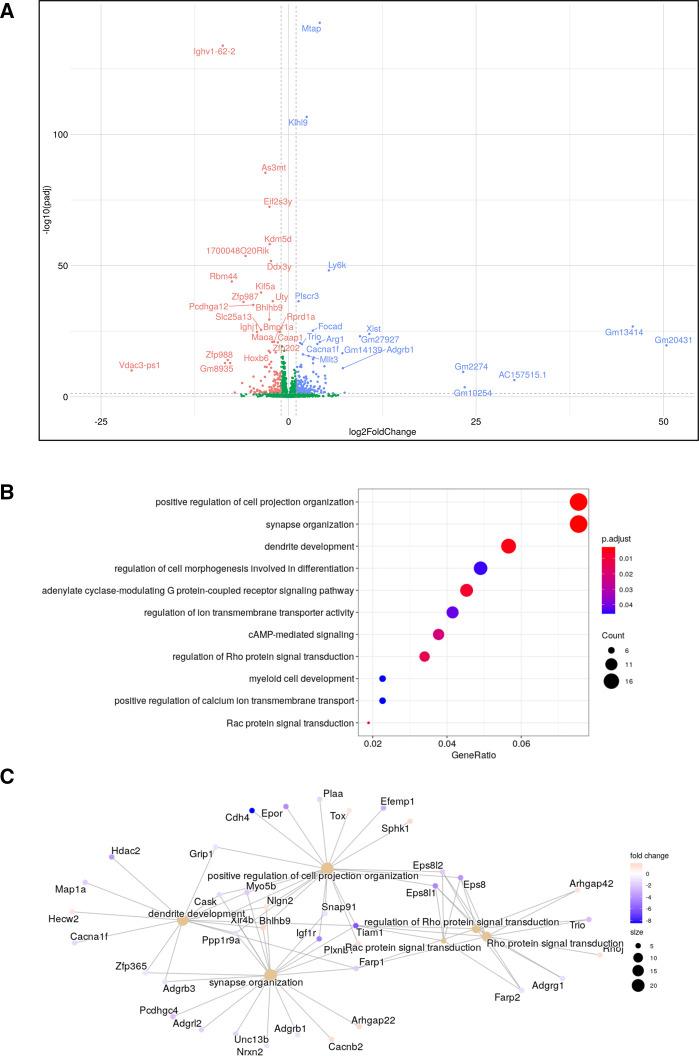
The development of resistance and the activation of bypass pathway signalling represents a major problem for the clinical application of protein kinase inhibitors. While investigating the effect of either a c-Rel deletion or RelAT505A phosphosite knockin on the Eµ-Myc mouse model of B-cell lymphoma, we discovered that both NF-κB subunit mutations resulted in CHK1 inhibitor resistance, arising from either loss or alteration of CHK1 activity, respectively. However, since Eµ-Myc lymphomas depend on CHK1 activity to cope with high levels of DNA replication stress and consequent genomic instability, it was not clear how these mutant NF-κB subunit lymphomas were able to survive. To understand these survival mechanisms and to identify potential compensatory bypass signalling pathways in these lymphomas, we applied a multi-omics strategy. With c-Rel-/- Eµ-Myc lymphomas we observed high levels of Phosphatidyl-inositol 3-kinase (PI3K) and AKT pathway activation. Moreover, treatment with the PI3K inhibitor Pictilisib (GDC-0941) selectively inhibited the growth of reimplanted c-Rel-/- and RelAT505A, but not wild type (WT) Eµ-Myc lymphomas. We also observed up-regulation of a RHO/RAC pathway gene expression signature in both Eµ-Myc NF-κB subunit mutation models. Further investigation demonstrated activation of the RHO/RAC effector p21-activated kinase (PAK) 2. Here, the PAK inhibitor, PF-3758309 successfully overcame resistance of RelAT505A but not WT lymphomas. These findings demonstrate that up-regulation of multiple bypass pathways occurs in CHK1 inhibitor resistant Eµ-Myc lymphomas. Consequently, drugs targeting these pathways could potentially be used as either second line or combinatorial therapies to aid the successful clinical application of CHK1 inhibitors.
耐药性的发展和旁路信号通路的激活是蛋白激酶抑制剂临床应用的一个主要问题。在研究 c-Rel 缺失或 RelAT505A 磷酸化位点敲入对 Eµ-Myc 小鼠 B 细胞淋巴瘤模型的影响时,我们发现 NF-κB 亚基突变均导致 CHK1 抑制剂耐药,分别源于 CHK1 活性的丧失或改变。然而,由于 Eµ-Myc 淋巴瘤依赖于 CHK1 活性来应对高水平的 DNA 复制应激和随之而来的基因组不稳定性,尚不清楚这些突变 NF-κB 亚基淋巴瘤如何能够存活。为了了解这些存活机制并鉴定这些淋巴瘤中潜在的代偿性旁路信号通路,我们应用了多组学策略。在 c-Rel-/-Eµ-Myc 淋巴瘤中,我们观察到磷酸肌醇 3-激酶 (PI3K) 和 AKT 通路的高激活。此外,用 PI3K 抑制剂 Pictilisib (GDC-0941) 治疗选择性地抑制了再植入的 c-Rel-/-和 RelAT505A,但不抑制野生型 (WT) Eµ-Myc 淋巴瘤的生长。我们还观察到这两种 Eµ-Myc NF-κB 亚基突变模型中 RHO/RAC 通路基因表达谱的上调。进一步的研究表明,RHO/RAC 效应物 p21 激活激酶 (PAK) 2 的激活。在这里,PAK 抑制剂 PF-3758309 成功地克服了 RelAT505A 的耐药性,但对 WT 淋巴瘤没有效果。这些发现表明,CHK1 抑制剂耐药的 Eµ-Myc 淋巴瘤中存在多个旁路通路的上调。因此,靶向这些通路的药物可能被用作二线或联合治疗药物,以帮助 CHK1 抑制剂的成功临床应用。



 Zotero 插件