Institute of Diabetes Research, Helmholtz Munich, German Center for Environmental Health, Munich, Germany.
Department of Pediatrics, Kinderklinik München Schwabing, School of Medicine, Technical University Munich, Munich, Germany.
J Clin Invest. 2022 Oct 17;132(20):e162123. doi: 10.1172/JCI162123.
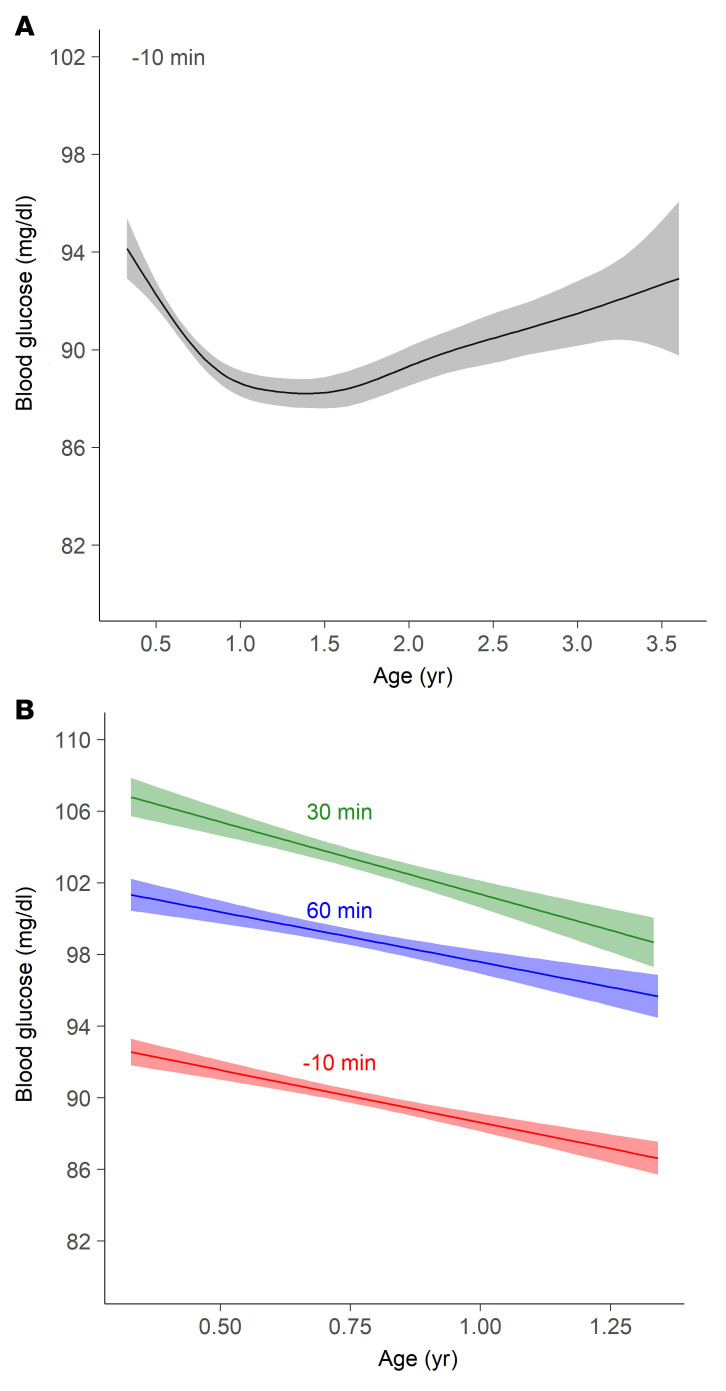
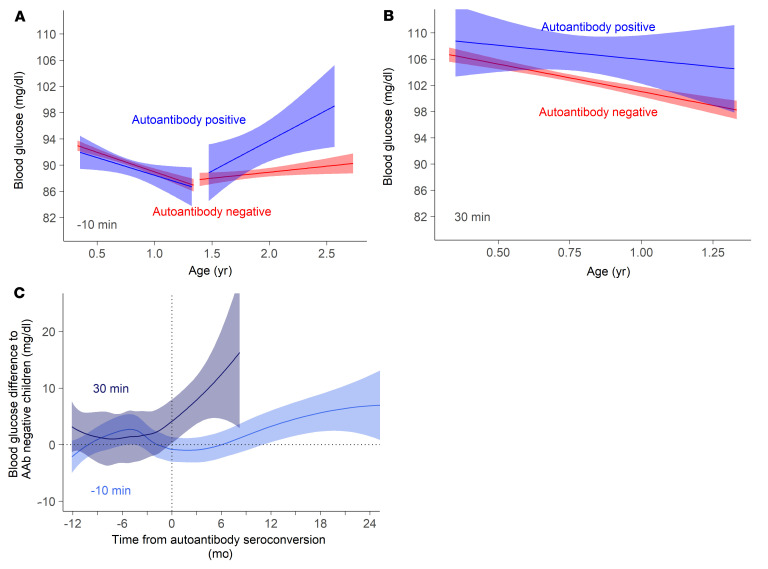
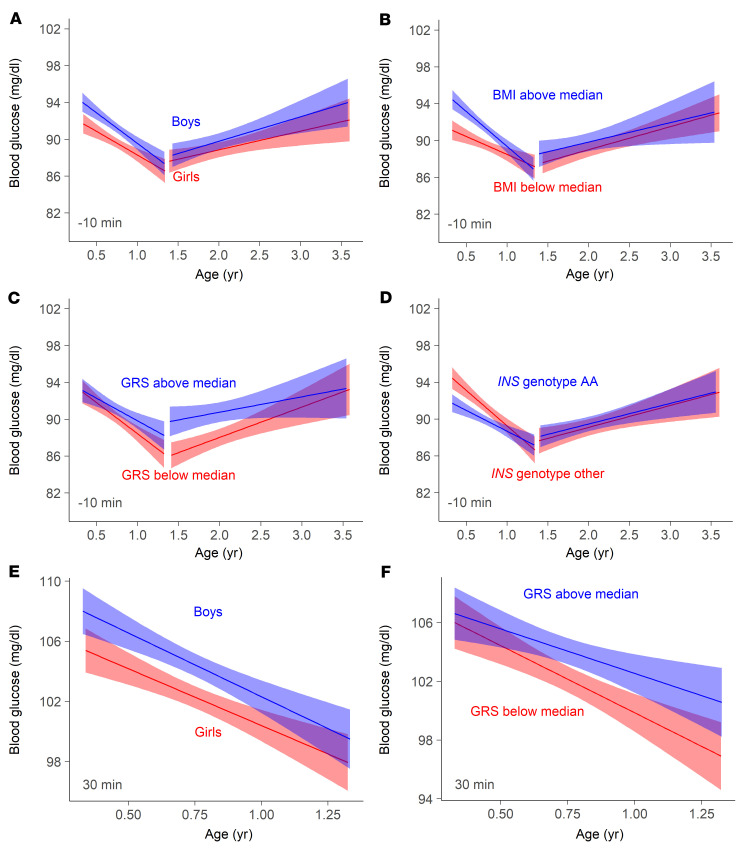
The etiology of type 1 diabetes has polygenic and environmental determinants that lead to autoimmune responses against pancreatic β cells and promote β cell death. The autoimmunity is considered silent without metabolic consequences until late preclinical stages,and it remains unknown how early in the disease process the pancreatic β cell is compromised. To address this, we investigated preprandial nonfasting and postprandial blood glucose concentrations and islet autoantibody development in 1,050 children with high genetic risk of type 1 diabetes. Pre- and postprandial blood glucose decreased between 4 and 18 months of age and gradually increased until the final measurements at 3.6 years of age. Determinants of blood glucose trajectories in the first year of life included sex, body mass index, glucose-related genetic risk scores, and the type 1 diabetes-susceptible INS gene. Children who developed islet autoantibodies had early elevations in blood glucose concentrations. A sharp and sustained rise in postprandial blood glucose was observed at around 2 months prior to autoantibody seroconversion, with further increases in postprandial and, subsequently, preprandial values after seroconversion. These findings show heterogeneity in blood glucose control in infancy and early childhood and suggest that islet autoimmunity is concurrent or subsequent to insults on the pancreatic islets.
1 型糖尿病的病因具有多基因和环境决定因素,这些因素导致针对胰腺β细胞的自身免疫反应,并促进β细胞死亡。在临床前晚期之前,自身免疫被认为是无声的,没有代谢后果,目前尚不清楚β细胞在疾病过程的早期是如何受到损害的。为了解决这个问题,我们研究了 1050 名具有 1 型糖尿病高遗传风险的儿童的空腹前和餐后血糖浓度以及胰岛自身抗体的发展情况。空腹前和餐后血糖在 4 至 18 个月之间下降,并逐渐增加,直到 3.6 岁时的最后测量。生命第一年血糖轨迹的决定因素包括性别、体重指数、与葡萄糖相关的遗传风险评分以及 1 型糖尿病易感的 INS 基因。发展胰岛自身抗体的儿童空腹前血糖浓度早期升高。在自身抗体血清转化前约 2 个月,观察到餐后血糖急剧和持续升高,随后在血清转化后,餐后和随后的空腹血糖进一步升高。这些发现表明婴儿期和幼儿期血糖控制存在异质性,并表明胰岛自身免疫与胰岛的损伤同时发生或随后发生。