National Institute of Biological Sciences, Beijing, Beijing, China.
Beijing Key Laboratory of the Cell Biology of Animal Aging, Beijing, China.
Nat Commun. 2022 Oct 25;13(1):6339. doi: 10.1038/s41467-022-33850-4.
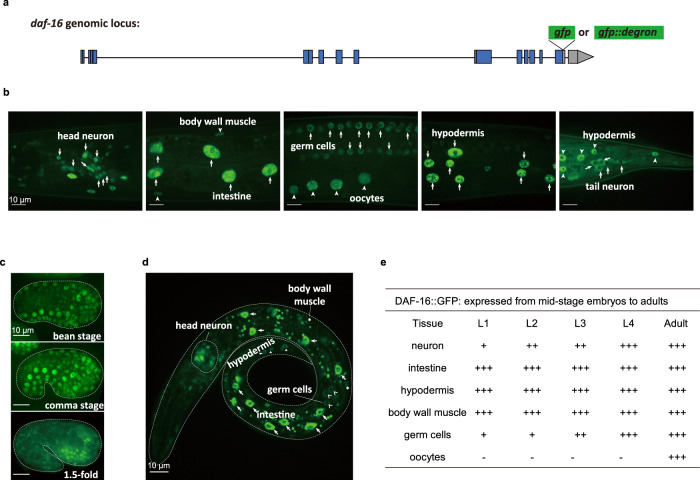
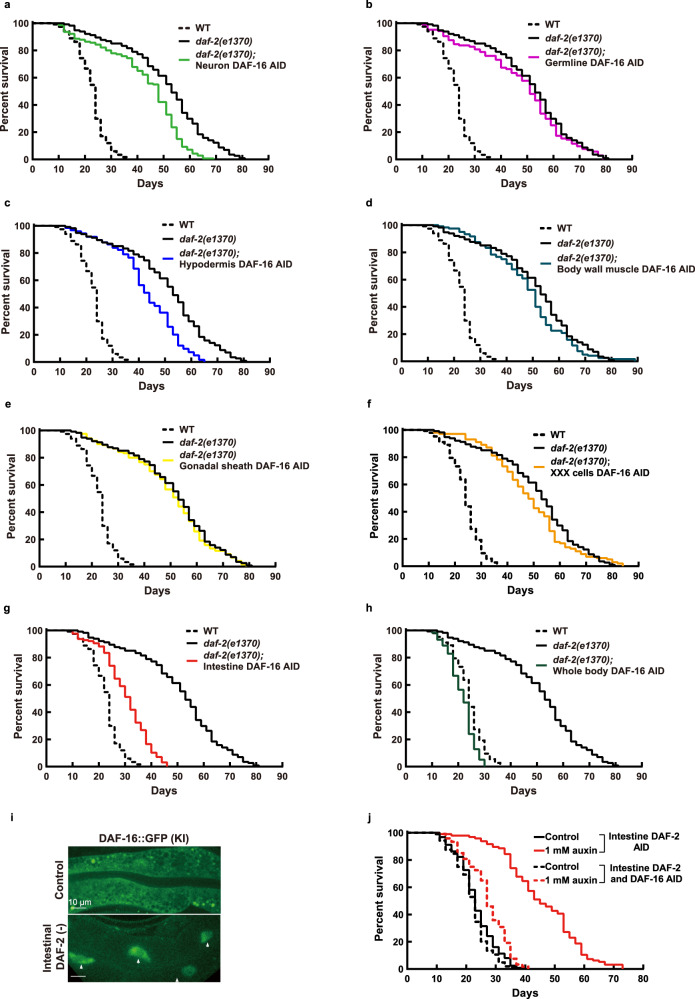
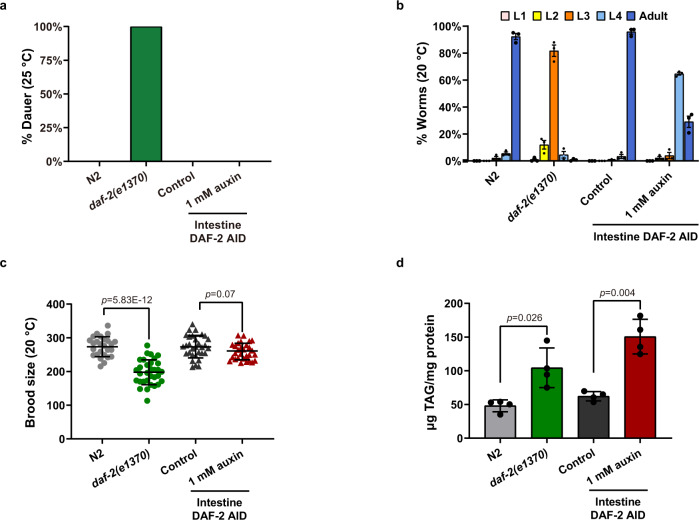
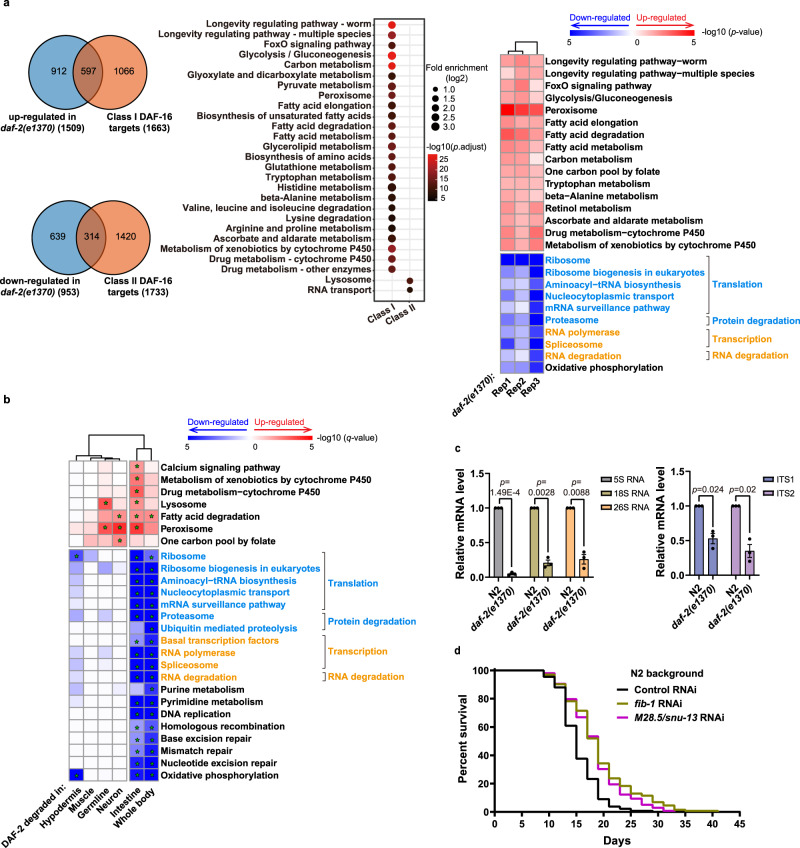
Twenty-nine years following the breakthrough discovery that a single-gene mutation of daf-2 doubles Caenorhabditis elegans lifespan, it remains unclear where this insulin/IGF-1 receptor gene is expressed and where it acts to regulate ageing. Using knock-in fluorescent reporters, we determined that daf-2 and its downstream transcription factor daf-16 are expressed ubiquitously. Using tissue-specific targeted protein degradation, we determined that intracellular DAF-2-to-DAF-16 signaling in the intestine plays a major role in lifespan regulation, while that in the hypodermis, neurons, and germline plays a minor role. Notably, intestine-specific loss of DAF-2 activates DAF-16 in and outside the intestine, causes almost no adverse effects on development and reproduction, and extends lifespan by 94% in a way that partly requires non-intestinal DAF-16. Consistent with intestine supplying nutrients to the entire body, evidence from this and other studies suggests that altered metabolism, particularly down-regulation of protein and RNA synthesis, mediates longevity by reduction of insulin/IGF-1 signaling.
29 年前,人们突破性地发现,daf-2 基因的一个单一基因突变能使秀丽隐杆线虫的寿命延长一倍,然而,daf-2 基因在何处表达以及它如何作用以调节衰老仍然不清楚。我们利用基因敲入荧光报告基因确定了 daf-2 及其下游转录因子 daf-16 广泛表达。利用组织特异性靶向蛋白降解,我们确定了肠道中细胞内的 DAF-2 到 DAF-16 信号转导在寿命调节中起主要作用,而在真皮层、神经元和生殖细胞中则起次要作用。值得注意的是,肠道特异性缺失 DAF-2 会激活肠道内外的 DAF-16,对发育和生殖几乎没有不良影响,并能使寿命延长 94%,这种延长方式部分依赖于非肠道的 DAF-16。与肠道向全身供应营养的证据一致,本研究和其他研究表明,改变代谢,特别是下调蛋白质和 RNA 合成,通过减少胰岛素/IGF-1 信号转导来介导长寿。