Department of Cell Biology, Helmholtz Centre for Infection Research, Inhoffenstrasse 7, 38124, Braunschweig, Germany.
Division of Molecular Cell Biology, Zoological Institute, Technische Universität Braunschweig, Spielmannstrasse 7, 38106, Braunschweig, Germany.
Sci Rep. 2022 Oct 25;12(1):17805. doi: 10.1038/s41598-022-20563-3.
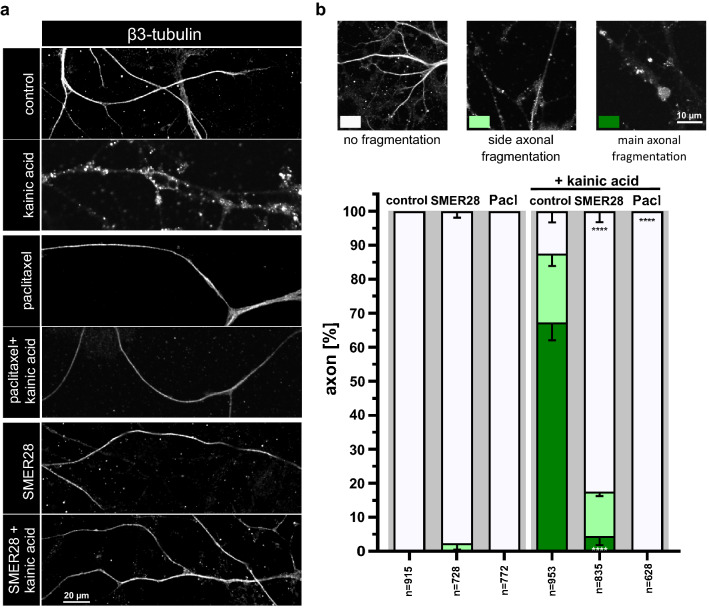
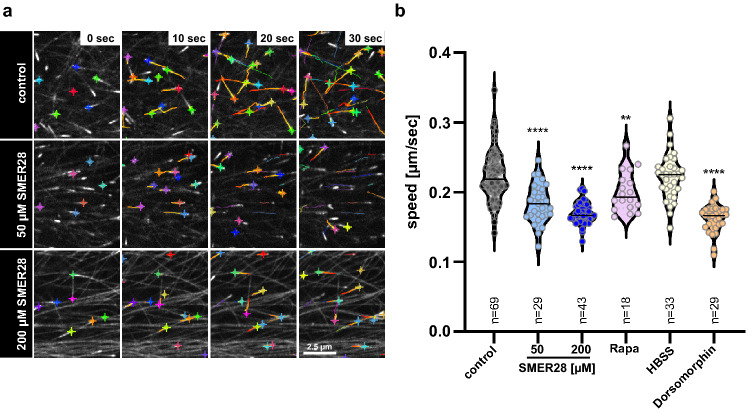
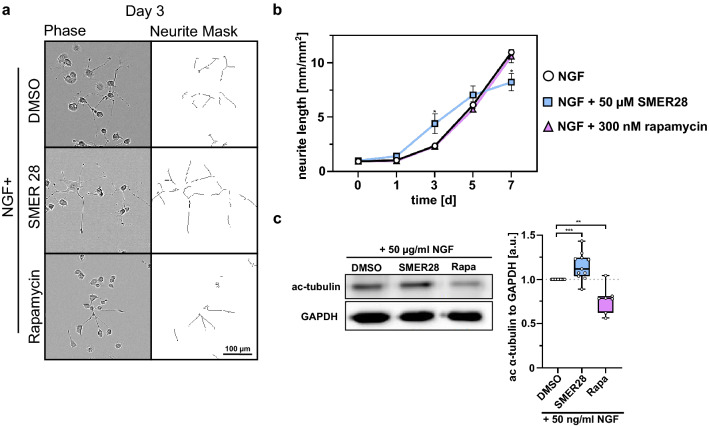
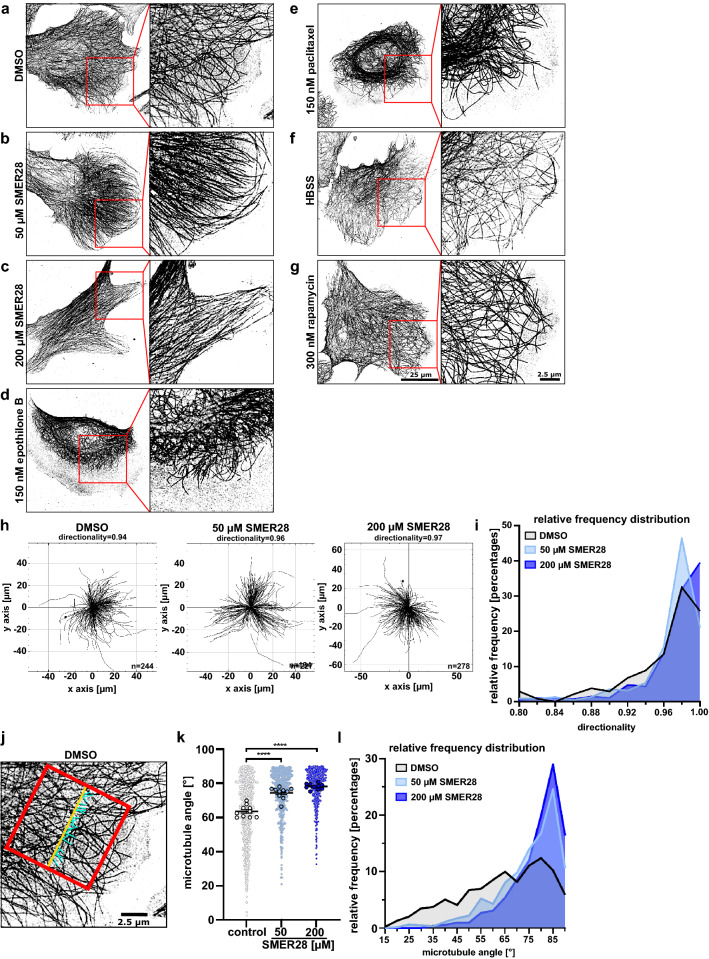
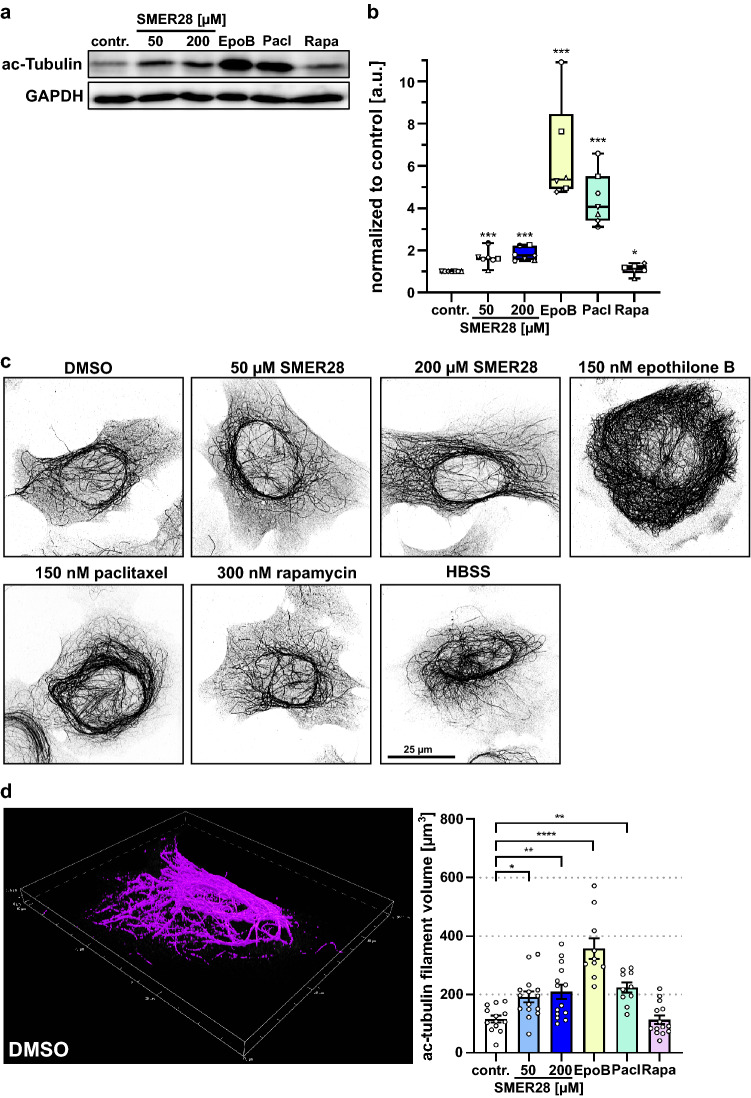
SMER28 originated from a screen for small molecules that act as modulators of autophagy. SMER28 enhanced the clearance of autophagic substrates such as mutant huntingtin, which was additive to rapamycin-induced autophagy. Thus, SMER28 was established as a positive regulator of autophagy acting independently of the mTOR pathway, increasing autophagosome biosynthesis and attenuating mutant huntingtin-fragment toxicity in cellular- and fruit fly disease models, suggesting therapeutic potential. Despite many previous studies, molecular mechanisms mediating SMER28 activities and its direct targets have remained elusive. Here we analyzed the effects of SMER28 on cells and found that aside from autophagy induction, it significantly stabilizes microtubules and decelerates microtubule dynamics. Moreover, we report that SMER28 displays neurotrophic and neuroprotective effects at the cellular level by inducing neurite outgrowth and protecting from excitotoxin-induced axon degeneration. Finally, we compare the effects of SMER28 with other autophagy-inducing or microtubule-stabilizing drugs: whereas SMER28 and rapamycin both induce autophagy, the latter does not stabilize microtubules, and whereas both SMER28 and epothilone B stabilize microtubules, epothilone B does not stimulate autophagy. Thus, the effect of SMER28 on cells in general and neurons in particular is based on its unique spectrum of bioactivities distinct from other known microtubule-stabilizing or autophagy-inducing drugs.
SMER28 源于一种小分子,可作为自噬调节剂。SMER28 增强了自噬底物(如突变型亨廷顿蛋白)的清除,与雷帕霉素诱导的自噬具有加性。因此,SMER28 被确定为一种独立于 mTOR 途径的自噬的正调节剂,增加自噬体生物合成,并减轻细胞和果蝇疾病模型中突变型亨廷顿蛋白片段的毒性,提示其具有治疗潜力。尽管有许多先前的研究,但介导 SMER28 活性及其直接靶标的分子机制仍然难以捉摸。在这里,我们分析了 SMER28 对细胞的影响,发现除了诱导自噬外,它还能显著稳定微管并减缓微管动力学。此外,我们报告 SMER28 通过诱导神经突生长和保护兴奋性毒素诱导的轴突退化,在细胞水平上具有神经营养和神经保护作用。最后,我们将 SMER28 的作用与其他诱导自噬或稳定微管的药物进行比较:虽然 SMER28 和雷帕霉素都能诱导自噬,但后者不能稳定微管,而 SMER28 和埃博霉素 B 都能稳定微管,但埃博霉素 B 不能刺激自噬。因此,SMER28 对细胞(特别是神经元)的总体影响基于其独特的生物活性谱,与其他已知的微管稳定或自噬诱导药物不同。