Matthes Dimitrios, Drakopoulos Vasileios
Department of Computer Science and Biomedical Informatics, University of Thessaly, 35131 Lamia, Greece.
J Imaging. 2022 Oct 17;8(10):286. doi: 10.3390/jimaging8100286.
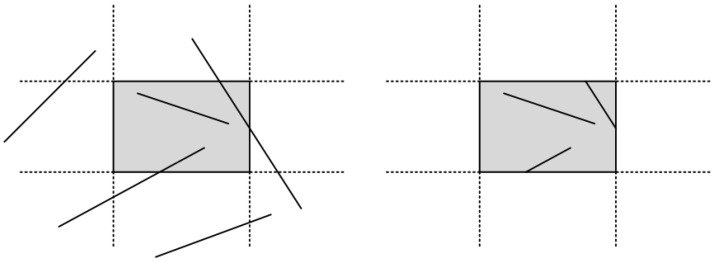
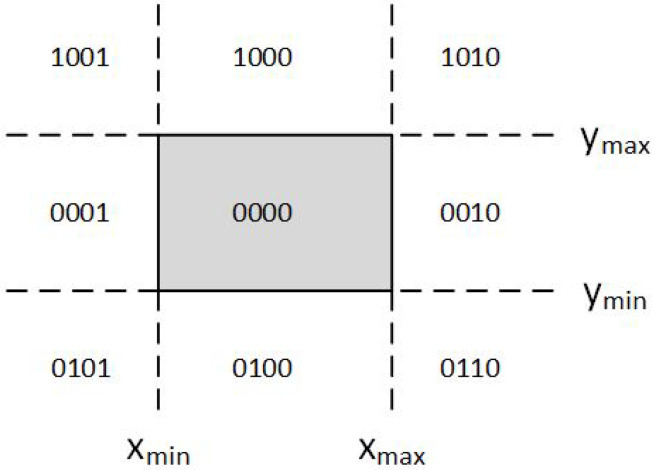
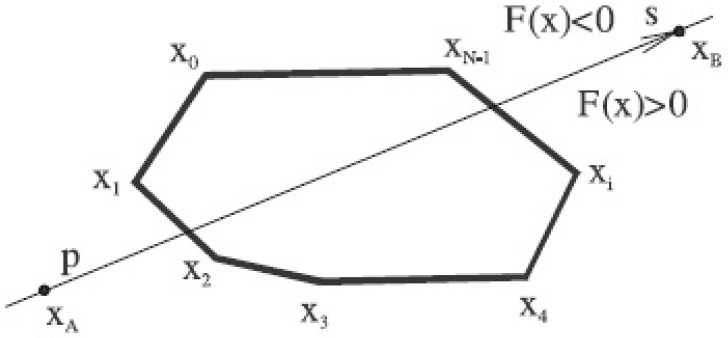
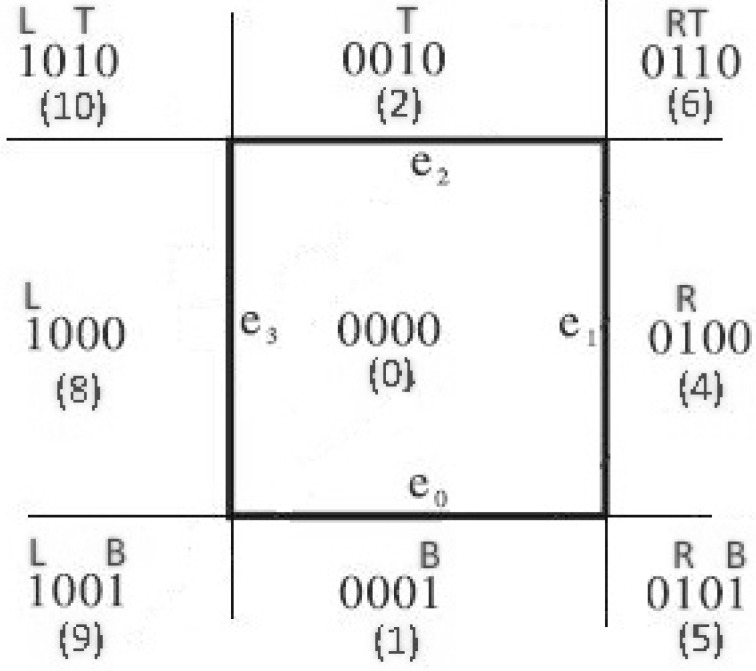
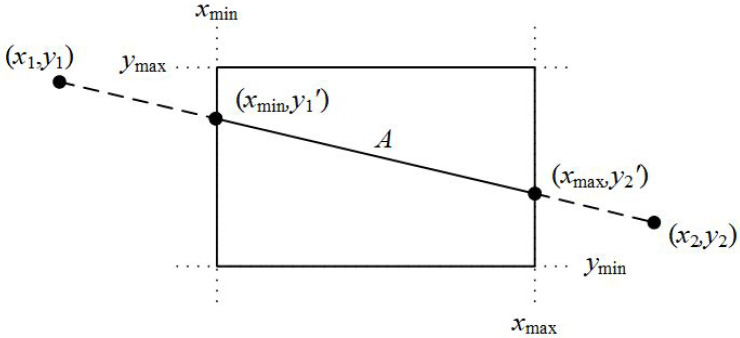
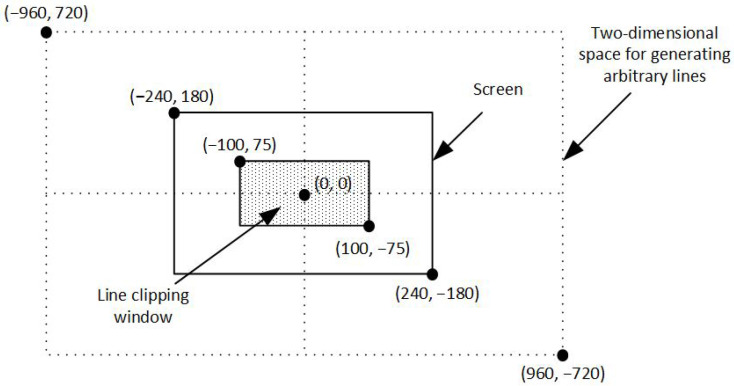
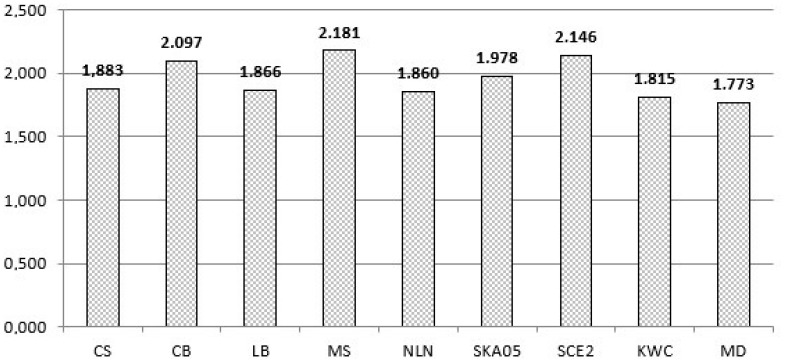
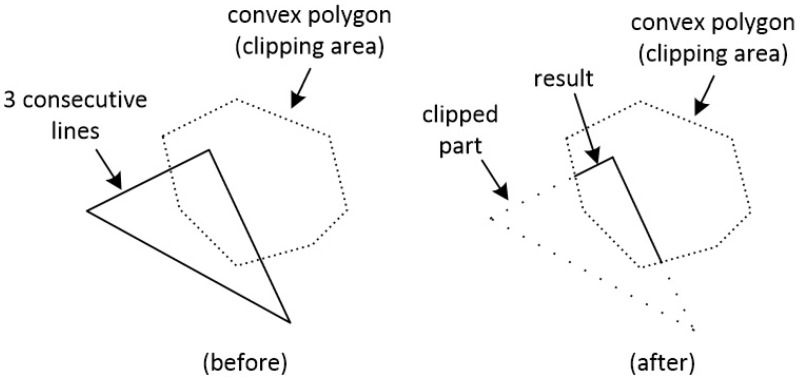
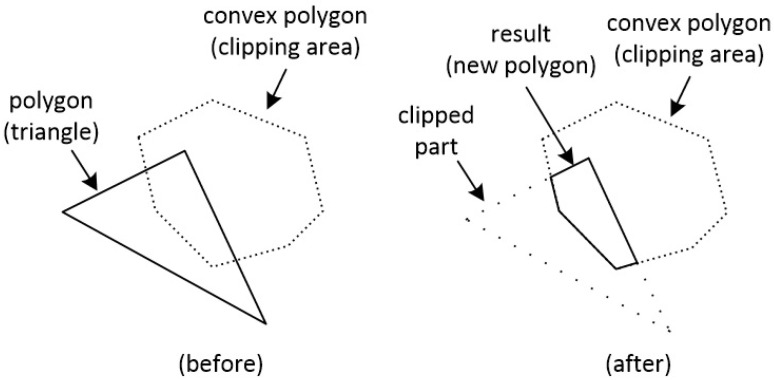
Clipping, as a fundamental process in computer graphics, displays only the part of a scene which is needed to be displayed and rejects all others. In two dimensions, the clipping process can be applied to a variety of geometric primitives such as points, lines, polygons or curves. A line-clipping algorithm processes each line in a scene through a series of tests and intersection calculations to determine whether the entire line or any part of it is to be saved. It also calculates the intersection position of a line with the window edges so its major goal is to minimize these calculations. This article surveys important techniques and algorithms for line-clipping in 2D but it also includes some of the latest research made by the authors. The survey criteria include evaluation of all line-clipping algorithms against a rectangular window, line clipping versus polygon clipping, and our line clipping against a convex polygon, as well as all line-clipping algorithms against a convex polygon algorithm.
裁剪作为计算机图形学中的一个基本过程,只显示场景中需要显示的部分,并舍弃其他所有部分。在二维空间中,裁剪过程可应用于各种几何图元,如点、线、多边形或曲线。直线裁剪算法通过一系列测试和交点计算来处理场景中的每条直线,以确定整条直线或其任何部分是否要保留。它还计算直线与窗口边缘的交点位置,因此其主要目标是尽量减少这些计算。本文概述了二维直线裁剪的重要技术和算法,但也包括了作者们的一些最新研究成果。调查标准包括针对矩形窗口对所有直线裁剪算法进行评估、直线裁剪与多边形裁剪的比较、针对凸多边形的直线裁剪以及针对凸多边形算法的所有直线裁剪算法。