Roux Françoise A, Le Breuil Florian, Branchereau Julien, Deschamps Jack-Yves
Emergency and Critical Care Unit, Oniris, Nantes-Atlantic College of Veterinary Medicine, Food Science and Engineering, La Chantrerie, CS 40706, CEDEX 03, 44307 Nantes, France.
Nutrition, PathoPhysiology and Pharmacology (NP3) Unit, Oniris, Nantes-Atlantic College of Veterinary Medicine, Food Science and Engineering, La Chantrerie, CS 40706, CEDEX 03, 44307 Nantes, France.
Vet Sci. 2022 Sep 23;9(10):518. doi: 10.3390/vetsci9100518.
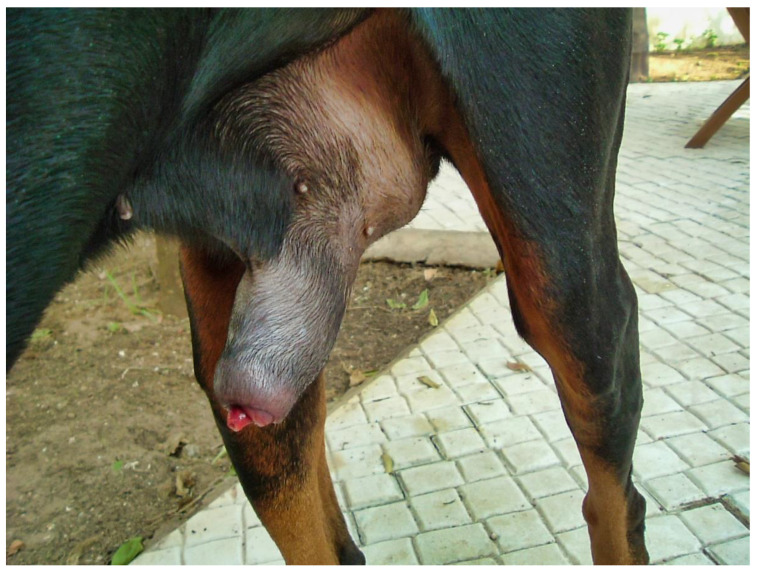
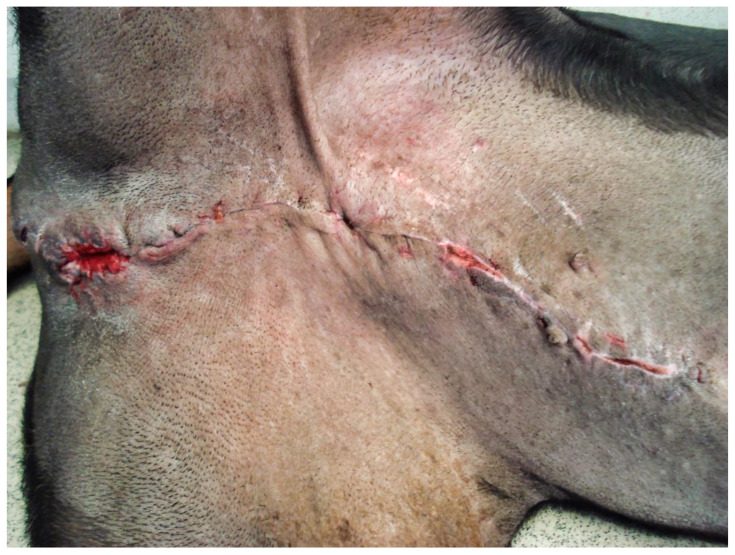
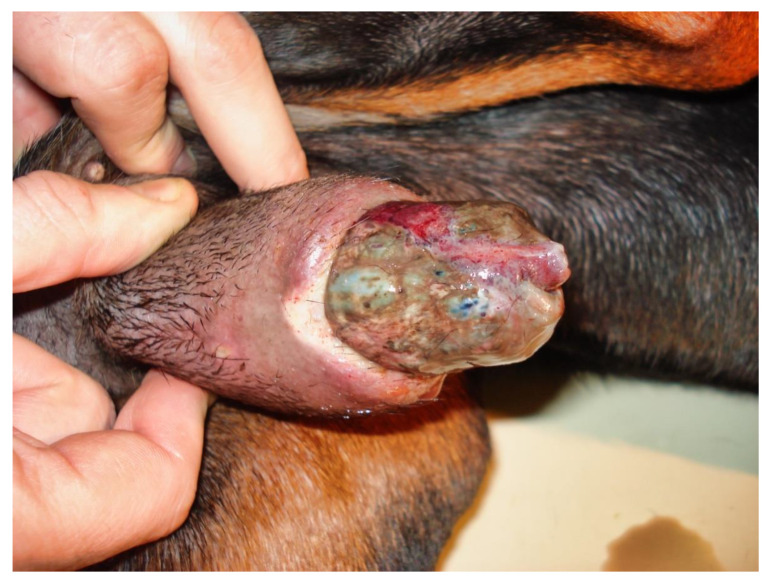
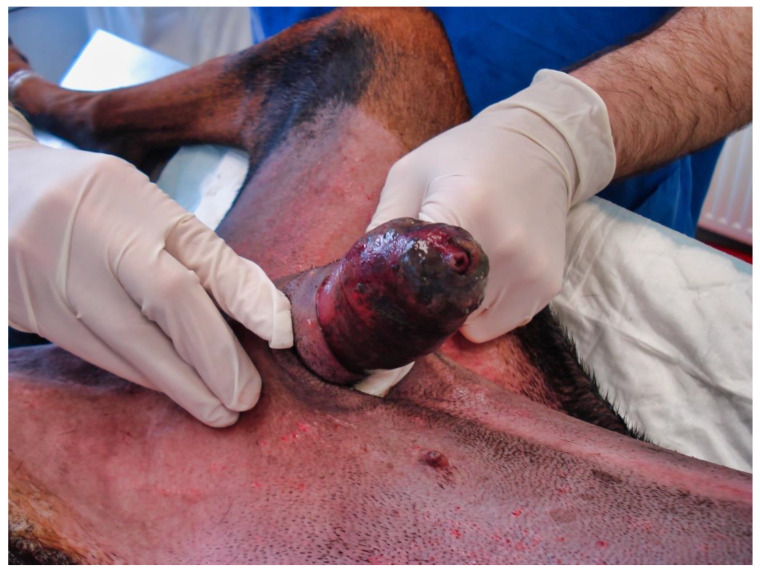
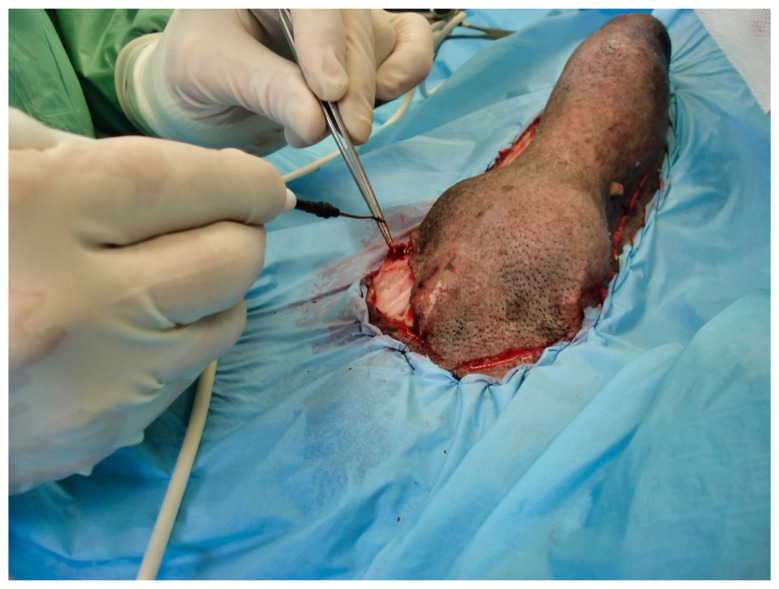
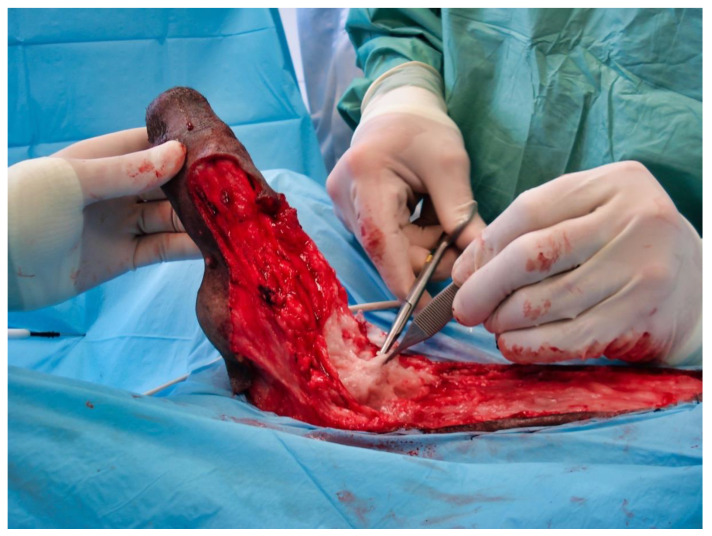
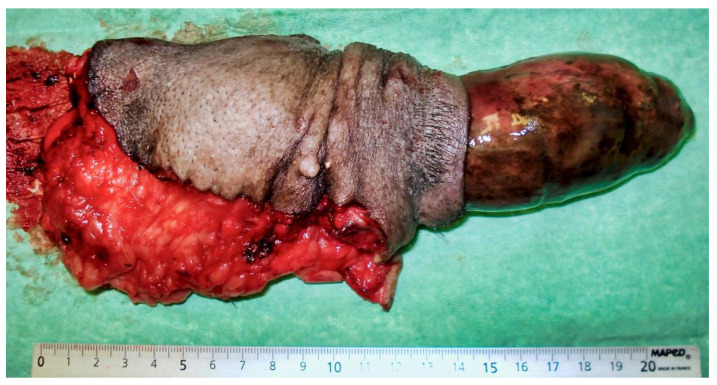
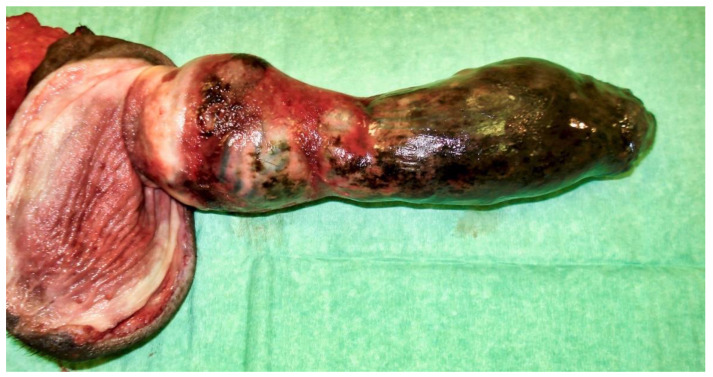
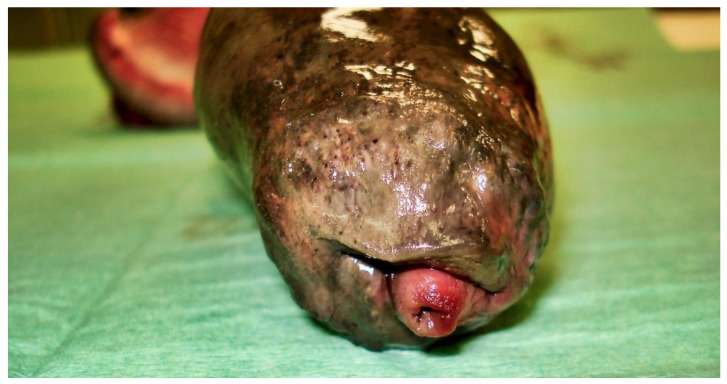
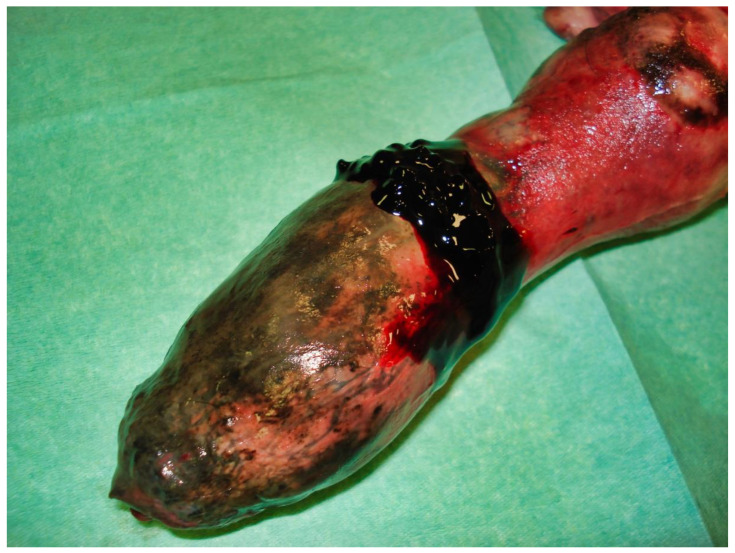
A 5-year-old recently castrated male Doberman dog presented for prolonged erection of one week's duration with associated pain and dysuria. This was the fourth episode within a year. Each episode was associated with an unusual event, which was stressful for the dog. Castration performed two months prior to the final episode did not prevent recurrence. Due to tissue necrosis, penile amputation and urethrostomy had to be performed. The dog recovered fully. Prolonged erection that persists beyond or that is unrelated to sexual stimulation is called "priapism". This term refers to the Greek god Priapus, a god of fertility, memorialized in sculptures for his giant phallus. In humans, depending on the mechanism involved, priapism is classified as nonischemic or ischemic. Because prognosis and treatment are different, priapism must be determined to be nonischemic or ischemic. Nonischemic priapism is a rare condition observed when an increase in penile arterial blood flow overwhelms the capacity of venous drainage; it is often associated with penile trauma, and does not require medical intervention. Ischemic priapism is associated with decreased venous return. In humans, ischemic priapism accounts for 95% of cases, the majority of which are idiopathic. Ischemic priapism is a urological emergency; simple conservative measures such as aspiration of blood from the corpora cavernosa and intracavernosal injection of an adrenergic agent are often successful. Stuttering priapism, also called recurrent or intermittent priapism, is a particular form of ischemic priapism reported in humans that is characterized by repetitive episodes of prolonged erections. Management consists of treating each new episode as an episode of acute ischemic priapism, and preventing recurrence with oral medications such as dutasteride and/or baclofen, gabapentin, or tadalafil. To the authors' knowledge, this case is the first report of stuttering priapism in a dog.
一只5岁的雄性杜宾犬,近期接受了去势手术,出现持续一周的阴茎异常勃起,并伴有疼痛和排尿困难。这是一年内的第四次发作。每次发作都与一件不寻常的事件有关,该事件对狗来说具有压力。在最后一次发作前两个月进行的去势手术未能防止复发。由于组织坏死,不得不进行阴茎截肢和尿道造口术。这只狗完全康复。持续超过或与性刺激无关的长时间勃起称为“阴茎异常勃起”。这个术语指的是希腊生育之神普里阿普斯,他因巨大的阴茎而在雕塑中被纪念。在人类中,根据涉及的机制,阴茎异常勃起分为非缺血性或缺血性。由于预后和治疗方法不同,必须确定阴茎异常勃起是缺血性还是非缺血性。非缺血性阴茎异常勃起是一种罕见的情况,当阴茎动脉血流增加超过静脉引流能力时会出现;它通常与阴茎创伤有关,不需要医学干预。缺血性阴茎异常勃起与静脉回流减少有关。在人类中,缺血性阴茎异常勃起占病例的95%,其中大多数是特发性的。缺血性阴茎异常勃起是一种泌尿外科急症;简单的保守措施,如从海绵体抽血和海绵体内注射肾上腺素能药物,通常是成功的。口吃性阴茎异常勃起,也称为复发性或间歇性阴茎异常勃起,是人类中报道的一种特殊形式的缺血性阴茎异常勃起,其特征是反复出现长时间勃起。治疗方法包括将每次新发作视为急性缺血性阴茎异常勃起发作进行治疗,并使用度他雄胺和/或巴氯芬、加巴喷丁或他达拉非等口服药物预防复发。据作者所知,该病例是狗口吃性阴茎异常勃起的首例报告。