Vivekanandhan Sneha, Knutson Keith L
Department of Immunology, Mayo Clinic, 4500 San Pablo Rd., Jacksonville, FL 32224, USA.
Cancers (Basel). 2022 Oct 19;14(20):5115. doi: 10.3390/cancers14205115.
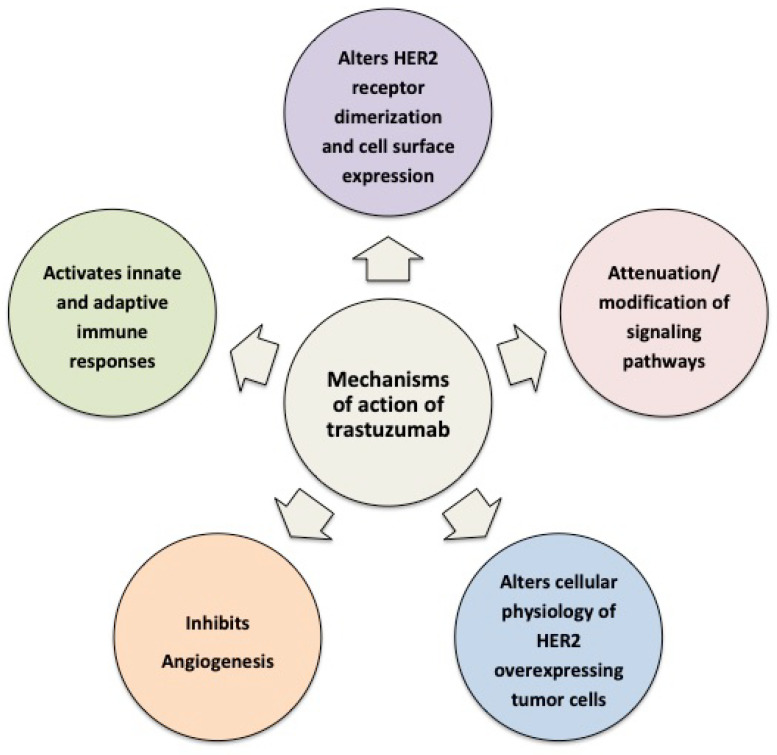
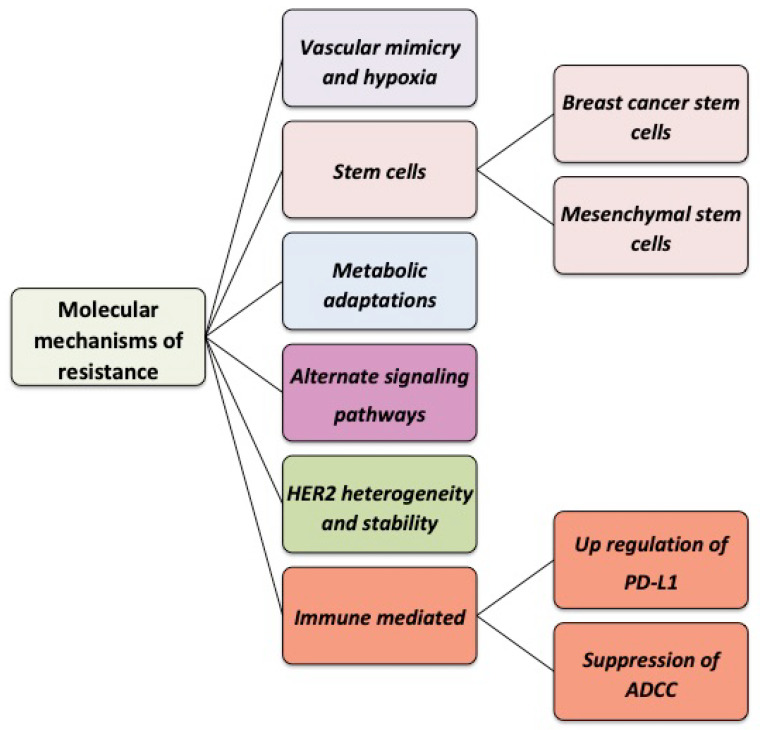
One of the most impactful biologics for the treatment of breast cancer is the humanized monoclonal antibody, trastuzumab, which specifically recognizes the HER2/neu (HER2) protein encoded by the gene. Useful for both advanced and early breast cancers, trastuzumab has multiple mechanisms of action. Classical mechanisms attributed to trastuzumab action include cell cycle arrest, induction of apoptosis, and antibody-dependent cell-mediated cytotoxicity (ADCC). Recent studies have identified the role of the adaptive immune system in the clinical actions of trastuzumab. Despite the multiple mechanisms of action, many patients demonstrate resistance, primary or adaptive. Newly identified molecular and cellular mechanisms of trastuzumab resistance include induction of immune suppression, vascular mimicry, generation of breast cancer stem cells, deregulation of long non-coding RNAs, and metabolic escape. These newly identified mechanisms of resistance are discussed in detail in this review, particularly considering how they may lead to the development of well-rationalized, patient-tailored combinations that improve patient survival.
治疗乳腺癌最具影响力的生物制剂之一是人性化单克隆抗体曲妥珠单抗,它能特异性识别由该基因编码的HER2/neu(HER2)蛋白。曲妥珠单抗对晚期和早期乳腺癌均有用,具有多种作用机制。曲妥珠单抗作用的经典机制包括细胞周期停滞、诱导凋亡和抗体依赖性细胞介导的细胞毒性(ADCC)。最近的研究确定了适应性免疫系统在曲妥珠单抗临床作用中的作用。尽管有多种作用机制,但许多患者表现出原发性或适应性耐药。新发现的曲妥珠单抗耐药的分子和细胞机制包括诱导免疫抑制、血管拟态、乳腺癌干细胞的产生、长链非编码RNA的失调以及代谢逃逸。本综述详细讨论了这些新发现的耐药机制,尤其考虑了它们如何导致开发出合理、针对患者的联合治疗方案以提高患者生存率。