Skrzydło-Radomańska Barbara, Cukrowska Bożena
Department of Gastroenterology, Medical University of Lublin, Jaczewskiego 8, 20-950 Lublin, Poland.
Department of Pathomorphology, The Children Memorial Health Institute, Aleja Dzieci Polskich 20, 04-730 Warsaw, Poland.
J Clin Med. 2022 Oct 12;11(20):6017. doi: 10.3390/jcm11206017.
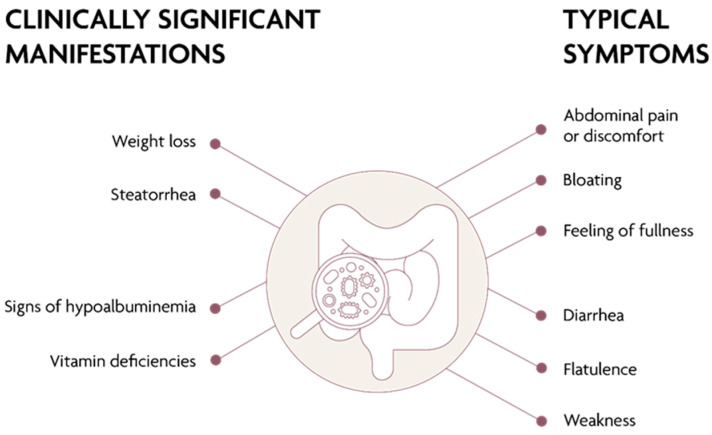
Small Intestinal Bacterial Overgrowth (SIBO) is a form of dysbiosis that involves increased bacterial colonization of the small intestine with some of the bacteria more characteristic of the colon microbiota. The prevalence of SIBO over recent decades has been estimated to range from 2.5 to 22% (depending on the source) and to increase with age and among individuals with comorbidities. Recently, an increase in the number of diagnosed SIBO cases has been observed, which is primarily due to the availability of noninvasive breath tests that facilitate the diagnostic process. However, SIBO is still both a diagnostic and a therapeutic problem. This review presents the pathophysiology, manifestations, diagnostics, and recommended management of SIBO.
小肠细菌过度生长(SIBO)是一种生态失调形式,涉及小肠细菌定植增加,其中一些细菌更具结肠微生物群的特征。近几十年来,SIBO的患病率估计在2.5%至22%之间(取决于来源),并随年龄增长以及在患有合并症的个体中增加。最近,已观察到确诊的SIBO病例数量有所增加,这主要归因于非侵入性呼气试验的应用,这些试验有助于诊断过程。然而,SIBO仍然是一个诊断和治疗难题。本综述介绍了SIBO的病理生理学、表现、诊断及推荐的管理方法。