Rizzo Davide, Crescio Claudia, Tramaloni Pierangela, De Luca Laura M, Turra Nicola, Manca Alessandra, Crivelli Paola, Tiana Chiara R, Fara Alberto, Cossu Antonio, Profili Stefano, Scaglione Mariano, Bussu Francesco
Department of Medical, Surgical and Experimental Science, University of Sassari, 07100 Sassari, Italy.
Division of Otolaryngology, Azienda Ospedaliero Universitaria, 07100 Sassari, Italy.
J Pers Med. 2022 Sep 26;12(10):1585. doi: 10.3390/jpm12101585.
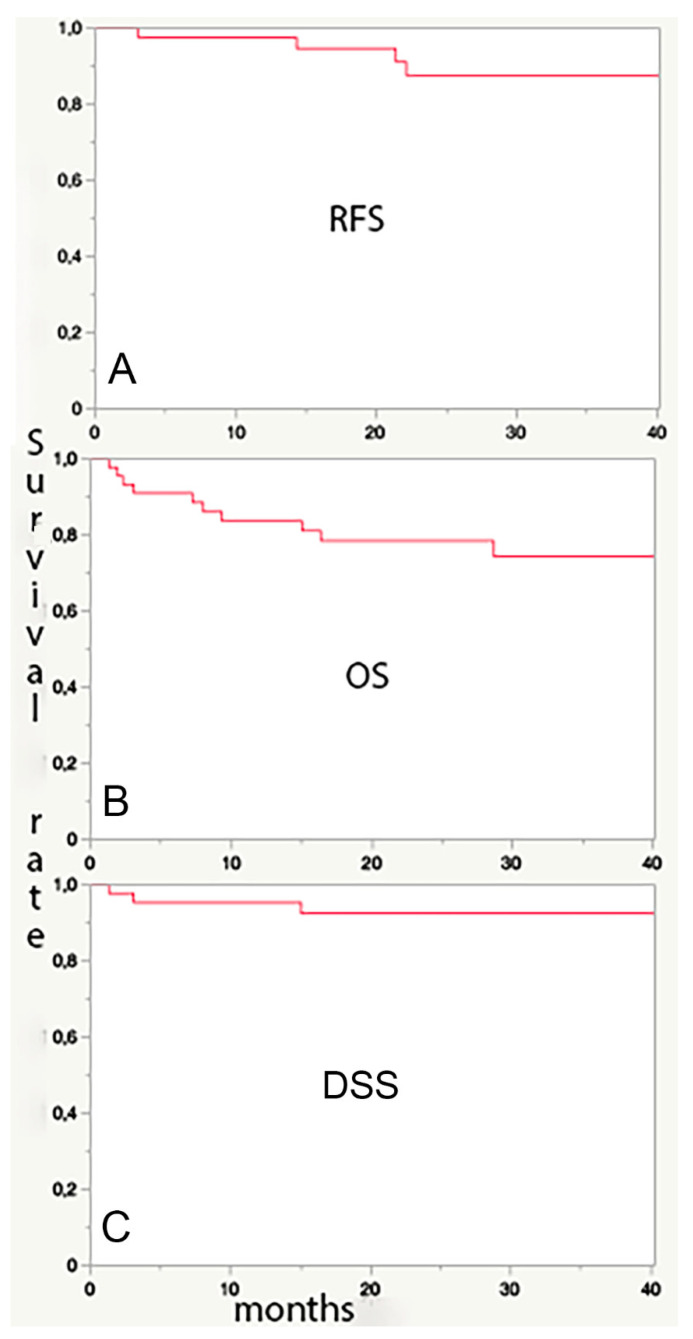
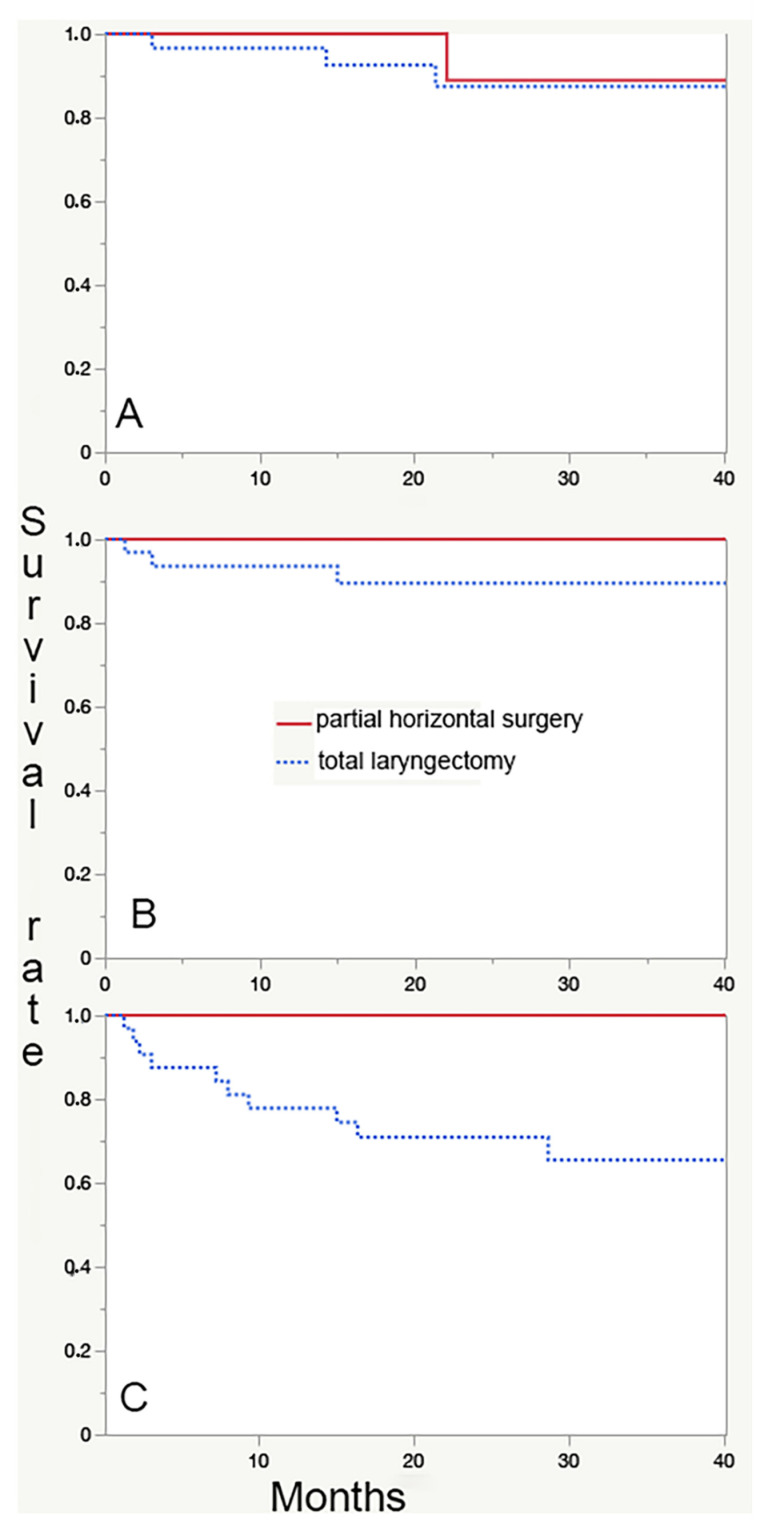
(1) Background: Endoscopy and morphological imaging are the mainstay of the diagnostic work up of laryngeal squamous cell carcinomas (LSCCs), which can be integrated in a multidisciplinary discussion to obtain a shared pretreatment staging. (2) Methods: A retrospective evaluation of patients, managed at a tertiary university hospital in Italy and submitted to major laryngeal surgery, has been performed. Four different stagings have been defined and compared: epTN (based on endoscopy and physical ENT examination); radTN (based on CT scan); cTN (based on multidisciplinary integration of the two above); pTN based on pathology on surgical samples. Oncological outcomes have been assessed. (3) Results: Three-year relapse free and disease specific survival were 88% and 92.5%, respectively, without significant differences between partial surgeries ( = 13) and total laryngectomies ( = 32). As for the pretreatment staging, and in particular the T classification, the cTN has been revealed as more reliable than epTN and radTN alone in predicting the final pT (Cohen kappa coefficient: 0.7 for cT, 0.44 for radT, 0.32 for epT). In the partial surgery group, we did not record any positive margin nor local recurrence, with a 100% overall and disease-specific survival. (4) Conclusions: The multidisciplinary approach is fundamental in the definition of the primary lesion in LSCC, in particular in order to safely perform surgical preservation of laryngeal function, which is associated with a higher laryngectomy-free survival than irradiation but to a lower salvageability in case of recurrence.
(1) 背景:内镜检查和形态学成像技术是喉鳞状细胞癌(LSCC)诊断性检查的主要手段,可将这些检查结果纳入多学科讨论,以获得共同的术前分期。(2) 方法:对在意大利一家三级大学医院接受治疗并接受主要喉部手术的患者进行了回顾性评估。定义并比较了四种不同的分期:内镜下TN分期(epTN,基于内镜检查和耳鼻喉科体格检查);影像学TN分期(radTN,基于CT扫描);联合TN分期(cTN,基于上述两者的多学科整合);手术标本病理TN分期(pTN)。评估了肿瘤学结局。(3) 结果:三年无复发生存率和疾病特异性生存率分别为88%和92.5%,部分手术(n = 13)和全喉切除术(n = 32)之间无显著差异。至于术前分期,特别是T分类,在预测最终pT方面,联合TN分期比单独的内镜下TN分期和影像学TN分期更可靠(Cohen卡方系数:cT为0.7,radT为0.44,epT为0.32)。在部分手术组中,未记录到任何切缘阳性或局部复发情况,总体生存率和疾病特异性生存率均为100%。(4) 结论:多学科方法在喉鳞状细胞癌原发灶的定义中至关重要,特别是为了安全地保留喉部功能进行手术,与放疗相比,保留喉部功能的生存率更高,但复发时的挽救性较低。