Psychiatry Unit 2, Department of Clinical and Experimental Medicine, Faculty of Medicine and Surgery, University of Pisa, Pisa, Italy.
Department of Translational Research and New Technologies in Medicine and Surgery, University of Pisa, Pisa 56126, Italy.
Curr Neuropharmacol. 2023;21(7):1467-1476. doi: 10.2174/1570159X20666220830154002.
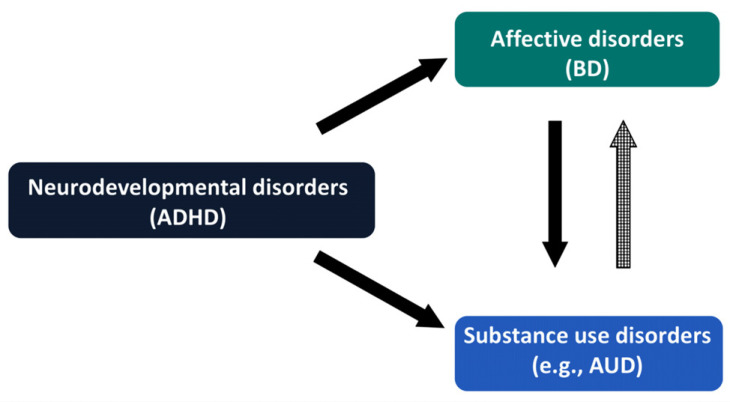
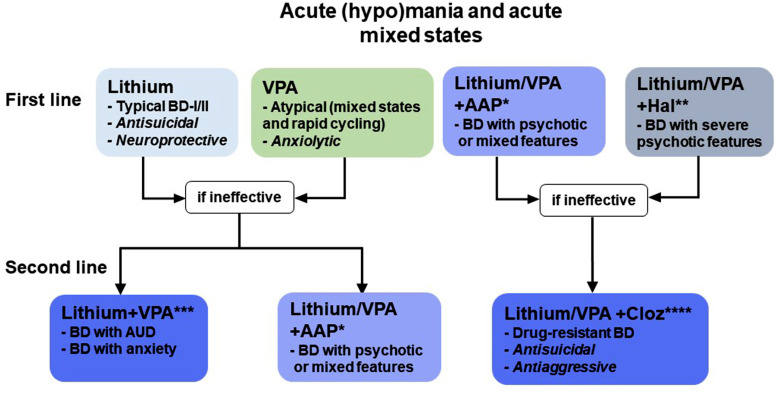
Attention-Deficit/Hyperactivity Disorder (ADHD), Bipolar Disorder (BD) and Alcohol Use Disorder (AUD) are common medical conditions often coexisting and exerting mutual influence on disease course and pharmacological treatment response. Each disorder, when considered separately, relies on different therapeutic approaches, making it crucial to detect the plausible association between them. Treating solely the emerging condition (e.g., alcoholism) and disregarding the patient's whole psychopathological ground often leads to treatment failure and relapse. Clinical experience and scientific evidence rather show that tailoring treatments for these three conditions considering their co-occurrence as a sole complex disorder yields more fulfilling and durable clinical outcomes. In light of the above considerations, the purpose of the present review is to critically discuss the pharmacological strategies in the personalized treatment of complex conditions defined by ADHD-bipolarityalcoholism coexistence.
注意力缺陷多动障碍(ADHD)、双相情感障碍(BD)和酒精使用障碍(AUD)是常见的医疗状况,它们经常同时存在,并相互影响疾病进程和药物治疗反应。每种疾病在单独考虑时都依赖于不同的治疗方法,因此检测它们之间可能的关联至关重要。仅治疗新出现的病症(例如,酗酒)而忽略患者的整个精神病理基础,往往会导致治疗失败和复发。临床经验和科学证据表明,针对这些三种病症进行个体化治疗时,将其共病作为单一复杂病症来考虑,会产生更满意和更持久的临床效果。有鉴于此,本综述的目的是批判性地讨论由 ADHD-双极性-酒精中毒共病定义的复杂病症的个体化治疗中的药物治疗策略。