Li Mo-Yun, Peng Li-Ming, Chen Xiao-Ping
Department of Clinical Pharmacology, Xiangya Hospital, Central South University, Changsha, China.
Hunan Key Laboratory of Pharmacogenetics, Institute of Clinical Pharmacology, Central South University, Changsha, China.
Front Cardiovasc Med. 2022 Oct 13;9:966261. doi: 10.3389/fcvm.2022.966261. eCollection 2022.
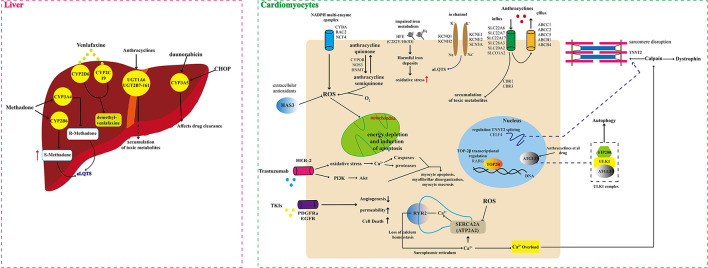
Drug-induced cardiotoxicity (DICT) is an important concern of drug safety in both drug development and clinical application. The clinical manifestations of DICT include cardiomyopathy, arrhythmia, myocardial ischemia, heart failure, and a series of cardiac structural and functional changes. The occurrence of DICT has negative impacts on the life quality of the patients, brings additional social and economic burden. It is important to identify the potential factors and explore the mechanisms of DICT. Traditional cardiovascular risk factors can only partially explain the risk of DICT. Pharmacogenomic studies show accumulated evidence of genetics in DICT and suggest the potential to guide precision therapy to reduce risk of cardiotoxicity. The comprehensive application of technologies such as third-generation sequencing, human induced pluripotent stem (iPS) cells and genome editing has promoted the in-depth understanding of the functional role of susceptible genes in DICT. This paper reviewed drugs that cause DICT, the clinical manifestations and laboratory tests, as well as the related content of genetic variations associated with the risk of DICT, and further discussed the implication of new technologies in pharmacogenomics of DICT.
药物性心脏毒性(DICT)是药物研发和临床应用中药物安全性的一个重要关注点。DICT的临床表现包括心肌病、心律失常、心肌缺血、心力衰竭以及一系列心脏结构和功能变化。DICT的发生对患者生活质量产生负面影响,带来额外的社会和经济负担。识别潜在因素并探索DICT的机制很重要。传统心血管危险因素只能部分解释DICT的风险。药物基因组学研究显示了遗传学在DICT中的累积证据,并提示了指导精准治疗以降低心脏毒性风险的潜力。第三代测序、人诱导多能干细胞(iPS)和基因组编辑等技术的综合应用促进了对易感基因在DICT中功能作用的深入理解。本文综述了引起DICT的药物、临床表现和实验室检查,以及与DICT风险相关的基因变异的相关内容,并进一步讨论了新技术在DICT药物基因组学中的意义。