Gong Peng, Zhang Shanshan, Ren Li, Zhang Jiangsong, Zhao Yibin, Mao Xuqing, Gan Lin, Wang Hao, Ma Congcong, Lin Yubo, Ye Qinyu, Qian Kecheng, Lin Xianming
Key Laboratory of Acupuncture and Neurology of Zhejiang Province, Department of Neurobiology and Acupuncture Research, The Third Clinical Medical College, Zhejiang Chinese Medical University, Hangzhou, China.
Front Cell Neurosci. 2022 Oct 13;16:1020644. doi: 10.3389/fncel.2022.1020644. eCollection 2022.
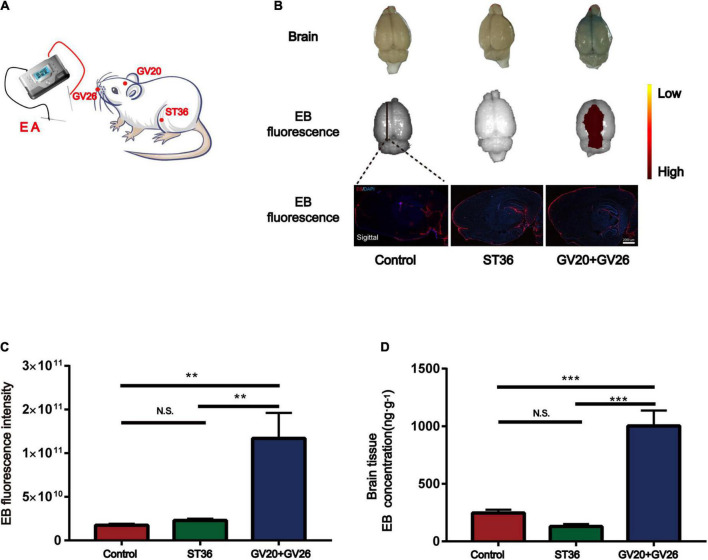
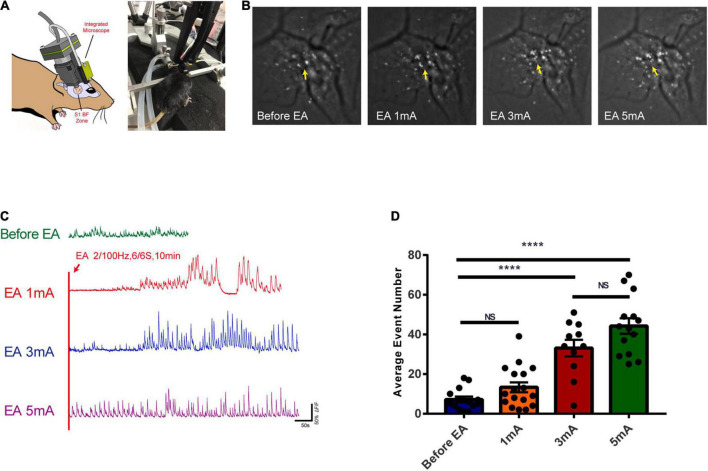
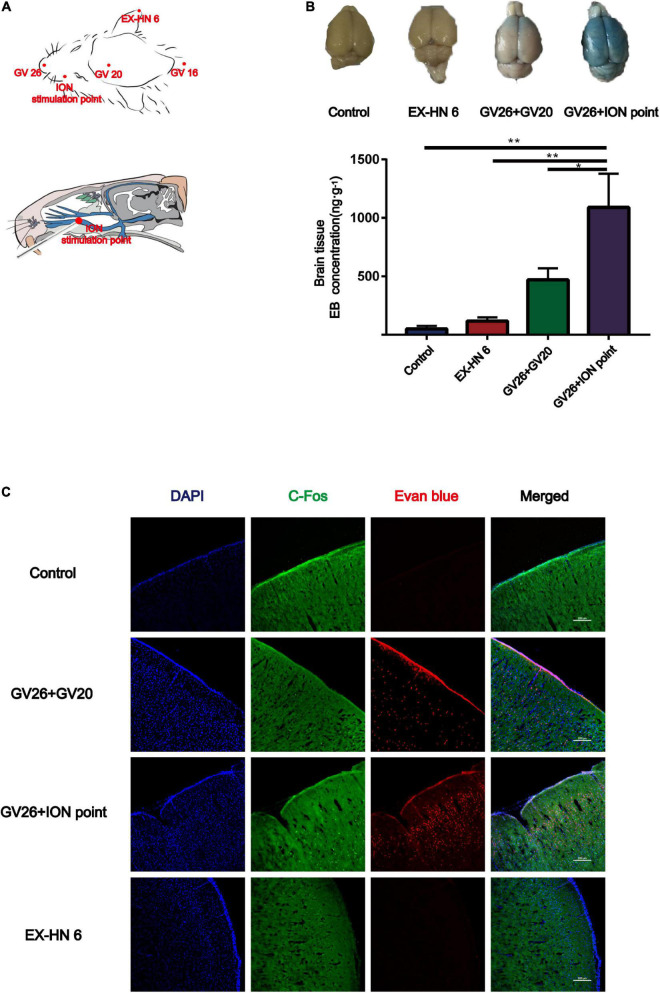
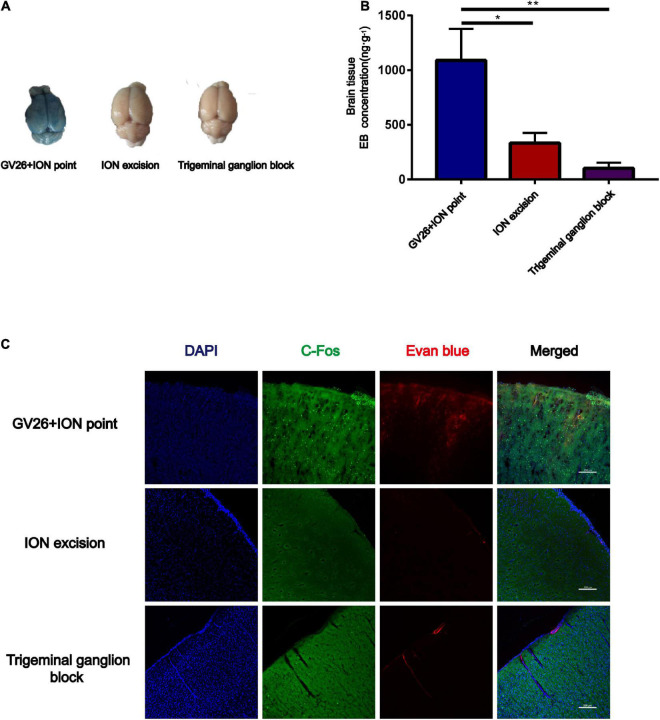
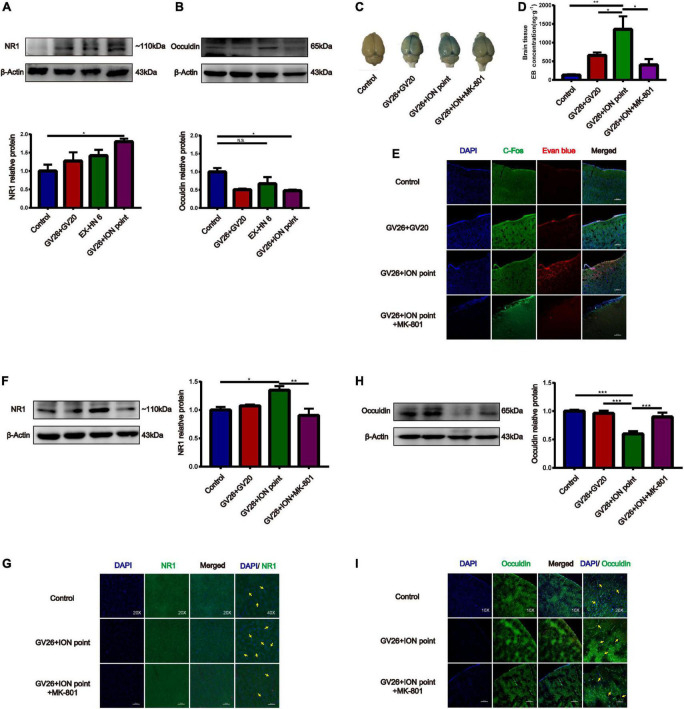
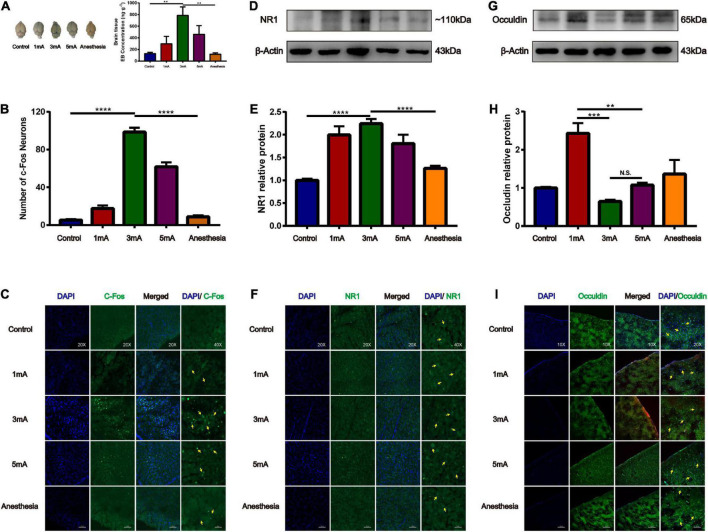
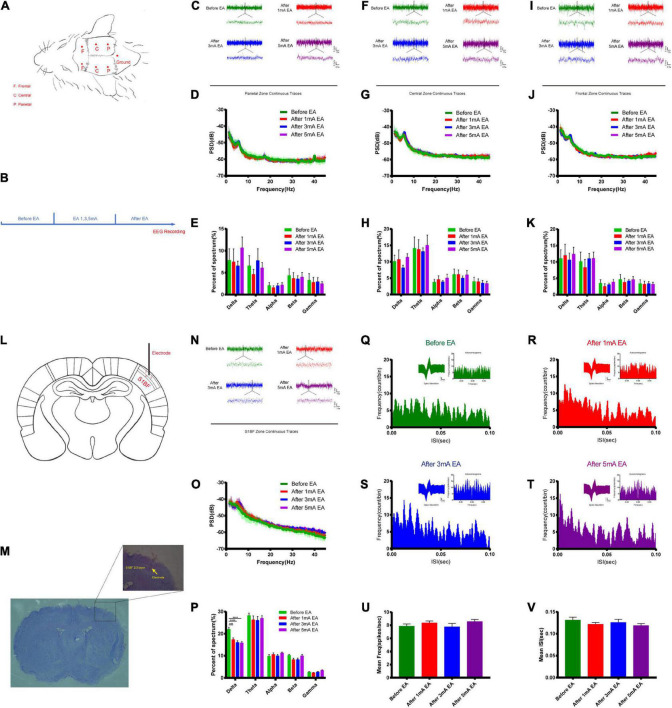
The blood-brain barrier (BBB) is an important structure for maintaining environmental stability in the central nervous system (CNS). Our previous study showed that specific parameters of electroacupuncture (EA) at the head points Shuigou (GV26) and Baihui (GV20) can open the BBB; however, the mechanism by which stimulation of body surface acupuncture points on the head results in peripheral stimulation and affects the status of the central BBB and the neuronal excitatory changes has not been elucidated. We used laser spectroscopy, the Imaging System (IVIS), immunofluorescence and immunoblotting to verified the role of the trigeminal nerve in BBB opening during EA, and we applied the central -methyl-D-aspartate (NMDA) receptors blocker MK-801 to verify the mediating role of NMDA receptors in EA-induced BBB opening. Next, electroencephalogram (EEG) and calcium imaging techniques were applied to verify the possible electrical patterns of BBB opening promoted by different intensities of EA stimulation. The results showed that the trigeminal nerve plays an important role in the alteration of BBB permeability promoted by EA stimulation of the head acupoints. Brain NMDA receptors play a mediating role in promoting BBB permeability during EA of the trigeminal nerve, which may affect the expression of the TJ protein occludin, and thus alter BBB permeability. The analysis of the electrical mechanism showed that there was no significant change in the rhythm of local field potentials (LFP) in different brain regions across frequency bands immediately after EA of the trigeminal nerve at different intensities. However, the local primary somatosensory (S1BF) area corresponding to the trigeminal nerve showed a transient reduction in the delta rhythm of LFP with no change in the high-frequency band, and the action potential (spike) with short inter spike interval (ISI) varied with EA intensity. Meanwhile, EA of the trigeminal nerve resulted in rhythmic changes in calcium waves in the S1BF region, which were influenced by different EA intensities. This study provides a research perspective and a technical approach to further explore the mechanism of EA-induced BBB opening and its potential clinical applications.
血脑屏障(BBB)是维持中枢神经系统(CNS)内环境稳定的重要结构。我们之前的研究表明,针刺头部水沟穴(GV26)和百会穴(GV20)的特定电针参数可打开血脑屏障;然而,刺激头部体表穴位导致外周刺激并影响中枢血脑屏障状态及神经元兴奋性变化的机制尚未阐明。我们使用激光光谱、成像系统(IVIS)、免疫荧光和免疫印迹法来验证三叉神经在电针过程中对血脑屏障开放的作用,并应用中枢N-甲基-D-天冬氨酸(NMDA)受体阻滞剂MK-801来验证NMDA受体在电针诱导血脑屏障开放中的介导作用。接下来,应用脑电图(EEG)和钙成像技术来验证不同强度电针刺激促进血脑屏障开放的可能电活动模式。结果表明,三叉神经在头部穴位电针刺激促进血脑屏障通透性改变中起重要作用。脑NMDA受体在三叉神经电针过程中促进血脑屏障通透性方面起介导作用,这可能影响紧密连接蛋白occludin的表达,从而改变血脑屏障通透性。电机制分析表明,不同强度三叉神经电针后,各脑区不同频段的局部场电位(LFP)节律在即刻无明显变化。然而,与三叉神经对应的局部初级体感(S1BF)区LFP的δ节律出现短暂降低,高频段无变化,且峰间间隔短(ISI)的动作电位(峰电位)随电针强度而变化。同时,三叉神经电针导致S1BF区钙波出现节律性变化,且受不同电针强度影响。本研究为进一步探索电针诱导血脑屏障开放的机制及其潜在临床应用提供了研究思路和技术方法。