Science & Data Generation Department, UPL Europe Ltd., Warrington, UK.
Toxicology and Environmental Research and Consulting, The Dow Chemical Company, Midland, Michigan, USA.
Environ Mol Mutagen. 2023 Jan;64(1):26-38. doi: 10.1002/em.22515. Epub 2022 Nov 23.
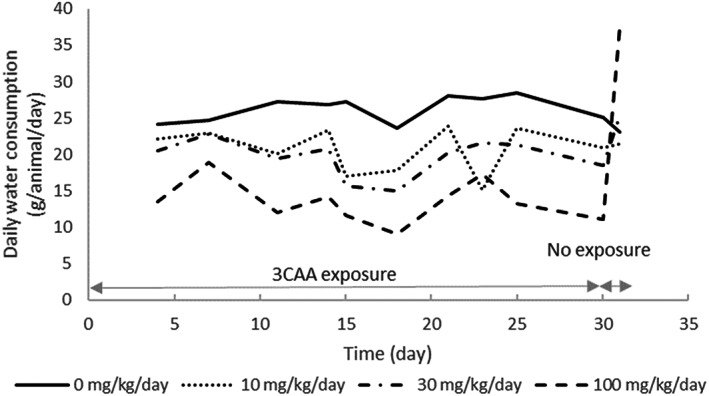
3-Chloroallyl alcohol (3-CAA) can be found in the environment following the application of plant protection products. 3-CAA is formed in groundwater following the injection of 1,3-dichloropropene, a fumigant used to control nematodes. 3-CAA is also formed, in leafy crops, as a glycoside conjugate following application of the herbicide, clethodim. Human exposure may occur from groundwater used as drinking water or through dietary consumption. To characterize 3-CAA's potential to cause genotoxicity in mammals, in vitro and in vivo studies were conducted. 3-CAA was negative in an Ames test and positive in a mouse lymphoma forward mutation assay. 3-CAA was negative in an acute in vivo CD-1 mouse bone marrow micronucleus assay when administered up to a dose level of 125 mg/kg/day for two consecutive days. In a combined gene mutation assay and erythrocyte micronucleus assay, using transgenic Big Blue® Fischer 344 rats, 3-CAA was administered via drinking water at targeted dose levels of 0, 10, 30, and 100 mg/kg/day for 29 days. Peripheral blood samples, collected at the end of treatment, were analyzed for micronucleus induction in reticulocytes using flow cytometry. Liver and bone marrow samples, collected 2 days after the termination of the treatment, were analyzed for the induction of mutations at the cII locus. 3-CAA did not induce an increase in mutant frequency or micronuclei under the experimental conditions. In conclusion, the mutagenic response observed in the in vitro mouse lymphoma assay is not confirmed in the whole animal. 3-CAA is not considered to pose a mutagenic risk.
3-氯丙烯醇(3-CAA)在使用植保产品后会出现在环境中。3-CAA 是在向地下水中注入 1,3-二氯丙烯(一种用于防治线虫的熏蒸剂)后形成的。3-CAA 也会作为叶类作物中草丁膦除草剂的糖苷轭合物形成。人类可能会通过饮用水或饮食摄入的方式接触 3-CAA。为了评估 3-CAA 在哺乳动物体内产生遗传毒性的潜力,进行了体外和体内研究。3-CAA 在 Ames 试验中呈阴性,而在小鼠淋巴瘤正向突变试验中呈阳性。3-CAA 在 CD-1 小鼠急性骨髓微核试验中呈阴性,当连续两天以高达 125mg/kg/天的剂量给药时。在基因突变速率测定和红细胞微核试验的联合试验中,使用转基因 Big Blue® Fischer 344 大鼠,通过饮用水给予 3-CAA,目标剂量分别为 0、10、30 和 100mg/kg/天,共 29 天。在治疗结束时采集外周血样本,使用流式细胞术分析网织红细胞中的微核诱导。在治疗结束后 2 天采集肝脏和骨髓样本,分析 cII 基因座突变的诱导情况。3-CAA 在实验条件下未诱导突变频率或微核增加。总之,在体外小鼠淋巴瘤试验中观察到的致突变反应在整体动物中没有得到证实。3-CAA 不被认为具有致突变风险。