The Province and Ministry Co-sponsored Collaborative Innovation Center for Medical Epigenetics, State Key Laboratory of Experimental Hematology, Key Laboratory of Immune Microenvironment and Disease of Ministry of Education, Department of Cell Biology, School of Basic Medicine, Tianjin Medical University, Tianjin, China.
State Key Laboratory of Experimental Hematology, National Clinical Research Center for Blood Diseases, Haihe Laboratory of Cell Ecosystem, Institute of Hematology & Blood Diseases Hospital, Chinese Academy of Medical Sciences & Peking Union Medical College, Tianjin, China.
Nat Commun. 2022 Nov 2;13(1):6578. doi: 10.1038/s41467-022-34253-1.
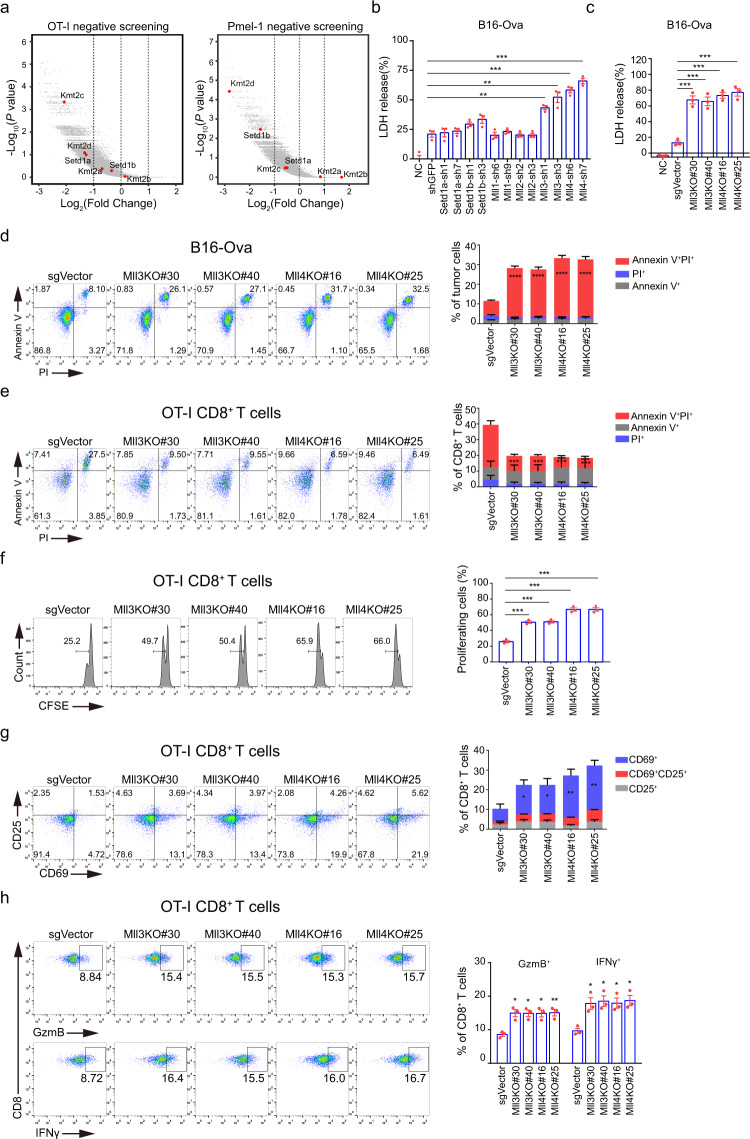
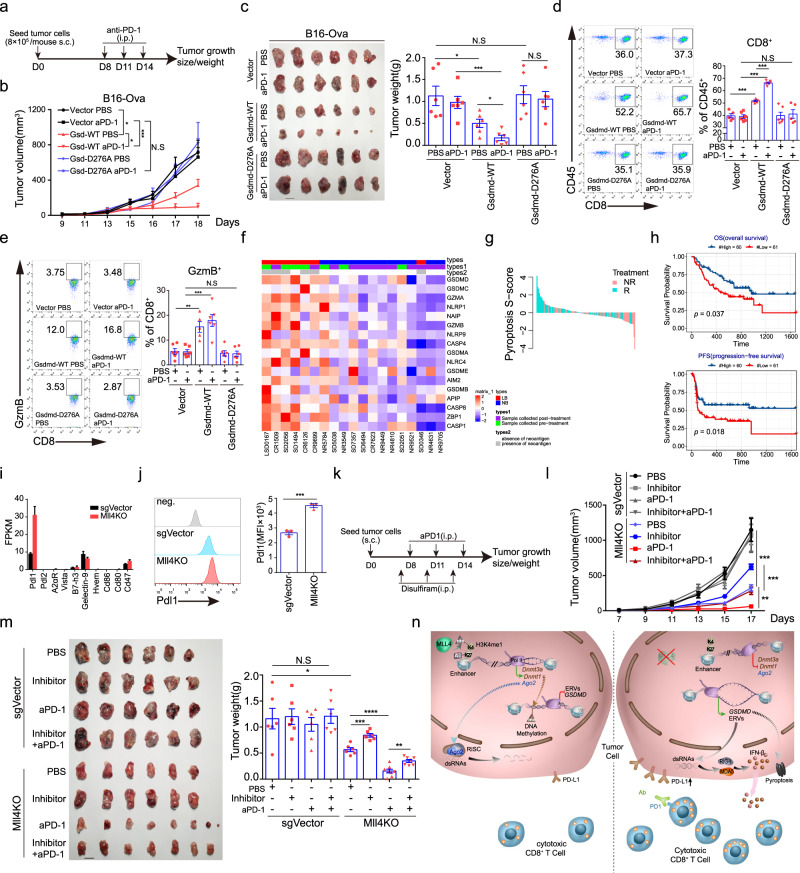
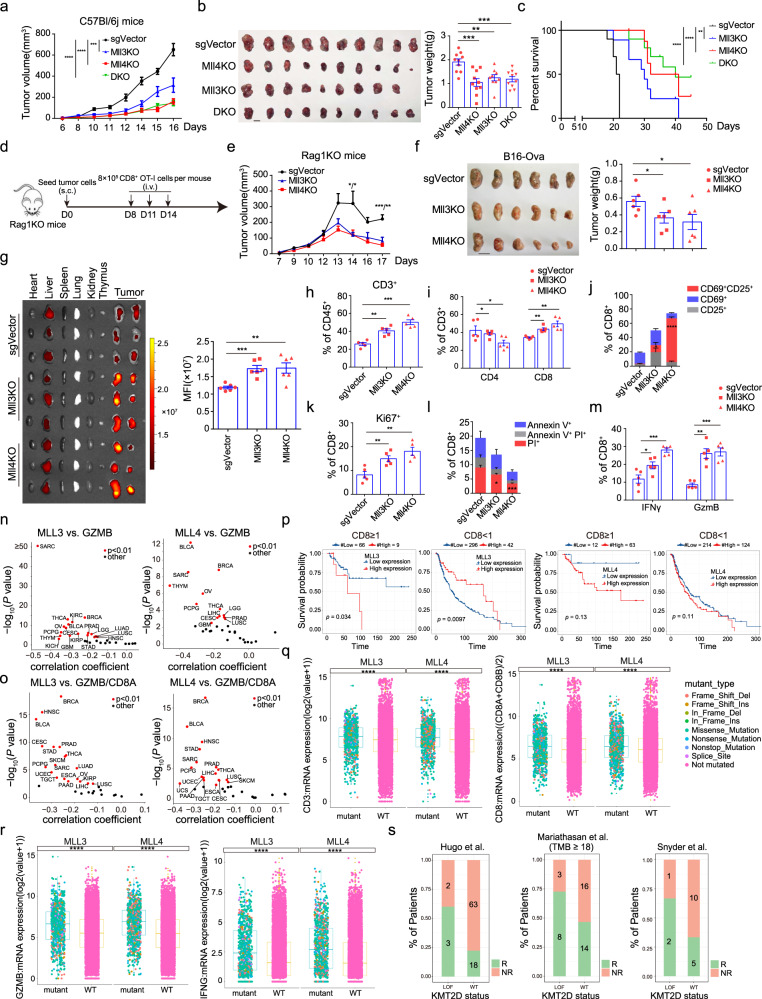
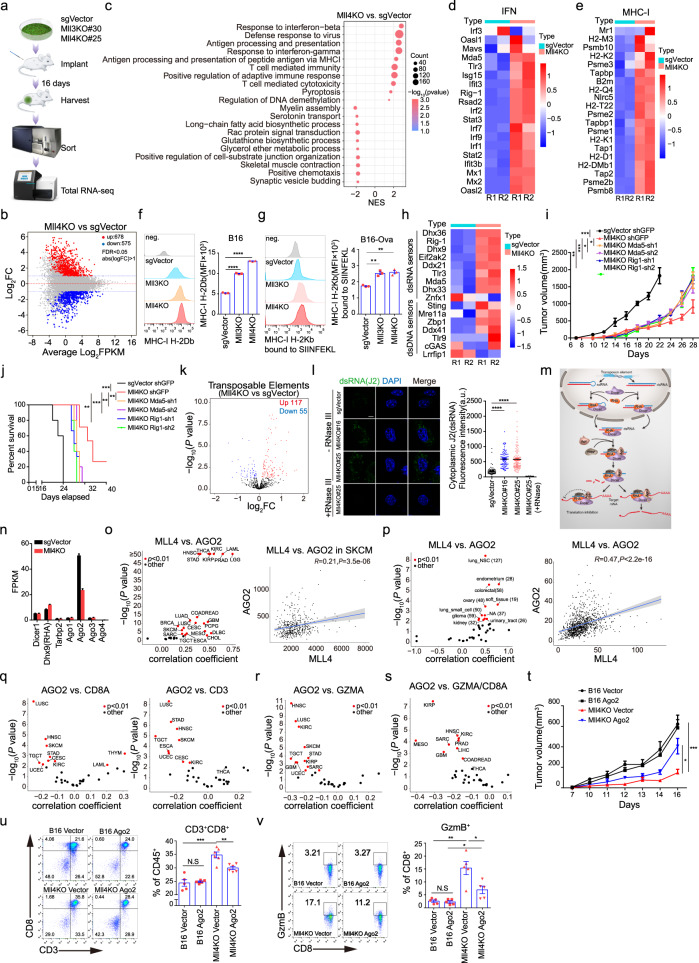
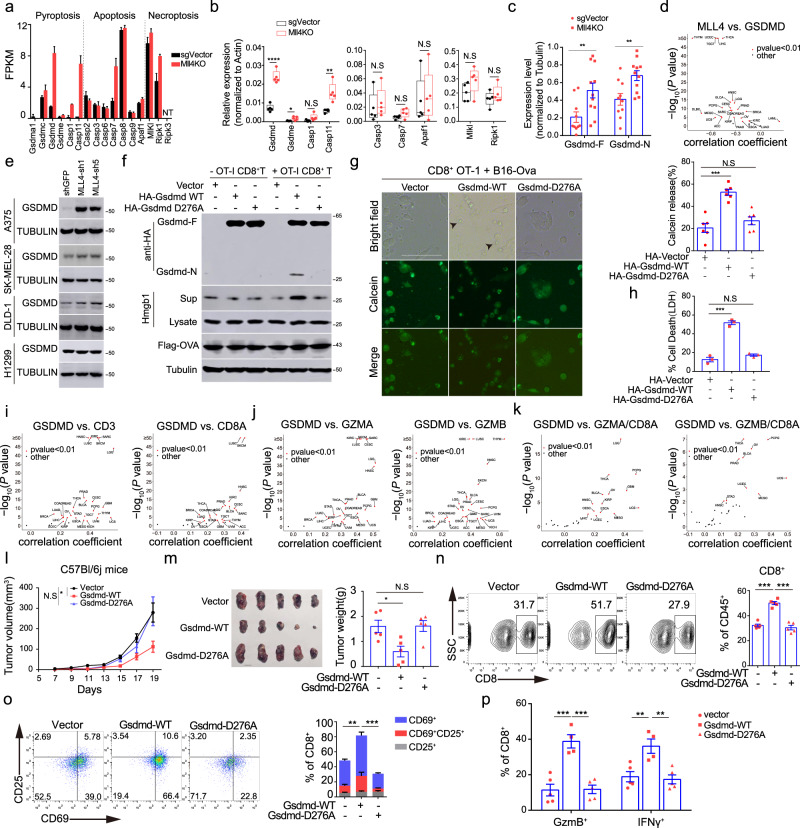
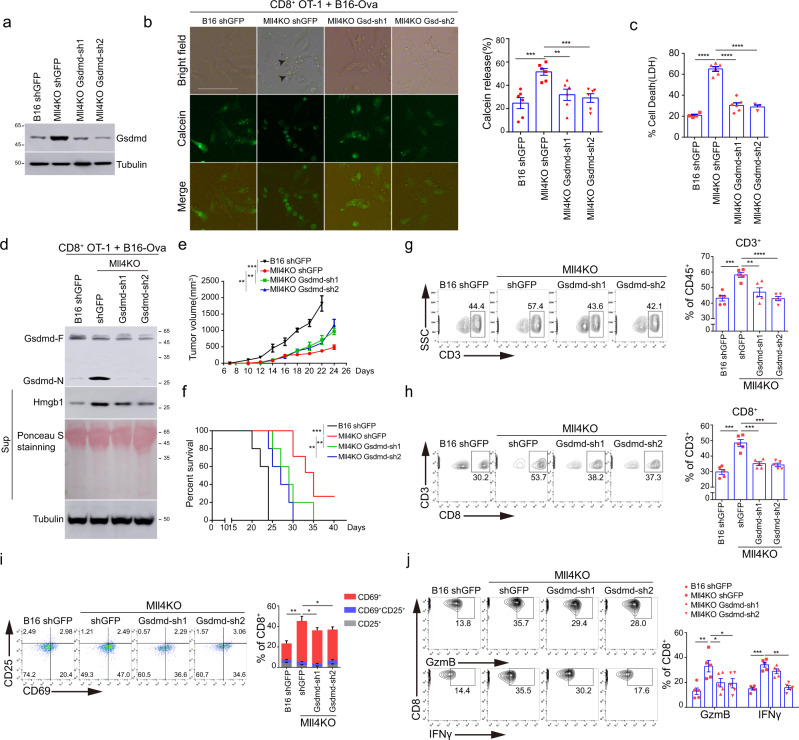
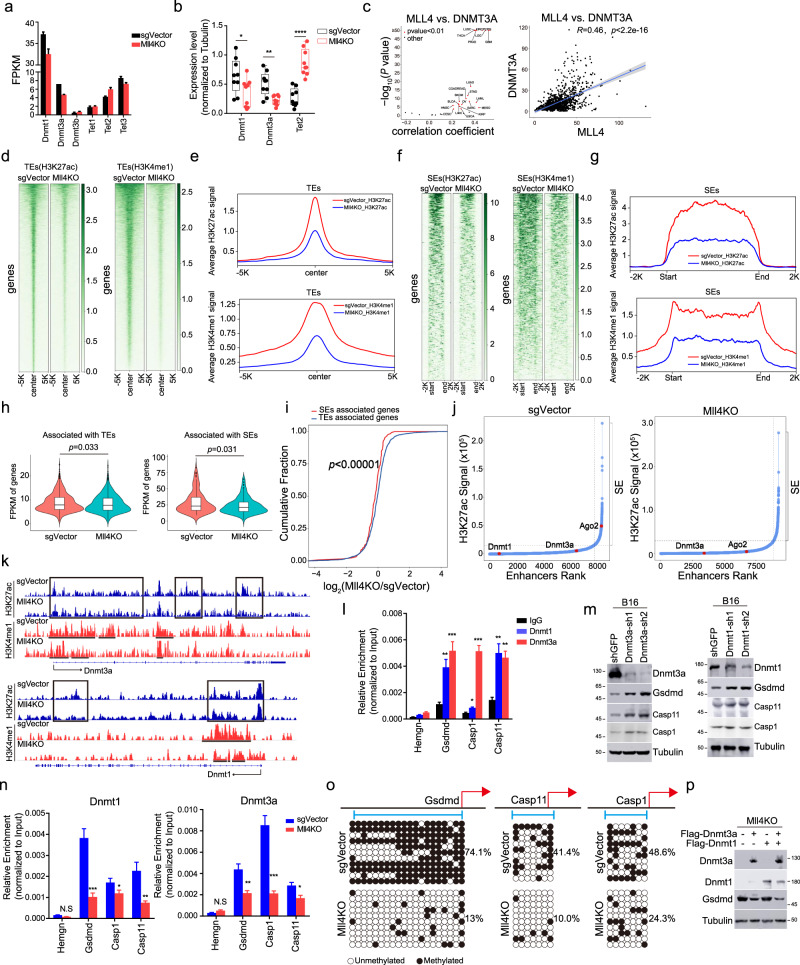
Enhancer deregulation is a well-established pro-tumorigenic mechanism but whether it plays a regulatory role in tumor immunity is largely unknown. Here, we demonstrate that tumor cell ablation of mixed-lineage leukemia 3 and 4 (MLL3 and MLL4, also known as KMT2C and KMT2D, respectively), two enhancer-associated histone H3 lysine 4 (H3K4) mono-methyltransferases, increases tumor immunogenicity and promotes anti-tumor T cell response. Mechanistically, MLL4 ablation attenuates the expression of RNA-induced silencing complex (RISC) and DNA methyltransferases through decommissioning enhancers/super-enhancers, which consequently lead to transcriptional reactivation of the double-stranded RNA (dsRNA)-interferon response and gasdermin D (GSDMD)-mediated pyroptosis, respectively. More importantly, we reveal that both the dsRNA-interferon signaling and GSDMD-mediated pyroptosis are of critical importance to the increased anti-tumor immunity and improved immunotherapeutic efficacy in MLL4-ablated tumors. Thus, our findings establish tumor cell enhancers as an additional layer of immune evasion mechanisms and suggest the potential of targeting enhancers or their upstream and/or downstream molecular pathways to overcome immunotherapeutic resistance in cancer patients.
增强子失活是一种成熟的促肿瘤发生机制,但它在肿瘤免疫中是否起调节作用在很大程度上尚不清楚。在这里,我们证明了混合谱系白血病 3 和 4(MLL3 和 MLL4,也分别称为 KMT2C 和 KMT2D)的肿瘤细胞消融,两种与增强子相关的组蛋白 H3 赖氨酸 4(H3K4)单甲基转移酶,可增加肿瘤的免疫原性并促进抗肿瘤 T 细胞反应。从机制上讲,MLL4 消融通过停用增强子/超级增强子来减弱 RNA 诱导沉默复合物 (RISC) 和 DNA 甲基转移酶的表达,从而分别导致双链 RNA (dsRNA)-干扰素反应和 GSDMD 介导的细胞焦亡的转录重新激活。更重要的是,我们揭示了 dsRNA-干扰素信号和 GSDMD 介导的细胞焦亡对于增强肿瘤免疫和提高 MLL4 消融肿瘤的免疫治疗效果都至关重要。因此,我们的研究结果确立了肿瘤细胞增强子作为免疫逃逸机制的另一个层面,并表明靶向增强子或其上游和/或下游分子途径以克服癌症患者的免疫治疗耐药性具有潜力。