Hu Anling, Gao Jian, Varier Krishnapriya M, Gajendran Babu, Jiang Fei, Liu Wuling, Wang Chunlin, Xiao Xiao, Li Yanmei, Zacksenhaus Eldad, Ali Sajjad, Ben-David Yaacov
State Key Laboratory for Functions and Applications of Medicinal Plants, Guizhou Medical University, Guiyang, 550014, Guizhou Province, People's Republic of China.
The Key Laboratory of Chemistry for Natural Products of Guizhou Province and Chinese Academic of Sciences, Guiyang, 550014, Guizhou Province, People's Republic of China.
Cell Death Discov. 2022 Nov 5;8(1):448. doi: 10.1038/s41420-022-01244-6.
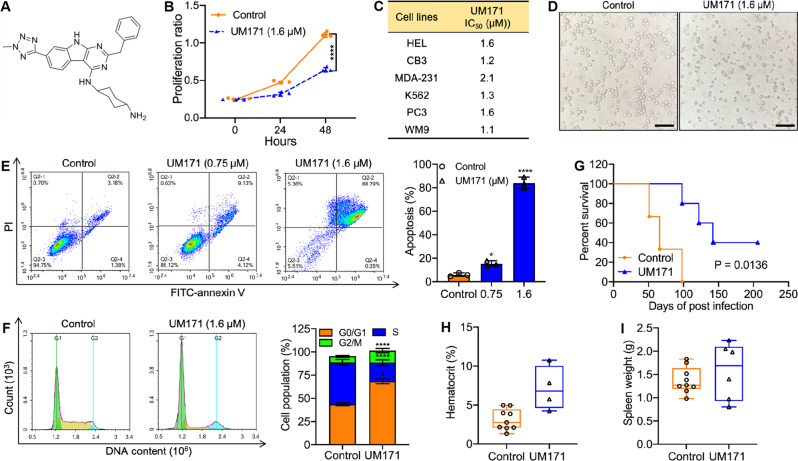
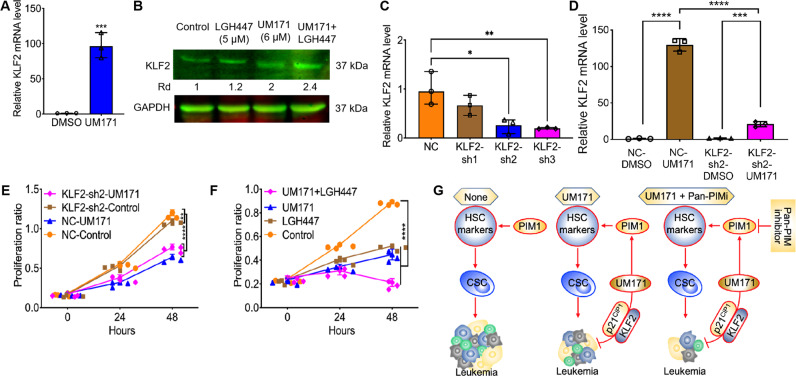
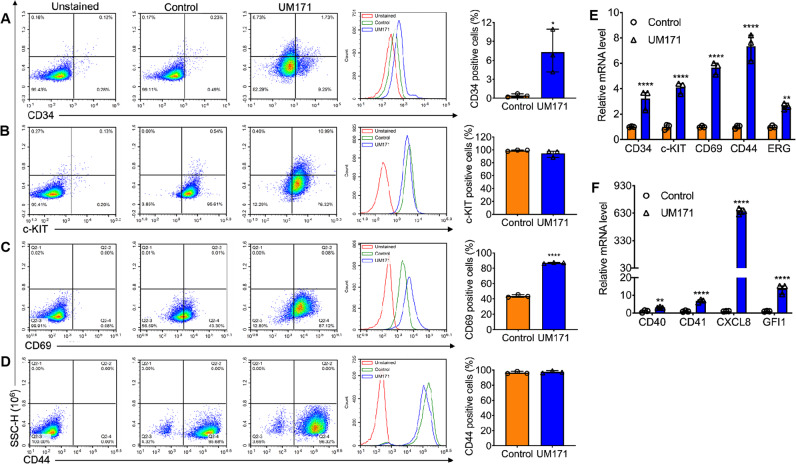
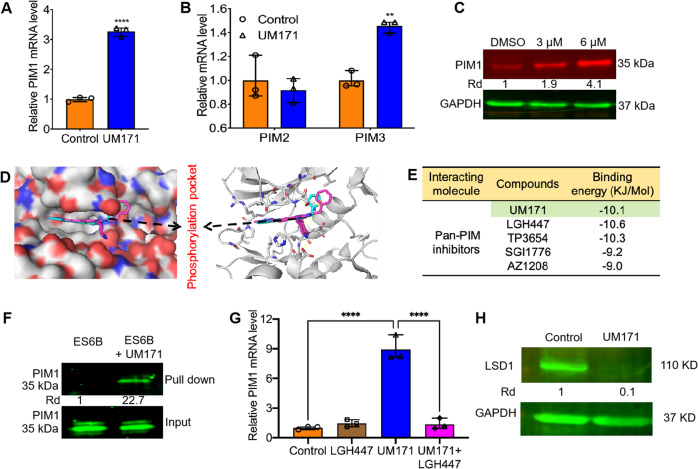
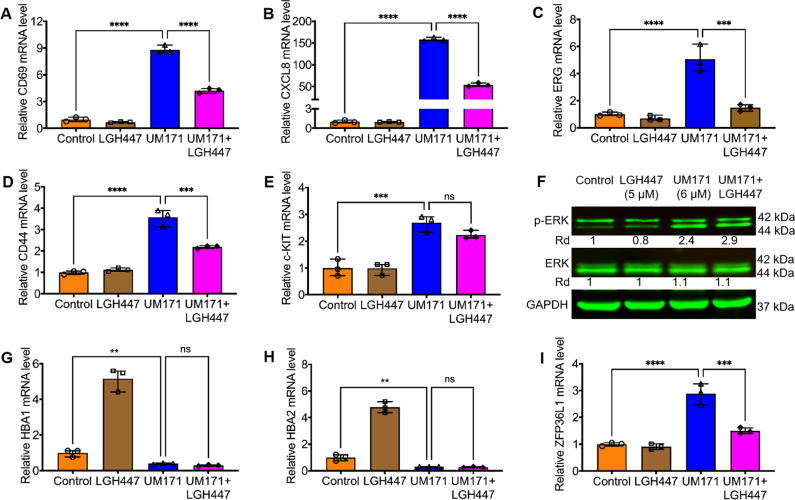
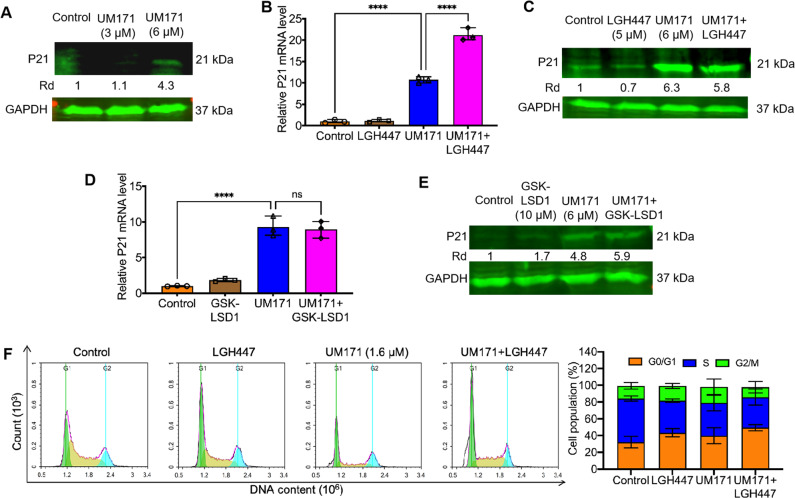
The pyrimido-indole derivative UM171 promotes human Hematopoietic Stem Cells Expansion (HSCE), but its impact on leukemia is not known. Herein, we show in a mouse model of erythroleukemia that UM171 strongly suppresses leukemia progression. UM171 inhibits cell cycle progression and apoptosis of leukemic cells in culture. The effect of UM171 on leukemia differentiation was accompanied by increased expression of HSCE markers. RNAseq analysis combined with Q-RT-PCR and western blotting revealed that the PIM1 protein kinase is highly elevated in response to UM171 treatment. Moreover, docking analysis combined with immunoprecipitation assays revealed high binding affinity of UM171 to PIM1. Interestingly, pan-PIM kinase inhibitors counteracted the effect of UM171 on HSCE marker expression and PIM1 transcription, but not its suppression of leukemic cell growth. Moreover, combination treatment with UM171 and a pan-PIM inhibitor further suppressed leukemic cell proliferation compared to each drug alone. To uncover the mechanism of growth inhibition, we showed strong upregulation of the cyclin-dependent kinase inhibitor P21 and the transcription factor KLF2 by UM171. In accordance, KLF2 knockdown attenuated growth inhibition by UM171. KLF2 upregulation by UM171 is also responsible for the activation of P21 in leukemic cells leading to a G1/S arrest and suppression of leukemogenesis. Thus, suppression of leukemic growth by UM171 through KLF2 and P21 is thwarted by PIM-mediated expansion of leukemic stemness, uncovering a novel therapeutic modality involving combined UM171 plus PIM inhibitors.
嘧啶并吲哚衍生物UM171可促进人类造血干细胞扩增(HSCE),但其对白血病的影响尚不清楚。在此,我们在红白血病小鼠模型中表明,UM171强烈抑制白血病进展。UM171抑制培养中白血病细胞的细胞周期进程和凋亡。UM171对白血病分化的影响伴随着HSCE标志物表达的增加。RNA测序分析结合定量逆转录聚合酶链反应(Q-RT-PCR)和蛋白质免疫印迹法显示,PIM1蛋白激酶在UM171处理后高度上调。此外,对接分析结合免疫沉淀试验显示UM171与PIM1具有高结合亲和力。有趣的是,泛PIM激酶抑制剂抵消了UM171对HSCE标志物表达和PIM1转录的影响,但并未抵消其对白血病细胞生长的抑制作用。此外,与单独使用每种药物相比,UM171与泛PIM抑制剂联合治疗进一步抑制了白血病细胞增殖。为了揭示生长抑制的机制,我们发现UM171强烈上调细胞周期蛋白依赖性激酶抑制剂P21和转录因子KLF2。相应地,KLF2基因敲低减弱了UM171对生长的抑制作用。UM171对KLF2的上调也导致白血病细胞中P21的激活,从而导致G1/S期阻滞并抑制白血病发生。因此,UM171通过KLF2和P21抑制白血病生长的作用被PIM介导的白血病干性扩增所阻碍,从而揭示了一种涉及联合使用UM171和PIM抑制剂的新型治疗方式。