Gao Mingyang, Bian Yang, Huang Lihong, Zhang Jingrui, Li Changyi, Liu Nian, Liu Xiaoxia, Zuo Song, Guo Xueyuan, Wang Wei, Zhao Xin, Long Deyong, Sang Caihua, Tang Ribo, Li Songnan, Dong Jianzeng, Ma Changsheng
Department of Cardiology, Beijing Anzhen Hospital, Capital Medical University, Beijing, China.
Department of Cardiology, Baoji Hospital Affiliated to Xi'an Medical University, Baoji, Shaanxi, China.
Front Cardiovasc Med. 2022 Oct 17;9:1015540. doi: 10.3389/fcvm.2022.1015540. eCollection 2022.
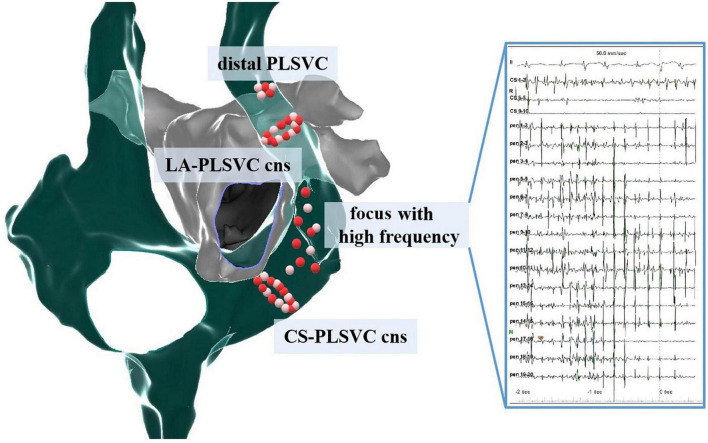
Persistent left superior vena cava (PLSVC) is the most common form of thoracic venous abnormality. Catheter ablation (CA) for atrial fibrillation (AF) can be complicated by the existence of PLSVC, which could act as an important arrhythmogenic mechanism in AF.
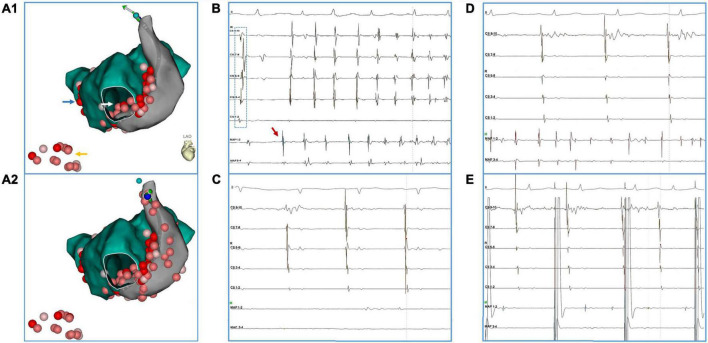
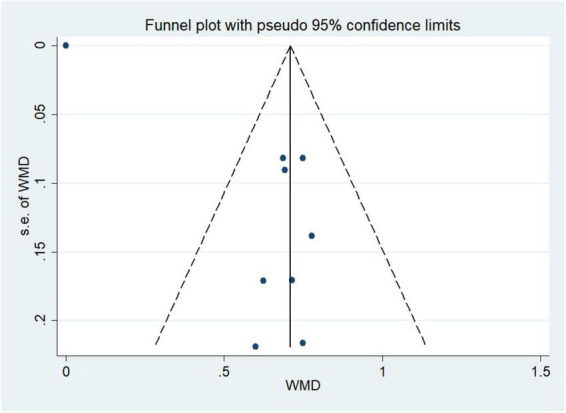
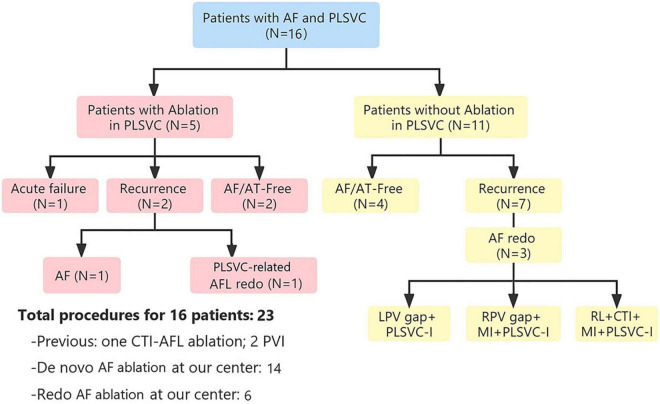
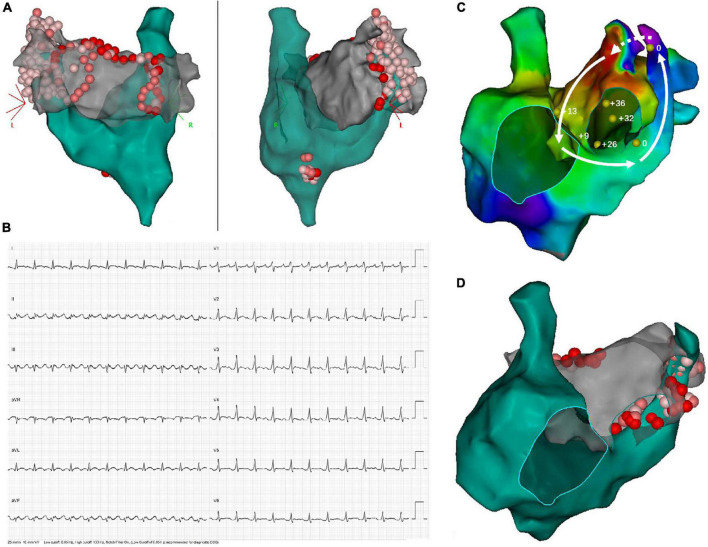
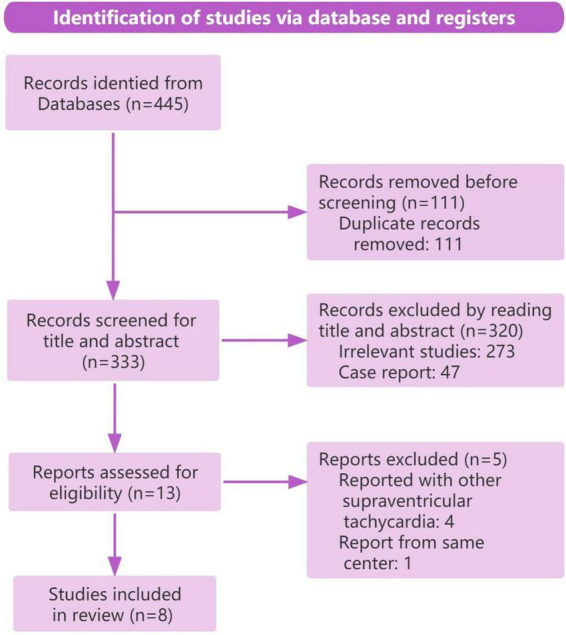
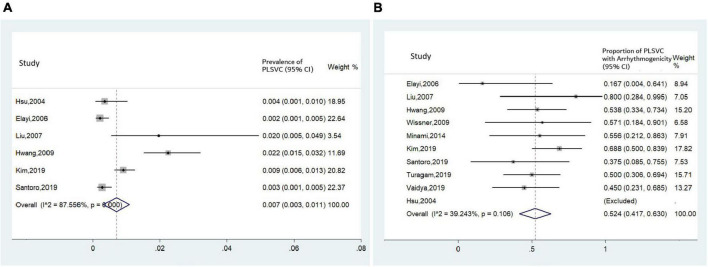
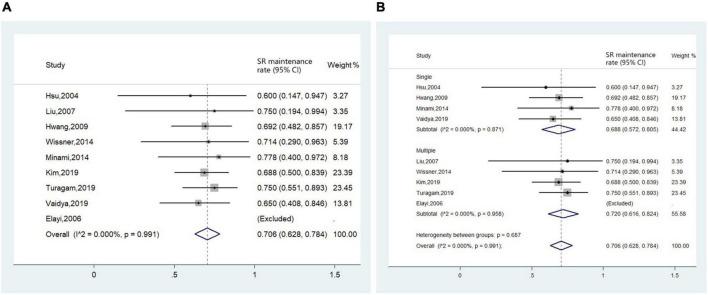
We reported a case series of patients with PLSVC who underwent CA for AF at our center between 2018 and 2021. A systematic search was also performed on PubMed, EMBASE, and Web of Science for research reporting CA for AF in patients with PLSVC. Sixteen patients with PLSVC were identified at our center. Ablation targeting PLSVC was performed in 5 patients in the index procedures and in four patients receiving redo procedures. One patient experienced acute procedure failure. After a median follow-up period of 15 months, only 6 (37.5%) patients remained free from AF/atrial tachycardia (AT) after a single procedure. In the systematic review, 11 studies with 167 patients were identified. Based on the included studies, the estimated prevalence of PLSVC in patients undergoing CA for AF was 0.7%. Ablation targeting PLSVC was performed in 121 (74.7%) patients. Major complications in patients with PLSVC receiving AF ablation procedure included four cases of cardiac tamponades (2%), three cases of cardiac effusion (1.5%), one case of ischemic stroke, and three cases of phrenic nerve injury (1.5%) (one left phrenic nerve and two right phrenic nerve). Pooled analysis revealed that after a median follow-up period of 15.6 months (IQR 12.0-74.0 months), the long-term AF/AT-free rate was 70.6% (95% CI 62.8-78.4%, = 0.0%) (Central illustration). Different ablation strategies for PLSVC were summarized and discussed in the systematic review.
In patients with PLSVC, recurrence of atrial arrhythmia after CA for AF is relatively common. Ablation aiming for PLSVC isolation is necessitated in most patients. The overall risk of procedural complications was within an acceptable range.
永存左上腔静脉(PLSVC)是最常见的胸段静脉异常形式。心房颤动(AF)的导管消融(CA)可能因PLSVC的存在而复杂化,PLSVC可能是AF的一个重要致心律失常机制。
我们报告了2018年至2021年期间在我们中心接受AF的CA治疗的PLSVC患者的病例系列。还对PubMed、EMBASE和Web of Science进行了系统检索,以查找关于PLSVC患者AF的CA治疗的研究报告。我们中心共确定了16例PLSVC患者。在初次手术中有5例患者、在接受再次手术的4例患者中针对PLSVC进行了消融。1例患者出现急性手术失败。中位随访期为15个月后,单次手术后仅有6例(37.5%)患者未发生AF/房性心动过速(AT)。在系统评价中,共纳入11项研究167例患者。根据纳入研究,接受AF的CA治疗的患者中PLSVC的估计患病率为0.7%。121例(74.7%)患者针对PLSVC进行了消融。接受AF消融手术的PLSVC患者的主要并发症包括4例心包填塞(2%)、3例心包积液(1.5%)、1例缺血性卒中以及3例膈神经损伤(1.5%)(1例左膈神经和2例右膈神经)。汇总分析显示,中位随访期为15.6个月(四分位间距12.0 - 74.0个月)后,长期无AF/AT率为70.6%(95%可信区间62.8 - 78.4%,P = 0.0%)(中心插图)。系统评价中总结并讨论了针对PLSVC的不同消融策略。
在PLSVC患者中,AF的CA治疗后房性心律失常复发较为常见。大多数患者需要针对PLSVC隔离进行消融。手术并发症的总体风险在可接受范围内。