Lisi Lucia, Marinelli Silvia, Ciotti Gabriella Maria Pia, Pizzoferrato Michela, Palmerio Federica, Chiavari Marta, Cattaneo Antonino, Navarra Pierluigi
Section of Pharmacology, Department of Healthcare Surveillance and Bioethics, Catholic University Medical School, Fondazione Policlinico Universitario A. Gemelli-IRCCS, Rome, Italy.
European Brain Research Institute-Fondazione Rita Levi Montalcini, Rome, Italy.
Front Cell Neurosci. 2022 Oct 21;16:969058. doi: 10.3389/fncel.2022.969058. eCollection 2022.
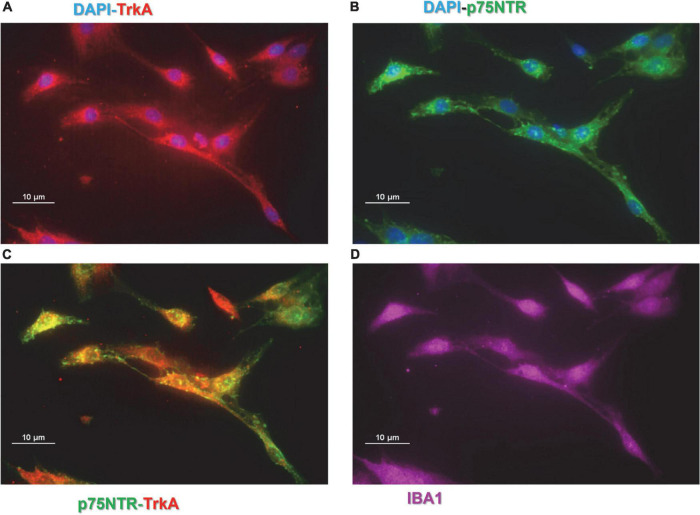
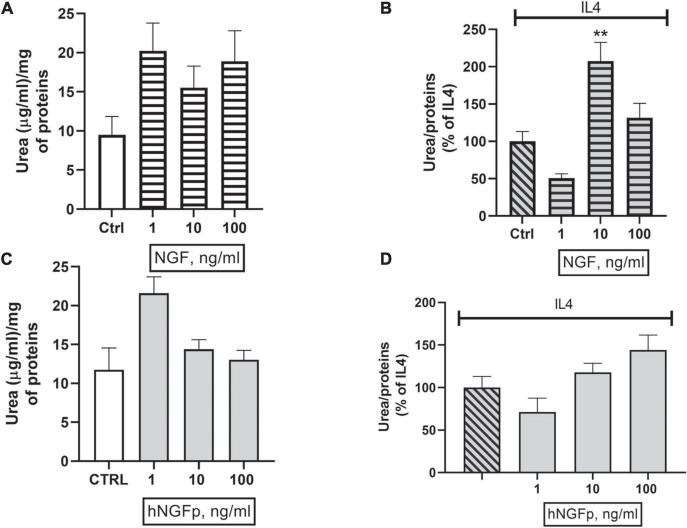
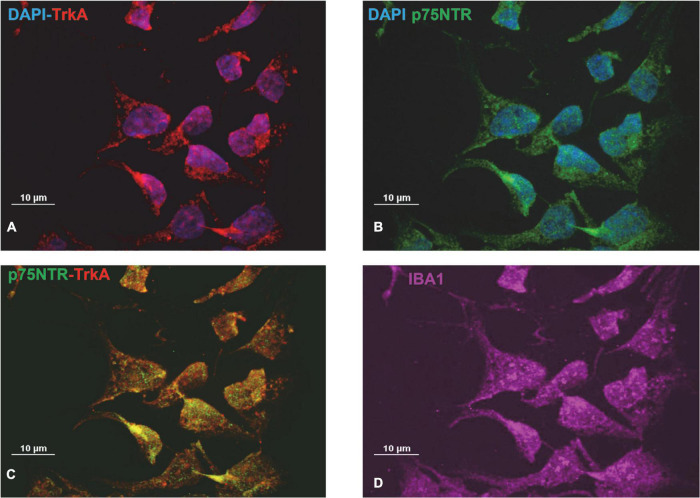
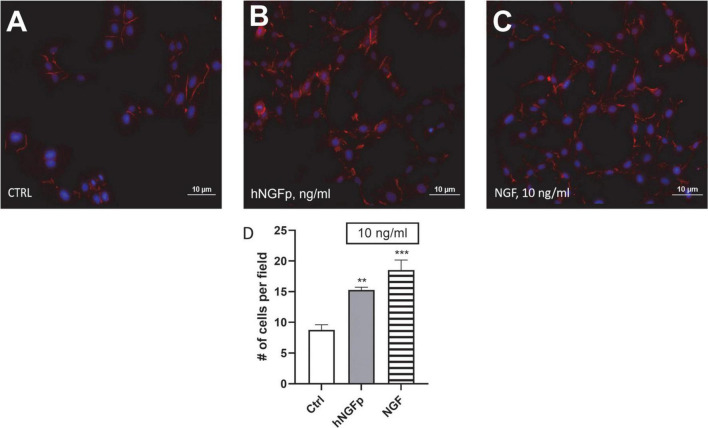
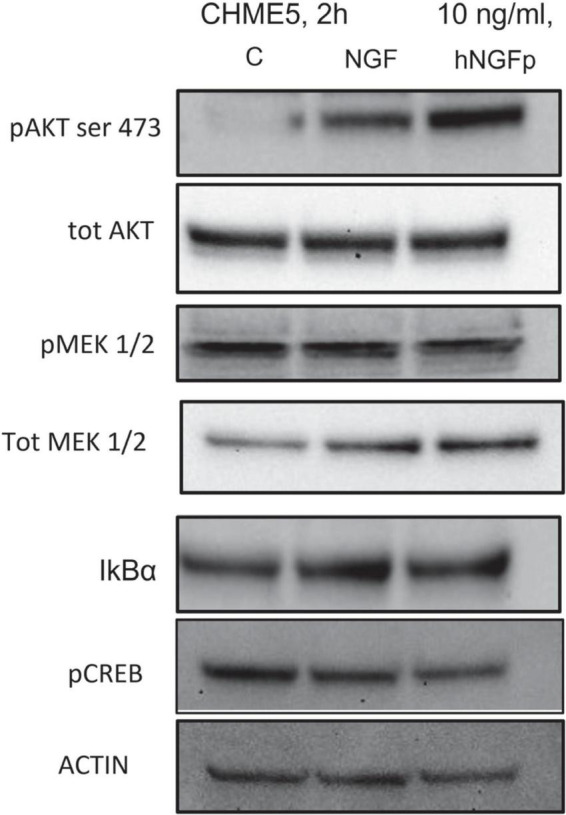
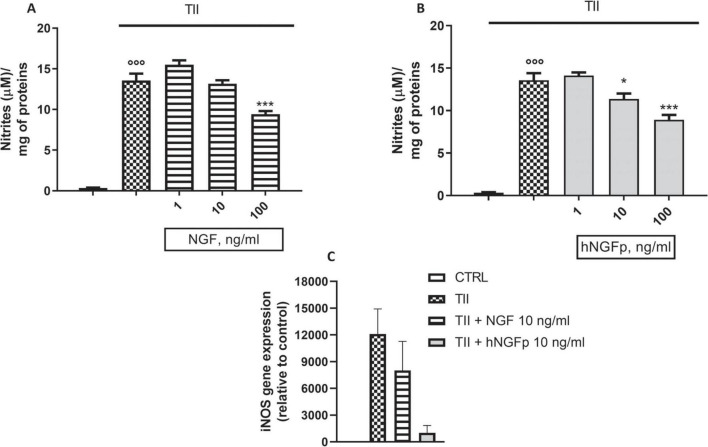
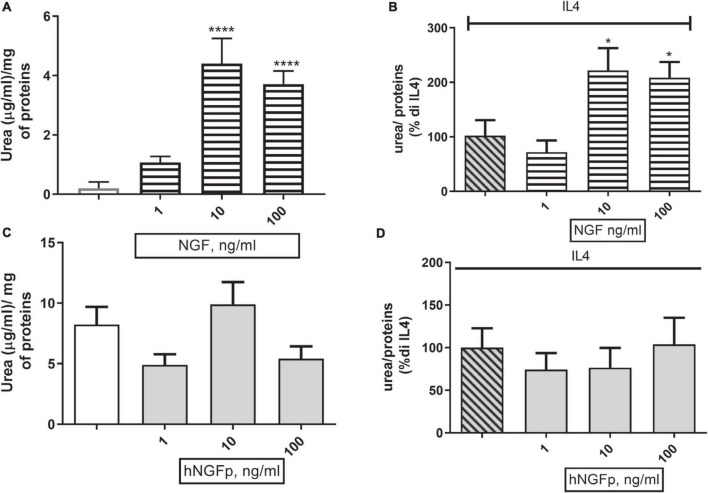
Previous studies in the rat suggest that microglial cells represent a potential druggable target for nerve growth factor (NGF) in the brain. The painless human Nerve Growth Factor (hNGFp) is a recombinant mutated form of human nerve growth factor (hNGF) that shows identical neurotrophic and neuroprotective properties of wild-type NGF but displays at least 10-fold lower algogenic activity. From the pharmacological point of view, hNGFp is a biased tropomyosin receptor kinase A (TrkA) agonist and displays a significantly lower affinity for the p75 neurotrophin receptor (p75NTR). This study aimed to evaluate the expression of TrkA and p75NTR NGF receptors in two different human microglia cell lines, and to investigate the effects of hNGFp and wild-type NGF (NGF) on L-arginine metabolism, taken as a marker of microglia polarization. Both NGF receptors are expressed in human microglia cell lines and are effective in transducing signals triggered by NGF and hNGFp. The latter and, to a lesser extent, NGF inhibit cytokine-stimulated inducible nitric oxide synthase (iNOS) expression and nitric oxide (NO) production in these cells. Conversely NGF but not hNGFp stimulates arginase-mediated urea production.
先前对大鼠的研究表明,小胶质细胞是大脑中神经生长因子(NGF)的一个潜在可药物作用靶点。无痛性人神经生长因子(hNGFp)是一种重组突变形式的人神经生长因子(hNGF),它具有与野生型NGF相同的神经营养和神经保护特性,但致痛活性至少低10倍。从药理学角度来看,hNGFp是一种偏向性的原肌球蛋白受体激酶A(TrkA)激动剂,对p75神经营养因子受体(p75NTR)的亲和力显著较低。本研究旨在评估两种不同的人小胶质细胞系中TrkA和p75NTR NGF受体的表达,并研究hNGFp和野生型NGF(NGF)对L-精氨酸代谢的影响,将其作为小胶质细胞极化的标志物。两种NGF受体均在人小胶质细胞系中表达,并能有效转导由NGF和hNGFp触发的信号。hNGFp以及在较小程度上的NGF可抑制这些细胞中细胞因子刺激的诱导型一氧化氮合酶(iNOS)表达和一氧化氮(NO)生成。相反,NGF而非hNGFp刺激精氨酸酶介导的尿素生成。