Maschio Marta, Maialetti Andrea, Giannarelli Diana, Koudriavtseva Tatiana, Galiè Edvina, Fabi Alessandra
Center for Tumour-Related Epilepsy-Neuro-oncology Unit, IRCCS Regina Elena National Cancer Institute, Rome, Italy.
Clinical Trial Design and Analysis Scientific Directorate, Department of Woman and Child Health and Public Health, Fondazione Policlinico Universitario A. Gemelli IRCCS, Rome, Italy.
Front Neurol. 2022 Oct 21;13:967946. doi: 10.3389/fneur.2022.967946. eCollection 2022.
Retrospective observational study on medical records of patients with epilepsy related brain metastases (BM) to evaluate efficacy, safety and possible interaction with cancer treatment of different anti-seizure medications (ASMs) and the risk of seizures.
We consecutively reviewed all medical records of epilepsy-related BM patients from 2010 to 2020 who were followed for at least one month at the Brain Tumour-related Epilepsy Center of the IRCCS Regina Elena National Cancer Institute Rome, Italy.
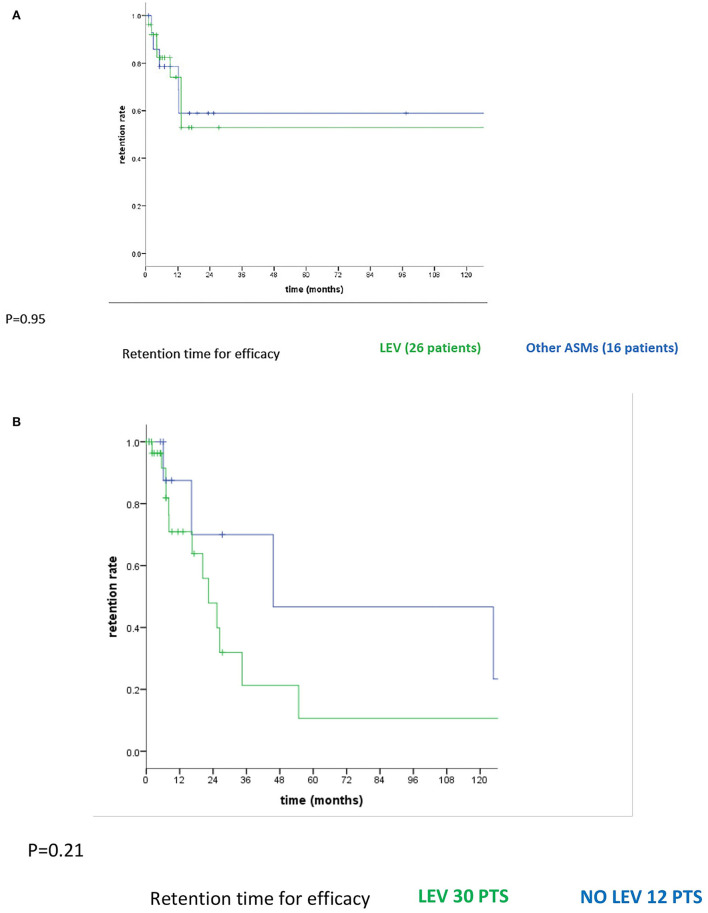
We selected 111 cancer patients. Of these, only 42 had at least undergone a second neurological examination. In the whole population, 95 (85.2%) had seizures and 16 patients had no seizures (14.4%). The most frequently first ASM prescribed was LEV (40.5%). We observed a significant correlation between tumor site and probability of having seizures, but not between seizure type and age (>65 or <65 years). Among 42 patients, 26 were administered levetiracetam, followed by oxcarbazepine. Until the last follow-up, 19 never changed the first ASM, maintained the same dosage and remained seizure free. After a median of 7 months, 16 (38.1%) required changes in therapeutic treatment due to inefficacy. At the last follow-up, 24 patients (57.1%) were seizure free. Eighteen patients (42.8%) never achieved freedom from seizures despite had at least 2 therapy changes. Two patients changed ASM due to adverse events and 1 to phenobarbital owing to the interaction with cancer treatment. The mean daily dose of first ASM in all 42 patients was very close to the Defined Daily Dose (DDD).
In BM patients seizure incidence could be underestimated; a team evaluation performed by oncologist and neurologist together, could guarantee an accurate taking care of both oncological illness and epilepsy, in this fragile patient population. More than 50% of our patients respond to monotherapy with new generation ASMs. Furthermore we deemed in patients receiving chemotherapy the choice of ASM should consider possible interactions with antitumor therapies, for this reason newer generation ASMs should be the preferred choice. It is necessary to get close to the DDD before considering an ASM ineffective in seizure control.
对癫痫相关性脑转移(BM)患者的病历进行回顾性观察研究,以评估不同抗癫痫药物(ASM)的疗效、安全性以及与癌症治疗的可能相互作用和癫痫发作风险。
我们连续回顾了2010年至2020年期间在意大利罗马 Regina Elena 国家癌症研究所脑肿瘤相关性癫痫中心随访至少1个月的癫痫相关性BM患者的所有病历。
我们选取了111例癌症患者。其中,只有42例至少接受了第二次神经学检查。在总体人群中,95例(85.2%)有癫痫发作,16例患者无癫痫发作(14.4%)。最常开具的第一种ASM是左乙拉西坦(LEV,40.5%)。我们观察到肿瘤部位与癫痫发作概率之间存在显著相关性,但癫痫发作类型与年龄(>65岁或<65岁)之间无相关性。在42例患者中,26例使用了左乙拉西坦,其次是奥卡西平。直到最后一次随访,19例患者从未改变第一种ASM,维持相同剂量且无癫痫发作。中位7个月后,16例(38.1%)因治疗无效需要更改治疗方案。在最后一次随访时,24例患者(57.1%)无癫痫发作。18例患者(42.8%)尽管至少更改了2次治疗方案,但仍未实现无癫痫发作。2例患者因不良事件更改了ASM,1例因与癌症治疗相互作用而改用苯巴比妥。所有42例患者第一种ASM的平均日剂量非常接近限定日剂量(DDD)。
在BM患者中,癫痫发作发生率可能被低估;由肿瘤学家和神经学家共同进行团队评估,可以确保在这个脆弱的患者群体中同时准确地治疗肿瘤疾病和癫痫。我们超过50%的患者对新一代ASM单药治疗有反应。此外,我们认为在接受化疗的患者中,ASM的选择应考虑与抗肿瘤治疗的可能相互作用,因此新一代ASM应是首选。在认为一种ASM对癫痫控制无效之前,有必要接近DDD。