Department of Biotechnology, Ramaiah Institute of Technology, Bengaluru, Karnataka, 560054, India.
Department of Biotechnology and Bioinformatics, Jaypee University of Information Technology (JUIT), Solan, Himachal Pradesh, 173234, India.
Sci Rep. 2022 Nov 7;12(1):18872. doi: 10.1038/s41598-022-23488-z.
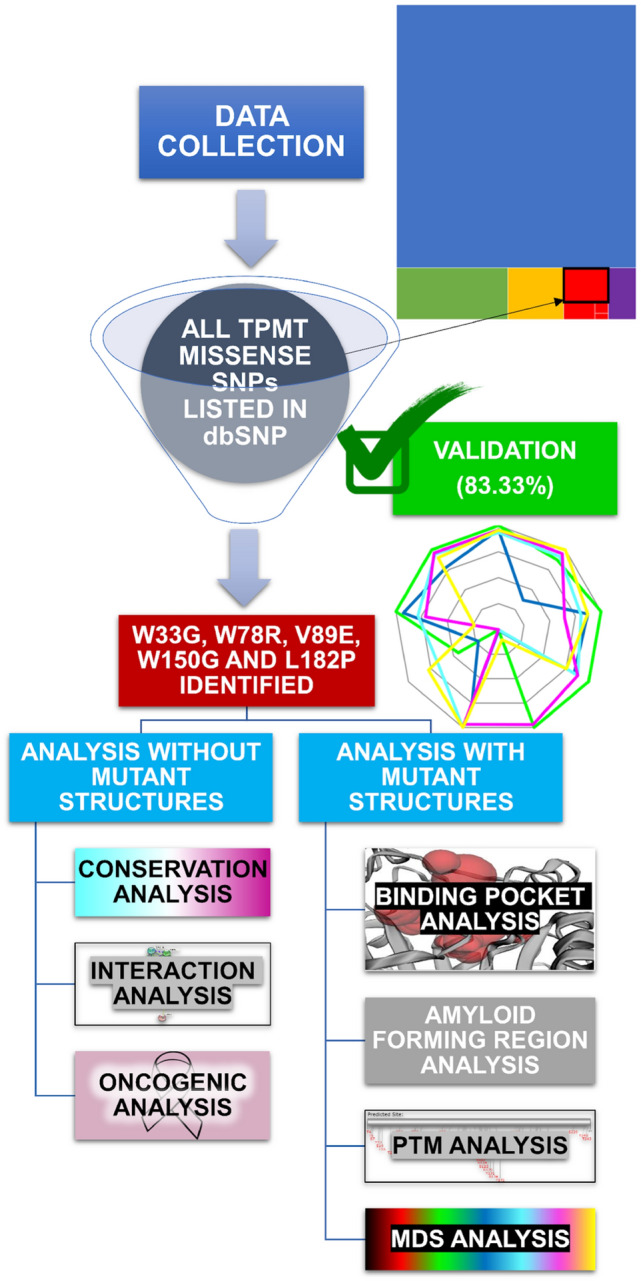
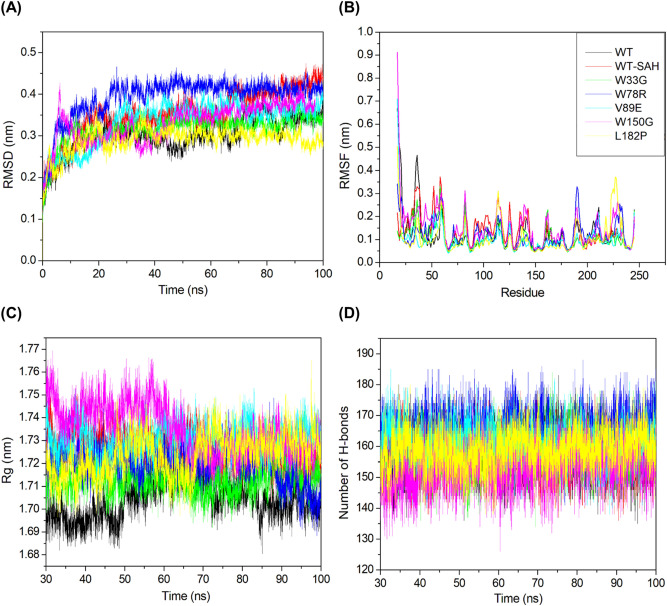
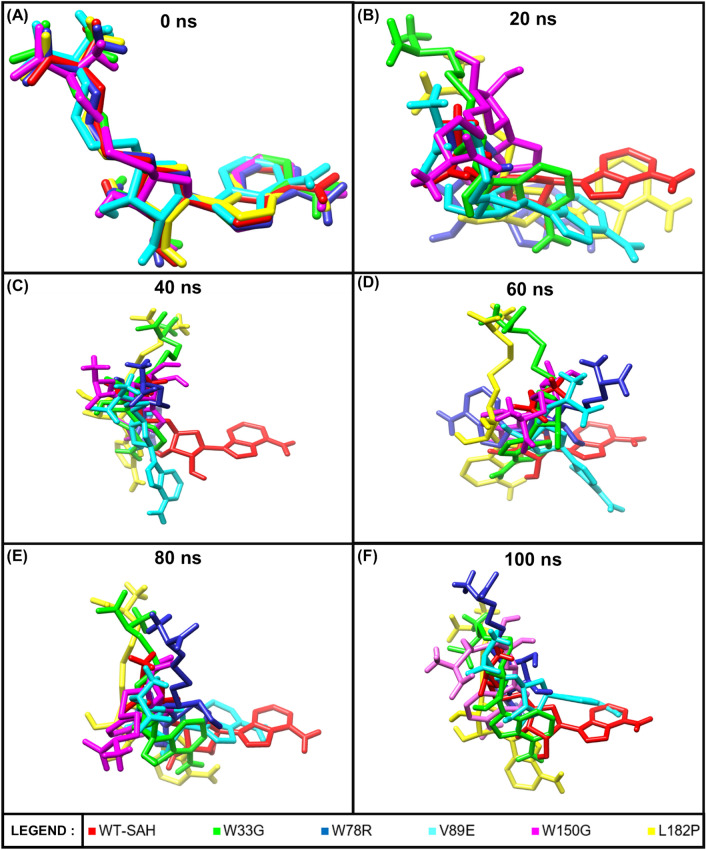
Polymorphisms of Thiopurine S-methyltransferase (TPMT) are known to be associated with leukemia, inflammatory bowel diseases, and more. The objective of the present study was to identify novel deleterious missense SNPs of TPMT through a comprehensive in silico protocol. The initial SNP screening protocol used to identify deleterious SNPs from the pool of all TPMT SNPs in the dbSNP database yielded an accuracy of 83.33% in identifying extremely dangerous variants. Five novel deleterious missense SNPs (W33G, W78R, V89E, W150G, and L182P) of TPMT were identified through the aforementioned screening protocol. These 5 SNPs were then subjected to conservation analysis, interaction analysis, oncogenic and phenotypic analysis, structural analysis, PTM analysis, and molecular dynamics simulations (MDS) analysis to further assess and analyze their deleterious nature. Oncogenic analysis revealed that all five SNPs are oncogenic. MDS analysis revealed that all SNPs are deleterious due to the alterations they cause in the binding energy of the wild-type protein. Plasticity-induced instability caused by most of the mutations as indicated by the MDS results has been hypothesized to be the reason for this alteration. While in vivo or in vitro protocols are more conclusive, they are often more challenging and expensive. Hence, future research endeavors targeted at TPMT polymorphisms and/or their consequences in relevant disease progressions or treatments, through in vitro or in vivo means can give a higher priority to these SNPs rather than considering the massive pool of all SNPs of TPMT.
硫嘌呤甲基转移酶 (TPMT) 的多态性与白血病、炎症性肠病等有关。本研究的目的是通过综合的计算方法确定 TPMT 中新型的有害错义 SNP。最初的 SNP 筛选方案用于从 dbSNP 数据库中所有 TPMT SNP 池中识别有害 SNP,其识别极度危险变异的准确率为 83.33%。通过上述筛选方案,我们确定了 TPMT 的 5 个新型有害错义 SNP(W33G、W78R、V89E、W150G 和 L182P)。然后对这 5 个 SNP 进行保守性分析、相互作用分析、致癌和表型分析、结构分析、PTM 分析和分子动力学模拟 (MDS) 分析,以进一步评估和分析其有害性。致癌分析表明,所有 5 个 SNP 都是致癌的。MDS 分析表明,所有 SNP 都是有害的,因为它们改变了野生型蛋白的结合能。MDS 结果表明,大多数突变引起的构象诱导不稳定性被假设是这种改变的原因。虽然体内或体外方案更具结论性,但它们通常更具挑战性和成本更高。因此,未来的研究工作针对 TPMT 多态性及其在相关疾病进展或治疗中的后果,通过体外或体内手段,可以优先考虑这些 SNP,而不是考虑 TPMT 的所有 SNP 池。