Yoshikawa Ryo, Fukui Tomoaki, Oe Keisuke, Kumabe Yohei, Oda Takahiro, Sawauchi Kenichi, Takase Kyohei, Yamamoto Yuya, Sakai Yoshitada, Kuroda Ryosuke, Niikura Takahiro
Department of Orthopaedic Surgery, Kobe University Graduate School of Medicine, Kobe 650-0017, Japan.
Division of Rehabilitation Medicine, Kobe University Graduate School of Medicine, Kobe 650-0017, Japan.
Curr Issues Mol Biol. 2022 Nov 9;44(11):5562-5578. doi: 10.3390/cimb44110377.
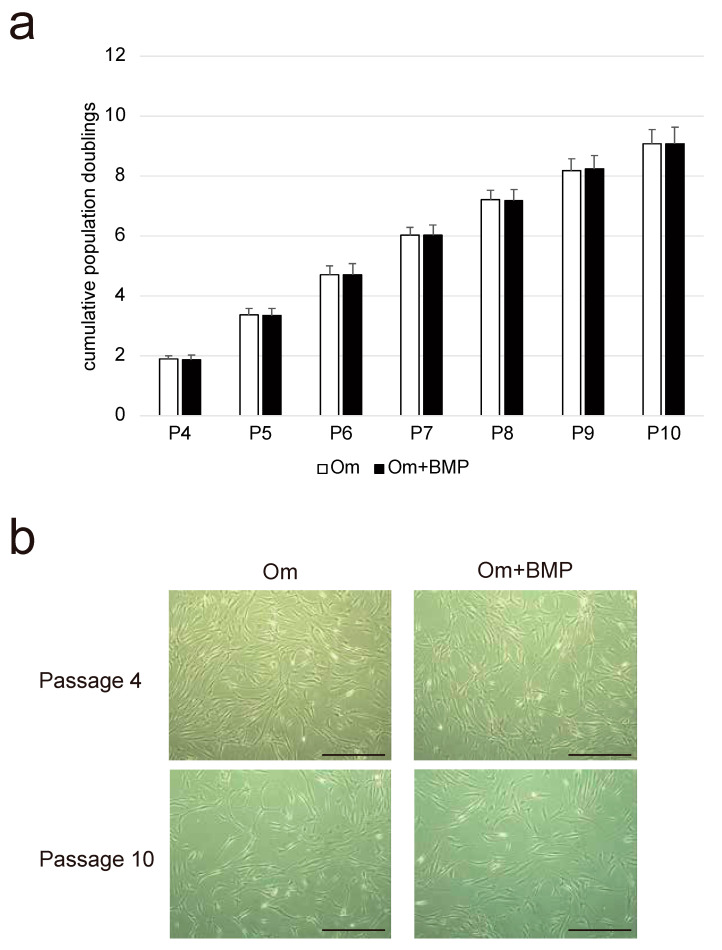
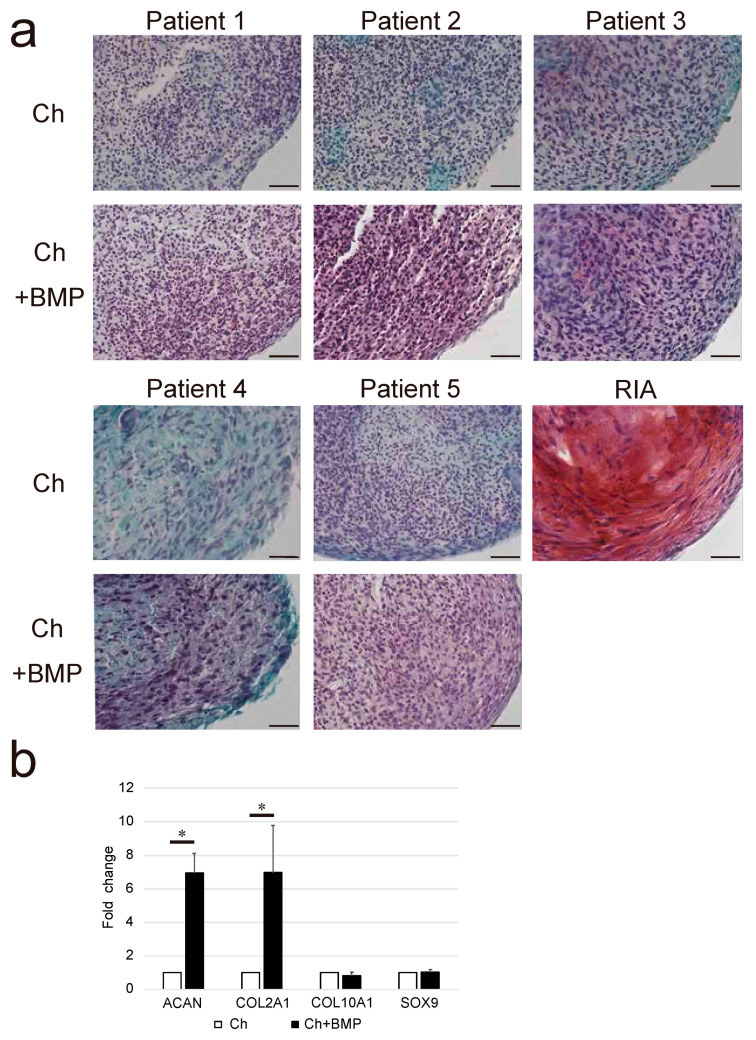
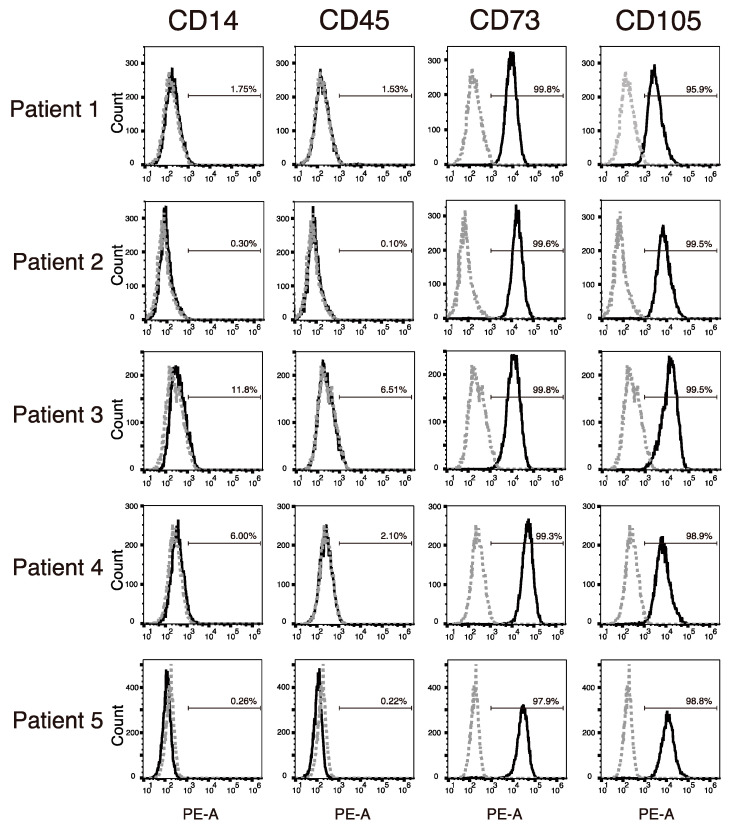
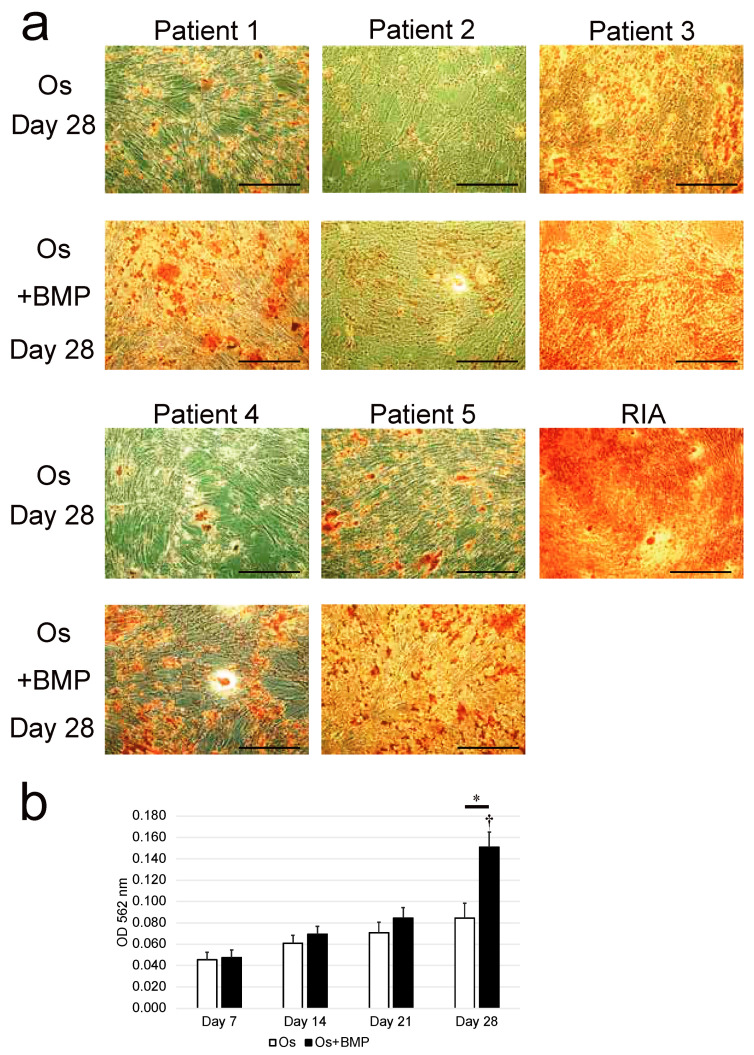
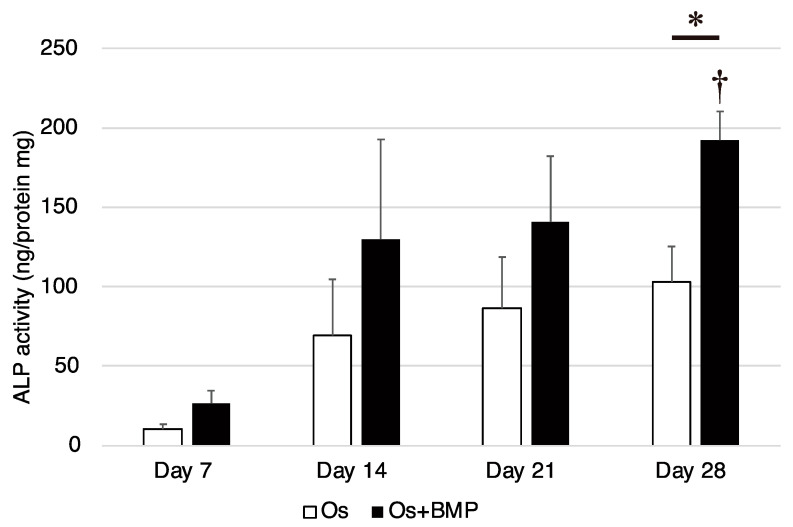
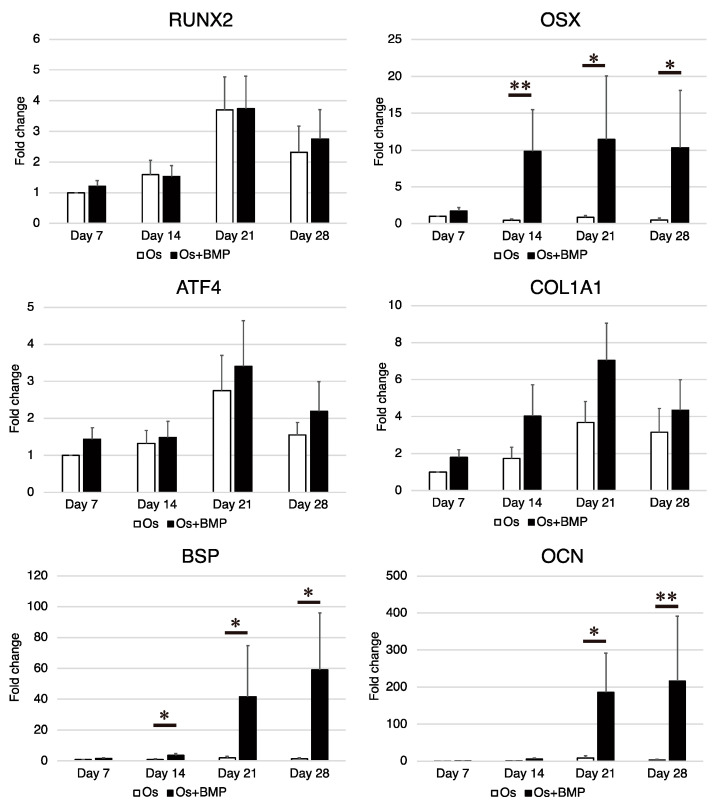
In this study, we examined the proliferation capability and osteogenic and chondrogenic differentiation potential of non-hypertrophic nonunion cells (NHNCs), and the effect of -derived BMP-2 (E-BMP-2) on them. We enrolled five patients with non-hypertrophic nonunion. NHNCs isolated from nonunion tissue sampled during surgery were cultured, passaged, counted every 14 days, and analyzed. NHNCs were homogenous fibroblastic adherent cells and long-lived through at least 10 passages, with a slight decline. The cells were consistently positive for mesenchymal stem cell-related markers CD73 and CD105, and negative for the hematopoietic markers CD14 and CD45. NHNCs could differentiate into osteoblast lineage cells; however, they did not have strong calcification or sufficient chondrogenic differentiation capability. E-BMP-2 did not affect the proliferative capability of the cells but improved their osteogenic differentiation capability by increasing alkaline phosphatase activity and upregulating the gene expression of osterix, bone sialoprotein, and osteocalcin. E-BMP-2 enhanced their chondrogenic differentiation capability by upregulating the gene expression of aggrecan and collagen type II. We showed, for the first time, that NHNCs have the capacity to differentiate into osteoblast-lineage cells, although the chondrogenic differentiation potential was poor. Local application of E-BMP-2 with preservation of nonunion tissue is a potential treatment option for non-hypertrophic nonunion.
在本研究中,我们检测了非肥大性骨不连细胞(NHNCs)的增殖能力以及成骨和成软骨分化潜能,以及表皮生长因子衍生的骨形态发生蛋白-2(E-BMP-2)对它们的影响。我们纳入了5例非肥大性骨不连患者。从手术中采集的骨不连组织中分离出的NHNCs进行培养、传代,每14天计数并分析。NHNCs是均一的成纤维细胞贴壁细胞,至少可传代10次,活力略有下降。这些细胞间充质干细胞相关标志物CD73和CD105持续呈阳性,造血标志物CD14和CD45呈阴性。NHNCs可分化为成骨细胞系细胞;然而,它们没有强烈的钙化或足够的软骨分化能力。E-BMP-2不影响细胞的增殖能力,但通过增加碱性磷酸酶活性和上调osterix、骨唾液蛋白和骨钙素的基因表达来提高其成骨分化能力。E-BMP-2通过上调聚集蛋白聚糖和II型胶原的基因表达来增强其软骨分化能力。我们首次表明,NHNCs有分化为成骨细胞系细胞的能力,尽管软骨分化潜能较差。保留骨不连组织局部应用E-BMP-2是治疗非肥大性骨不连的一种潜在选择。