Staurenghi Erica, Leoni Valerio, Lo Iacono Marco, Sottero Barbara, Testa Gabriella, Giannelli Serena, Leonarduzzi Gabriella, Gamba Paola
Department of Clinical and Biological Sciences, University of Turin, Orbassano, 10043 Turin, Italy.
Laboratory of Clinical Biochemistry, Hospital Pius XI of Desio, ASST-Brianza, University of Milano-Bicocca, 20126 Monza, Italy.
Antioxidants (Basel). 2022 Nov 1;11(11):2168. doi: 10.3390/antiox11112168.
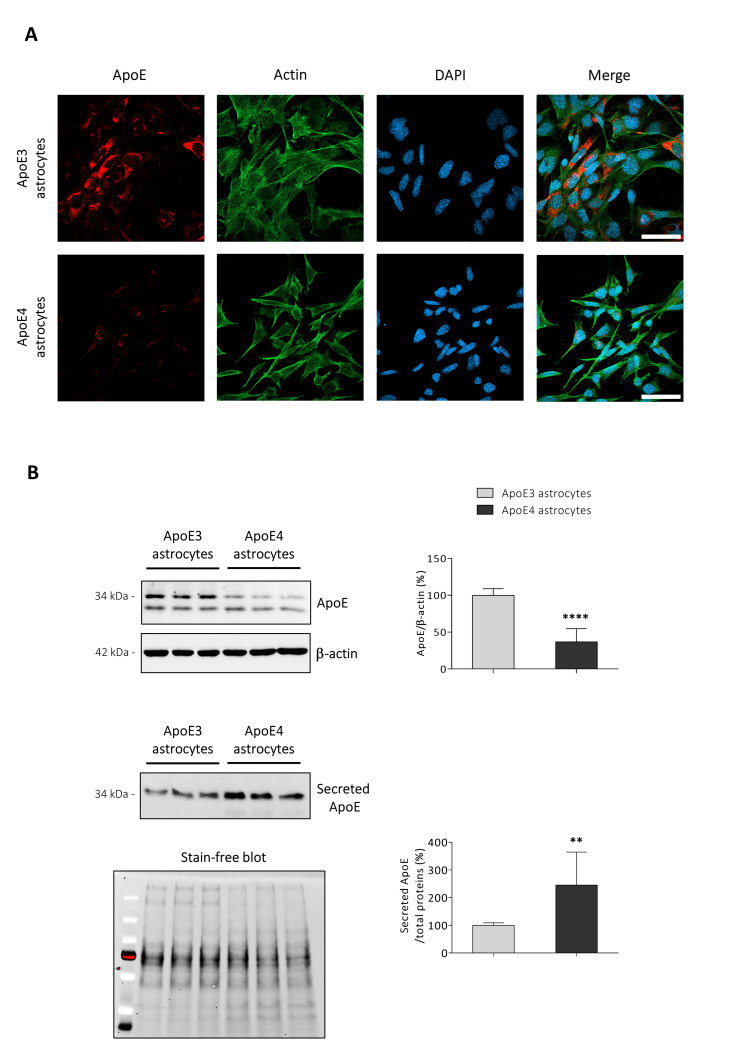
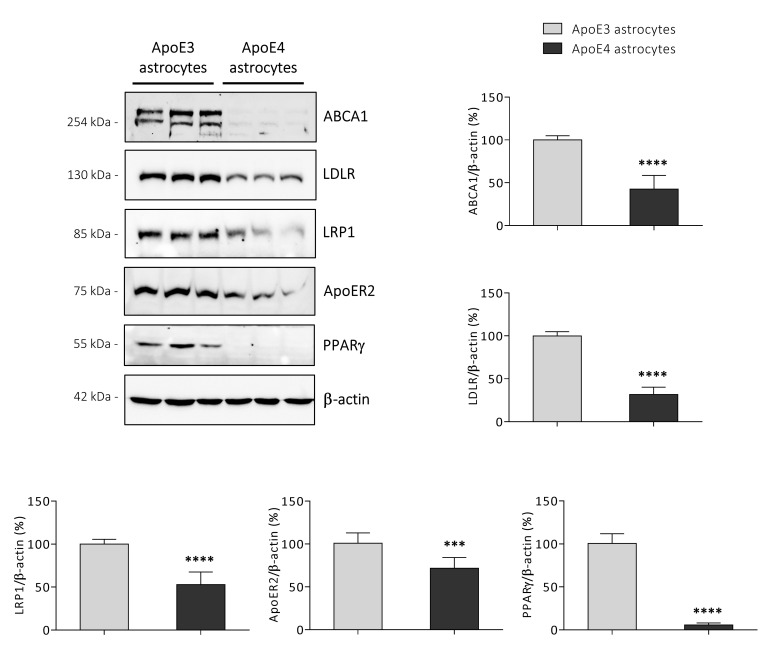
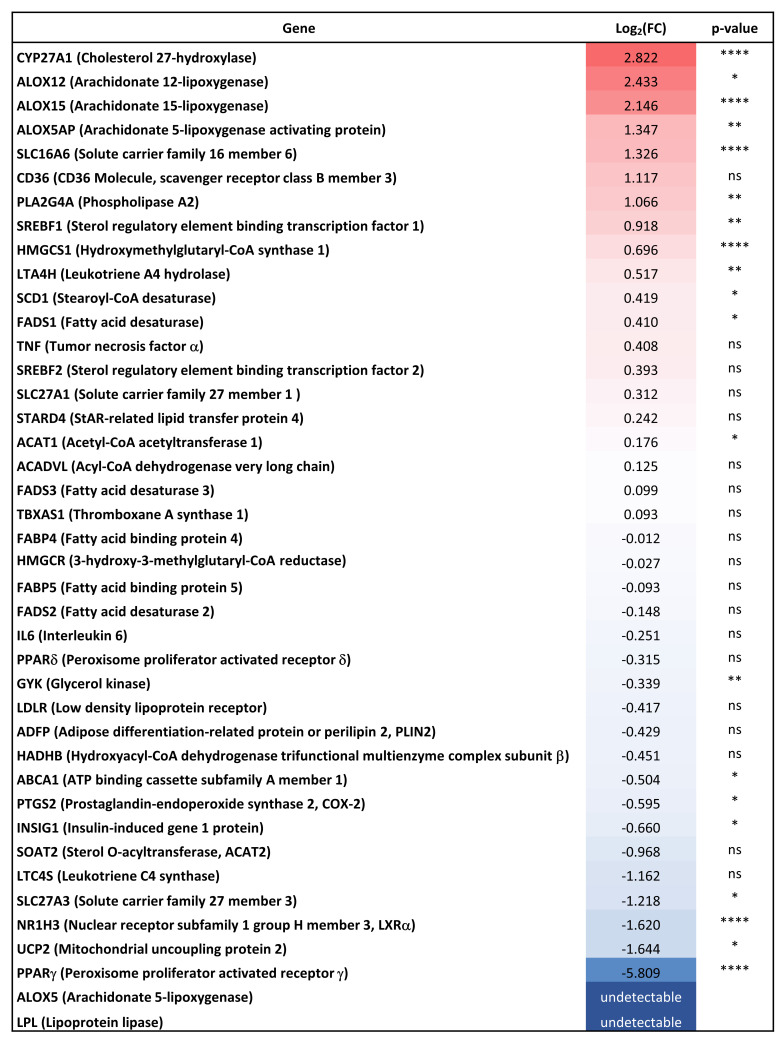
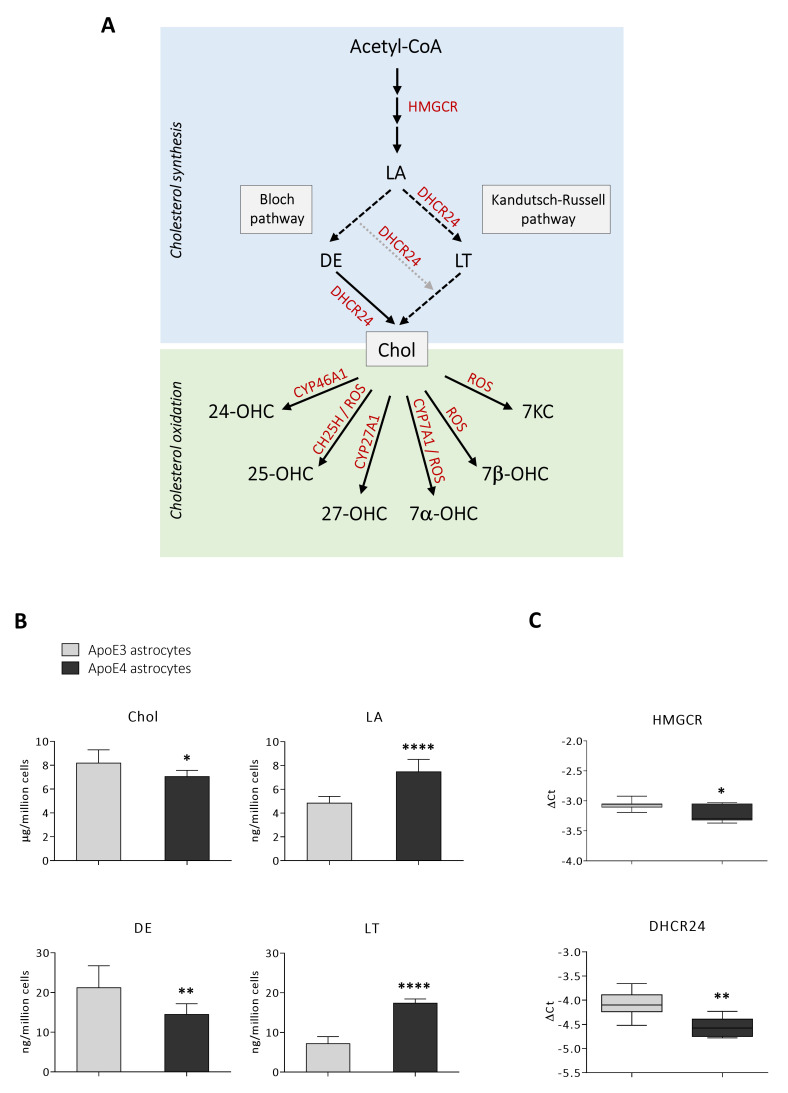
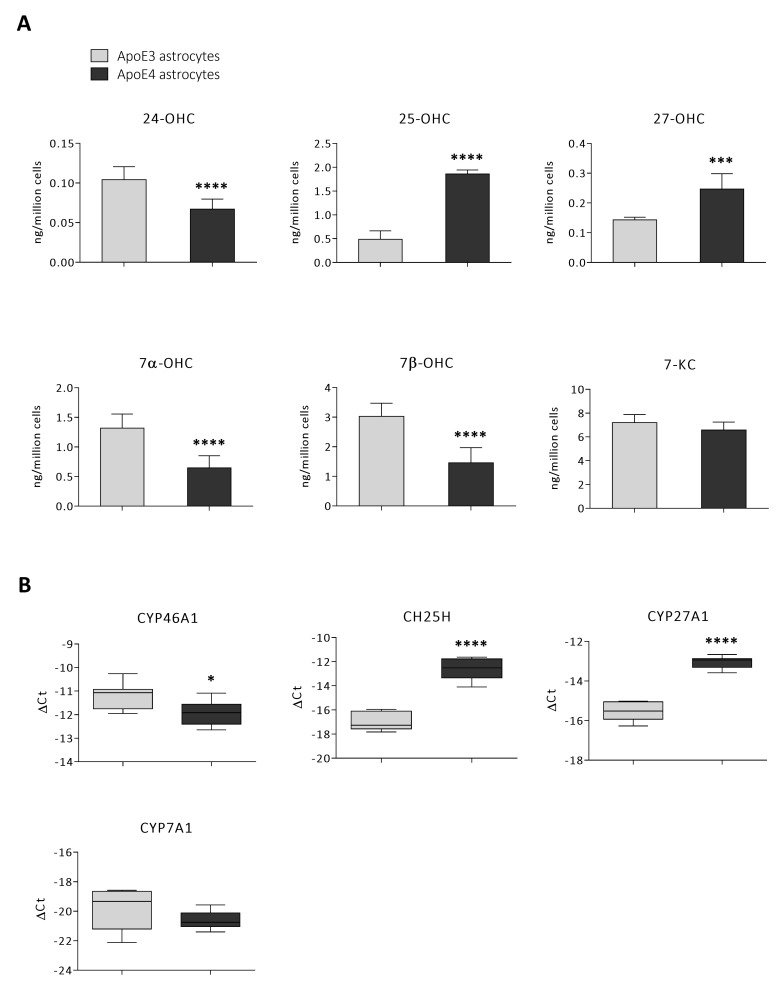
The strongest genetic risk factor for sporadic Alzheimer's disease (AD) is the presence of the ε4 allele of the apolipoprotein E (ApoE) gene, the major apolipoprotein involved in brain cholesterol homeostasis. Being astrocytes the main producers of cholesterol and ApoE in the brain, we investigated the impact of the ApoE genotype on astrocyte cholesterol homeostasis. Two mouse astrocytic cell lines expressing the human ApoE3 or ApoE4 isoform were employed. Gas chromatography-mass spectrometry (GC-MS) analysis pointed out that the levels of total cholesterol, cholesterol precursors, and various oxysterols are altered in ApoE4 astrocytes. Moreover, the gene expression analysis of more than 40 lipid-related genes by qRT-PCR showed that certain genes are up-regulated (e.g., CYP27A1) and others down-regulated (e.g., PPARγ, LXRα) in ApoE4, compared to ApoE3 astrocytes. Beyond confirming the significant reduction in the levels of PPARγ, a key transcription factor involved in the maintenance of lipid homeostasis, Western blotting showed that both intracellular and secreted ApoE levels are altered in ApoE4 astrocytes, as well as the levels of receptors and transporters involved in lipid uptake/efflux (ABCA1, LDLR, LRP1, and ApoER2). Data showed that the ApoE genotype clearly affects astrocytic cholesterol homeostasis; however, further investigation is needed to clarify the mechanisms underlying these differences and the consequences on neighboring cells. Indeed, drug development aimed at restoring cholesterol homeostasis could be a potential strategy to counteract AD.
散发性阿尔茨海默病(AD)最强的遗传风险因素是载脂蛋白E(ApoE)基因的ε4等位基因的存在,ApoE是参与脑胆固醇稳态的主要载脂蛋白。由于星形胶质细胞是脑中胆固醇和ApoE的主要产生者,我们研究了ApoE基因型对星形胶质细胞胆固醇稳态的影响。我们使用了两种表达人ApoE3或ApoE4异构体的小鼠星形胶质细胞系。气相色谱-质谱联用(GC-MS)分析指出,ApoE4星形胶质细胞中总胆固醇、胆固醇前体和各种氧化甾醇的水平发生了改变。此外,通过qRT-PCR对40多个脂质相关基因进行的基因表达分析表明,与ApoE3星形胶质细胞相比,ApoE4星形胶质细胞中某些基因上调(如CYP27A1),而其他基因下调(如PPARγ、LXRα)。除了证实参与维持脂质稳态的关键转录因子PPARγ水平显著降低外,蛋白质印迹法显示ApoE4星形胶质细胞中细胞内和分泌的ApoE水平均发生了改变,以及参与脂质摄取/流出的受体和转运蛋白(ABCA1、LDLR、LRP1和ApoER2)的水平也发生了改变。数据表明,ApoE基因型明显影响星形胶质细胞的胆固醇稳态;然而,需要进一步研究以阐明这些差异背后的机制以及对邻近细胞的影响。实际上,旨在恢复胆固醇稳态的药物开发可能是对抗AD的一种潜在策略。