Recuero Amanda Medeiros, Gomes Larissa Garcia, Maciel Gustavo Arantes Rosa, de Mello Malta Fernanda, Salles Ana Paula Moreira, Vezozzo Denise Cerqueira Paranaguá, Baracat Edmund Chada, Pinho João Renato Rebello, Carrilho Flair José, Stefano José Tadeu, Oliveira Claudia P
Laboratório de Gastroenterologia Clínica e Experimental (LIM-07), Division of Clinical Gastroenterology and Hepatology, Department of Gastroenterology, Hospital das Clínicas, School of Medicine, University of Sao Paulo, Sao Paulo 048293, Brazil.
Division of Clinical Gastroenterology and Hepatology, Department of Gastroenterology, Hospital das Clínicas, School of Medicine, University of São Paulo, Sao Paulo 048293, Brazil.
Biomedicines. 2022 Oct 27;10(11):2719. doi: 10.3390/biomedicines10112719.
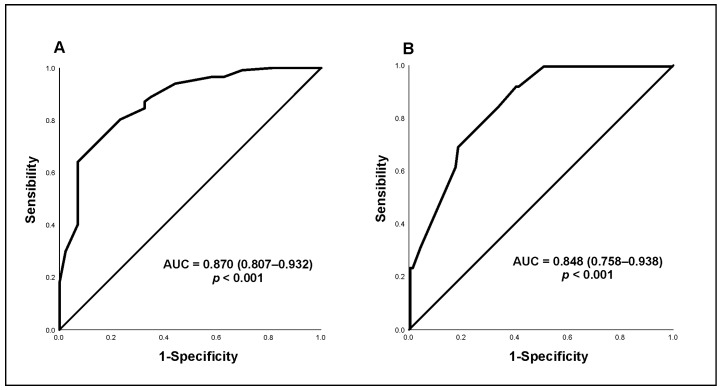
Background: The aim of this study was to determine the frequency of the rs738409 polymorphism in the patatin-like phospholipase domain containing 3 (PNPLA3) gene in patients with polycystic ovary syndrome (PCOS) and its impact on nonalcoholic fatty liver disease (NAFLD) risk and severity. We also evaluated other risk factors associated with NAFLD and advanced fibrosis. Methods: This was a cross-sectional study involving 163 patients with PCOS at a tertiary center. Genotyping for the PNPLA3 polymorphism was undertaken using a TaqMan assay. The degree of fibrosis was defined by transient elastography. Results: The prevalence of NAFLD was 72.4%, and the polymorphism was heterozygous in 41.7% and homozygous in 8% of patients. Homeostasis model assessment of insulin resistance ≥ 2.5 was the main factor associated with the risk of developing NAFLD (OR = 4.313, p = 0.022), and its effect was amplified by the polymorphism (OR = 12.198, p = 0.017). Age > 32 years also conferred a higher risk for NAFLD. HDL values ≥ 50 mg/dL conferred protection against the outcome. Metabolic syndrome (OR = 13.030, p = 0.020) and AST > 32 U/L (OR = 9.039, p = 0.009) were independent risk factors for advanced fibrosis. Conclusions: In women with PCOS, metabolic characteristics are more relevant than PNPLA3 polymorphism regarding the risk for NAFLD and its advanced forms, but these factors can act synergistically, increasing disease risk.
本研究旨在确定多囊卵巢综合征(PCOS)患者中含patatin样磷脂酶结构域3(PNPLA3)基因的rs738409多态性的频率及其对非酒精性脂肪性肝病(NAFLD)风险和严重程度的影响。我们还评估了与NAFLD和晚期纤维化相关的其他风险因素。方法:这是一项在三级中心对163例PCOS患者进行的横断面研究。使用TaqMan分析对PNPLA3多态性进行基因分型。纤维化程度通过瞬时弹性成像确定。结果:NAFLD的患病率为72.4%,41.7%的患者多态性为杂合子,8%为纯合子。胰岛素抵抗稳态模型评估≥2.5是与发生NAFLD风险相关的主要因素(OR = 4.313,p = 0.022),并且多态性会放大其作用(OR = 12.198,p = 0.017)。年龄>32岁也会增加患NAFLD的风险。高密度脂蛋白(HDL)值≥50 mg/dL可预防该结果。代谢综合征(OR = 13.030,p = 0.020)和天冬氨酸转氨酶(AST)>32 U/L(OR = 9.039,p = 0.009)是晚期纤维化的独立风险因素。结论:在PCOS女性中,就NAFLD及其晚期形式的风险而言,代谢特征比PNPLA3多态性更相关,但这些因素可协同作用,增加疾病风险。