Institute of Pharmacology and Structural Biology (IPBS), University of Toulouse, CNRS, 31000 Toulouse, France.
Faculté de Santé, Université Paris Cité, 75006 Paris, France.
Int J Mol Sci. 2022 Nov 7;23(21):13623. doi: 10.3390/ijms232113623.
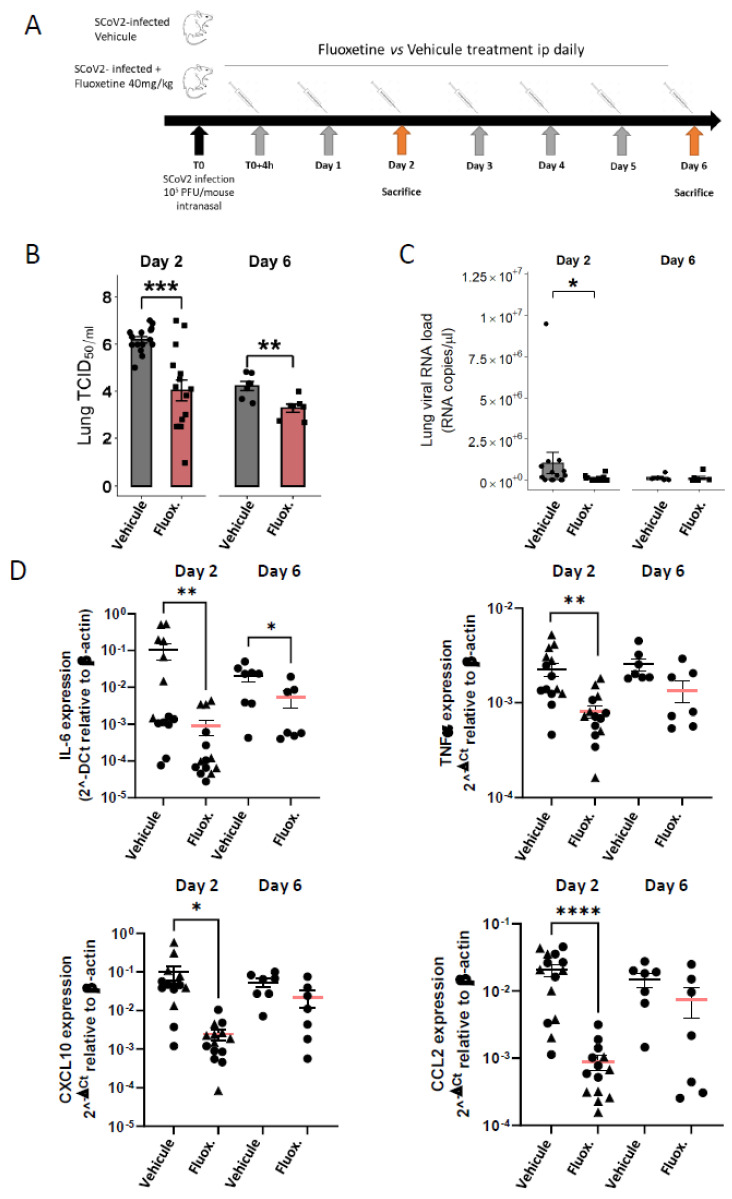
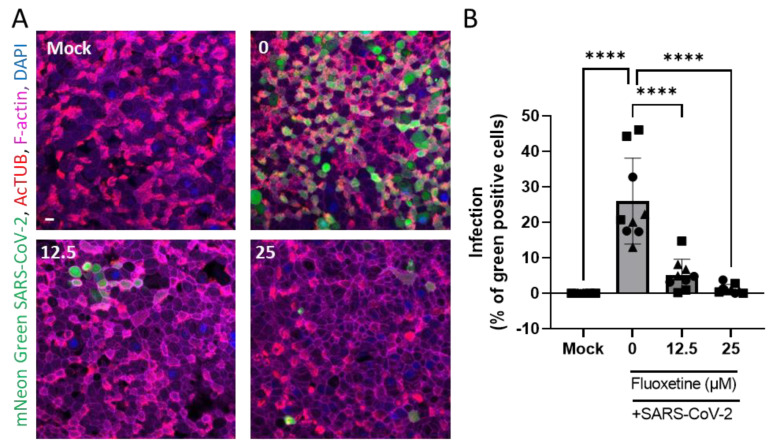
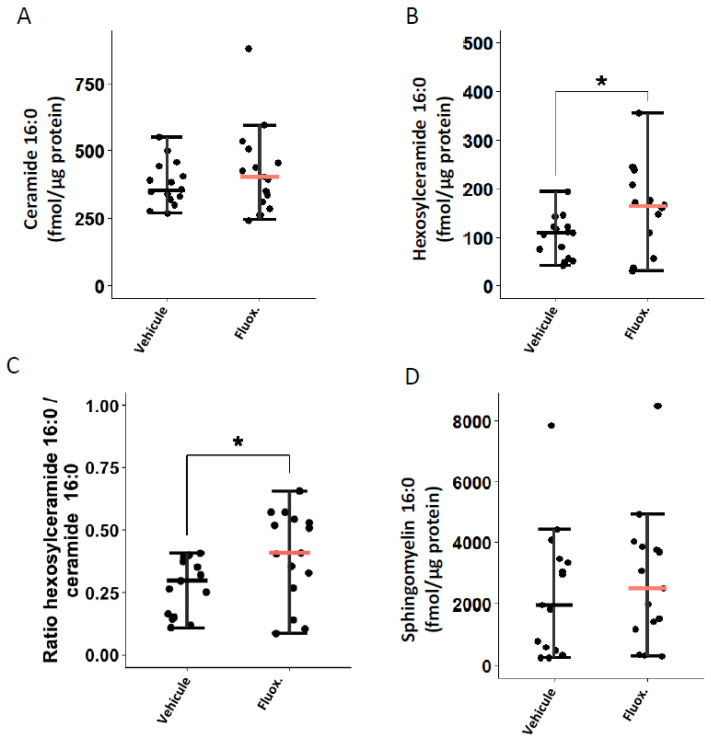
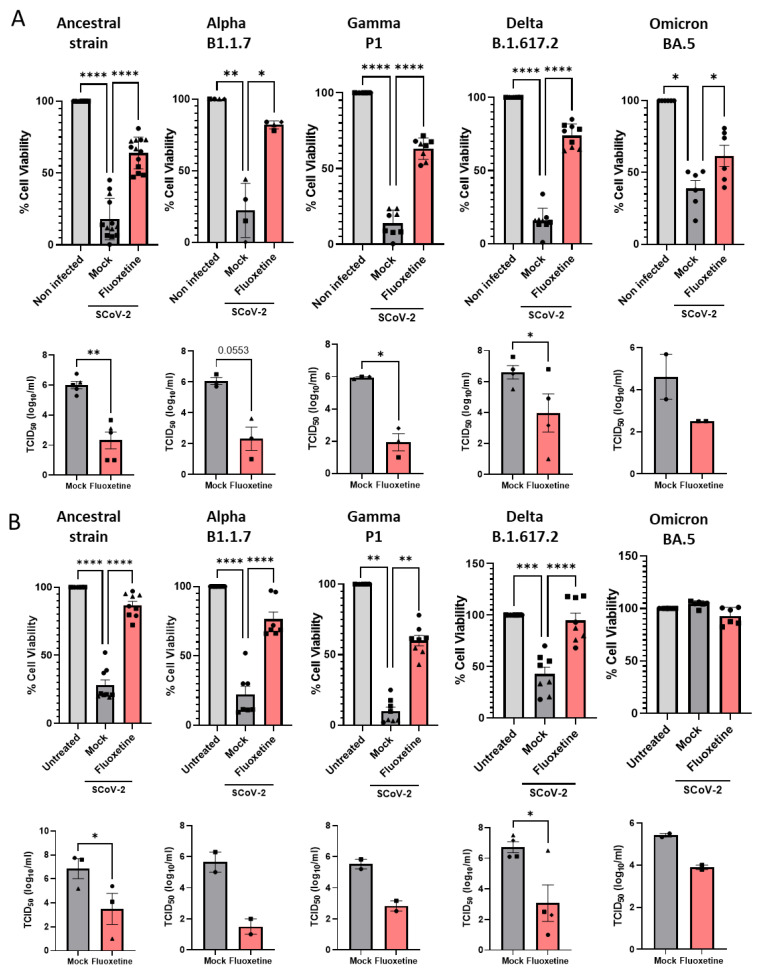
The coronavirus disease 2019 (COVID-19) pandemic continues to cause significant morbidity and mortality worldwide. Since a large portion of the world's population is currently unvaccinated or incompletely vaccinated and has limited access to approved treatments against COVID-19, there is an urgent need to continue research on treatment options, especially those at low cost and which are immediately available to patients, particularly in low- and middle-income countries. Prior in vitro and observational studies have shown that fluoxetine, possibly through its inhibitory effect on the acid sphingomyelinase/ceramide system, could be a promising antiviral and anti-inflammatory treatment against COVID-19. In this report, we evaluated the potential antiviral and anti-inflammatory activities of fluoxetine in a K18-hACE2 mouse model of SARS-CoV-2 infection, and against variants of concern in vitro, i.e., SARS-CoV-2 ancestral strain, Alpha B.1.1.7, Gamma P1, Delta B1.617 and Omicron BA.5. Fluoxetine, administrated after SARS-CoV-2 infection, significantly reduced lung tissue viral titres and expression of several inflammatory markers (i.e., IL-6, TNFα, CCL2 and CXCL10). It also inhibited the replication of all variants of concern in vitro. A modulation of the ceramide system in the lung tissues, as reflected by the increase in the ratio HexCer 16:0/Cer 16:0 in fluoxetine-treated mice, may contribute to explain these effects. Our findings demonstrate the antiviral and anti-inflammatory properties of fluoxetine in a K18-hACE2 mouse model of SARS-CoV-2 infection, and its in vitro antiviral activity against variants of concern, establishing fluoxetine as a very promising candidate for the prevention and treatment of SARS-CoV-2 infection and disease pathogenesis.
新型冠状病毒病 2019(COVID-19)大流行继续在全球范围内造成重大发病率和死亡率。由于世界上很大一部分人口目前未接种疫苗或未完全接种疫苗,并且获得批准的 COVID-19 治疗方法有限,因此迫切需要继续研究治疗方案,特别是那些成本低且患者可立即获得的治疗方案,尤其是在中低收入国家。先前的体外和观察性研究表明,氟西汀可能通过抑制酸性鞘磷脂酶/神经酰胺系统发挥作用,是一种有前途的抗 COVID-19 病毒和抗炎治疗方法。在本报告中,我们评估了氟西汀在 K18-hACE2 小鼠 SARS-CoV-2 感染模型中的潜在抗病毒和抗炎活性,以及在体外针对关注变体的活性,即 SARS-CoV-2 原始株、Alpha B.1.1.7、Gamma P1、Delta B1.617 和 Omicron BA.5。在 SARS-CoV-2 感染后给予氟西汀可显著降低肺组织中的病毒滴度和几种炎症标志物(即 IL-6、TNFα、CCL2 和 CXCL10)的表达。它还抑制了所有关注变体在体外的复制。肺组织中神经酰胺系统的调制,如氟西汀治疗小鼠中 HexCer 16:0/Cer 16:0 比值的增加所反映的那样,可能有助于解释这些作用。我们的研究结果表明氟西汀在 K18-hACE2 小鼠 SARS-CoV-2 感染模型中具有抗病毒和抗炎特性,以及其在体外对关注变体的抗病毒活性,确立氟西汀是预防和治疗 SARS-CoV-2 感染和疾病发病机制的很有前途的候选药物。