Department of Civil Engineering, National Yang Ming Chiao Tung University, Hsinchu 30010, Taiwan.
Department of Civil Engineering, Parahyangan Catholic University, Bandung 40141, Indonesia.
Sensors (Basel). 2022 Nov 5;22(21):8532. doi: 10.3390/s22218532.
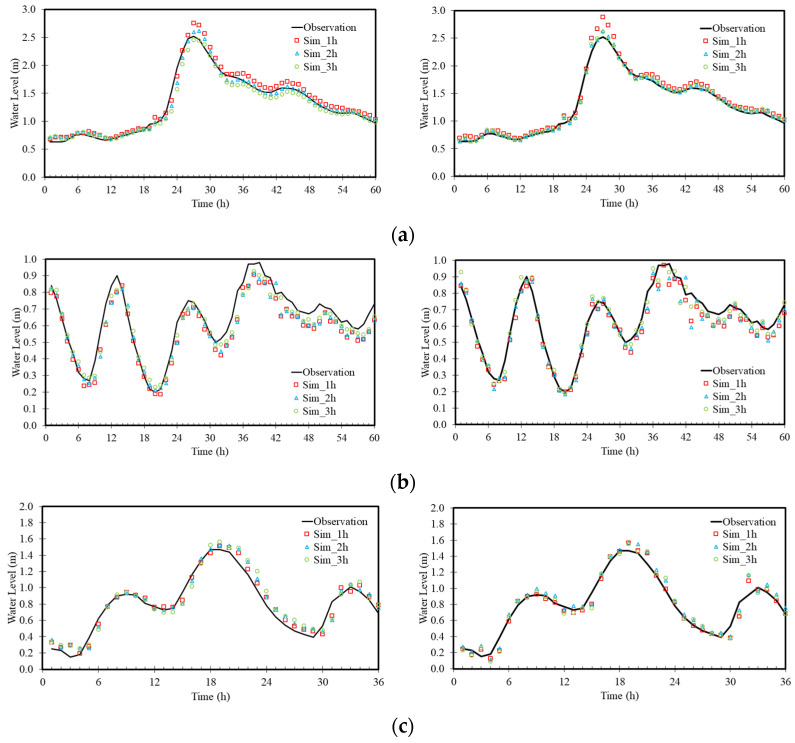
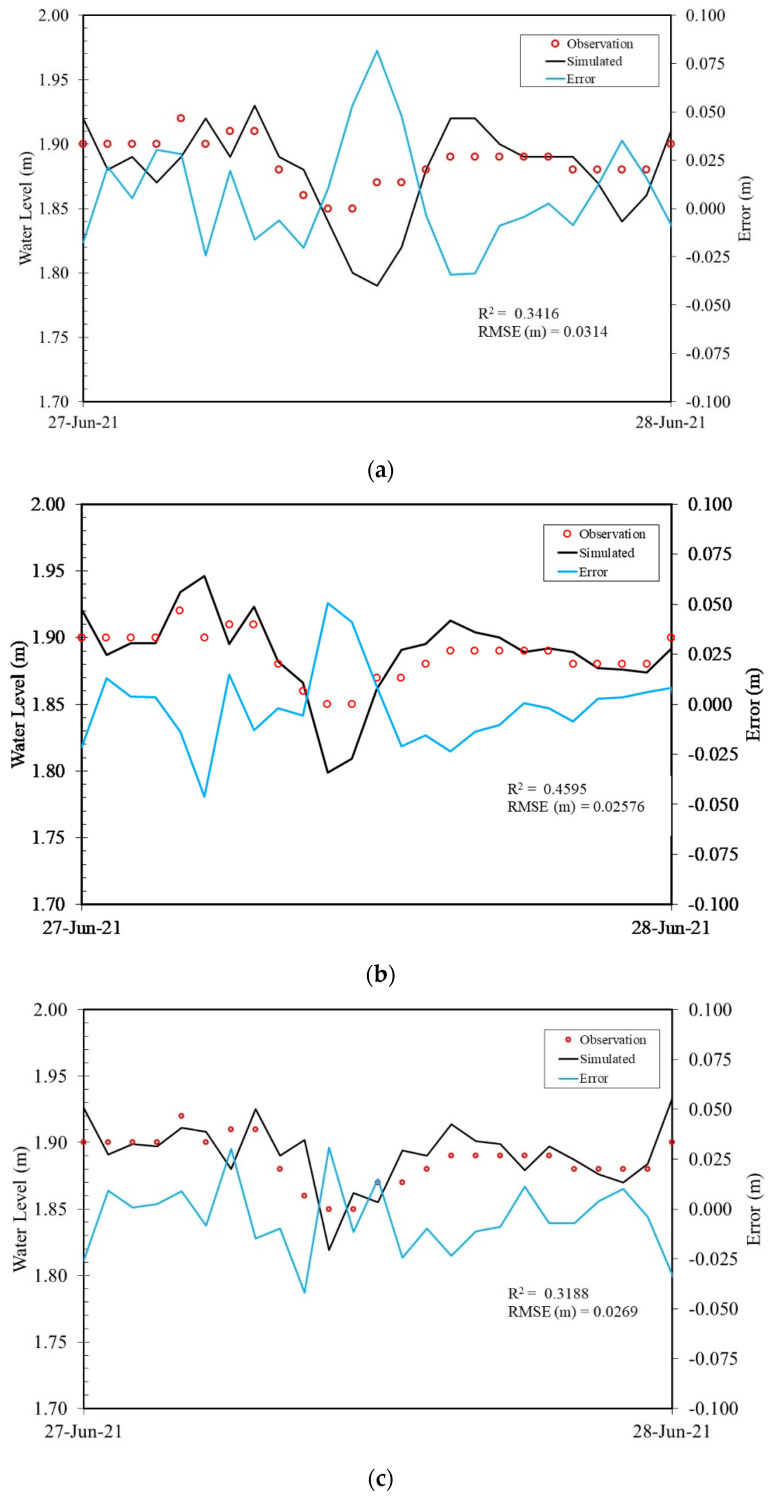
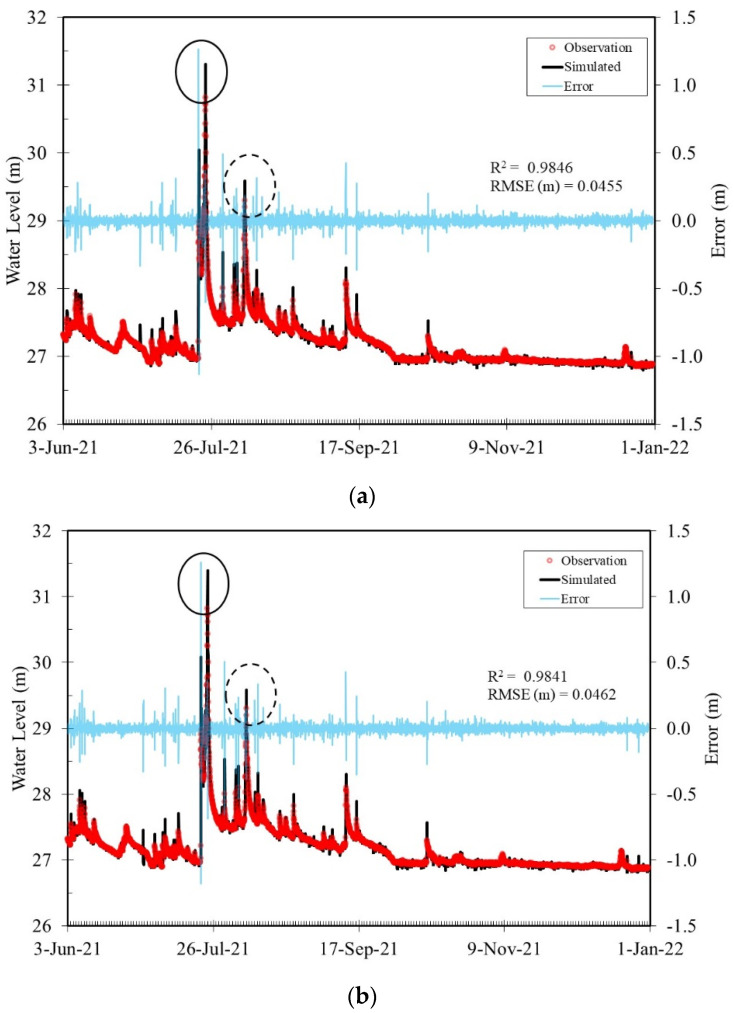
Extreme weather events cause stream overflow and lead to urban inundation. In this study, a decentralized flood monitoring system is proposed to provide water level predictions in streams three hours ahead. The customized sensor in the system measures the water levels and implements edge computing to produce future water levels. It is very different from traditional centralized monitoring systems and considered an innovation in the field. In edge computing, traditional physics-based algorithms are not computationally efficient if microprocessors are used in sensors. A correlation analysis was performed to identify key factors that influence the variations in the water level forecasts. For example, the second-order difference in the water level is considered to represent the acceleration or deacceleration of a water level rise. According to different input factors, three artificial neural network (ANN) models were developed. Four streams or canals were selected to test and evaluate the performance of the models. One case was used for model training and testing, and the others were used for model validation. The results demonstrated that the ANN model with the second-order water level difference as an input factor outperformed the other ANN models in terms of RMSE. The customized microprocessor-based sensor with an embedded ANN algorithm can be adopted to improve edge computing capabilities and support emergency response and decision making.
极端天气事件会导致溪流溢出,从而引发城市内涝。在这项研究中,提出了一种分散式洪水监测系统,以便提前三小时提供溪流水位预测。系统中的定制传感器测量水位,并通过边缘计算生成未来的水位。与传统的集中式监测系统相比,它有很大的不同,被认为是该领域的一项创新。在边缘计算中,如果在传感器中使用微处理器,传统的基于物理的算法在计算效率方面并不理想。进行了相关分析以确定影响水位预测变化的关键因素。例如,水位的二阶差分被认为代表了水位上升的加速或减速。根据不同的输入因素,开发了三个人工神经网络 (ANN) 模型。选择了四条溪流或运河进行测试和评估模型的性能。一个案例用于模型训练和测试,其他案例用于模型验证。结果表明,在 RMSE 方面,将二阶水位差作为输入因素的 ANN 模型优于其他 ANN 模型。基于定制微处理器的传感器具有嵌入式 ANN 算法,可以采用该传感器来提高边缘计算能力,并支持应急响应和决策制定。