Department of Molecular, Cell and Developmental Biology, UCLA School of Life Sciences, Los Angeles, CA, USA.
Department of Integrated Biology and Physiology, UCLA School of Life Sciences, Los Angeles, CA, USA.
J Alzheimers Dis. 2023;91(1):245-261. doi: 10.3233/JAD-220764.
Macrophages of healthy subjects have a pro-resolution phenotype, upload amyloid-β (Aβ) into endosomes, and degrade Aβ, whereas macrophages of patients with Alzheimer's disease (AD) generally have a pro-inflammatory phenotype and lack energy for brain clearance of Aβ.
To clarify the pathogenesis of sporadic AD and therapeutic effects of polyunsaturated fatty acids (PUFA) with vitamins B and D and antioxidants on monocyte/macrophage (MM) migration in the AD brain, MM transcripts in energy and Aβ degradation, MM glycome, and macrophage clearance of Aβ.
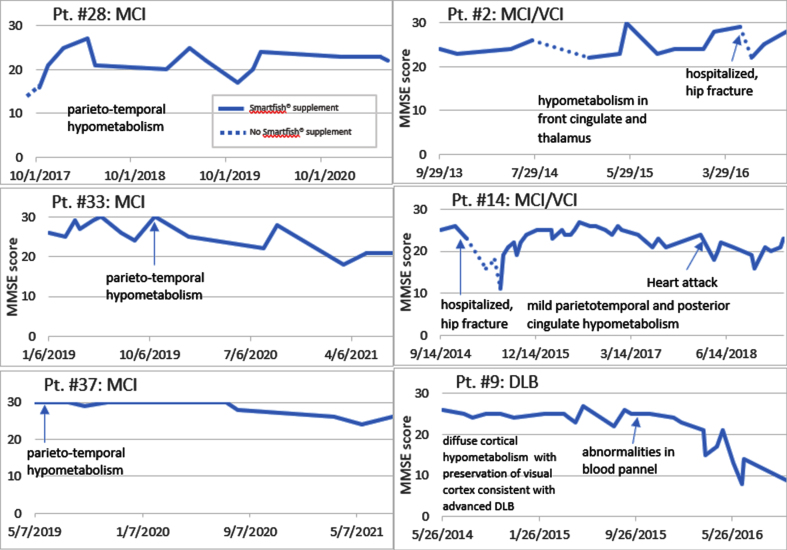
We followed for 31.3 months (mean) ten PUFA-supplemented neurodegenerative patients: 3 with subjective cognitive impairment (SCI), 2 with mild cognitive impairment (MCI), 3 MCI/vascular cognitive impairment, 2 with dementia with Lewy bodies, and 7 non-supplemented caregivers. We examined: monocyte migration in the brain and a blood-brain barrier model by immunochemistry and electron microscopy; macrophage transcriptome by RNAseq; macrophage glycome by N-glycan profiling and LTQ-Orbitrap mass spectrometry; and macrophage phenotype and phagocytosis by immunofluorescence.
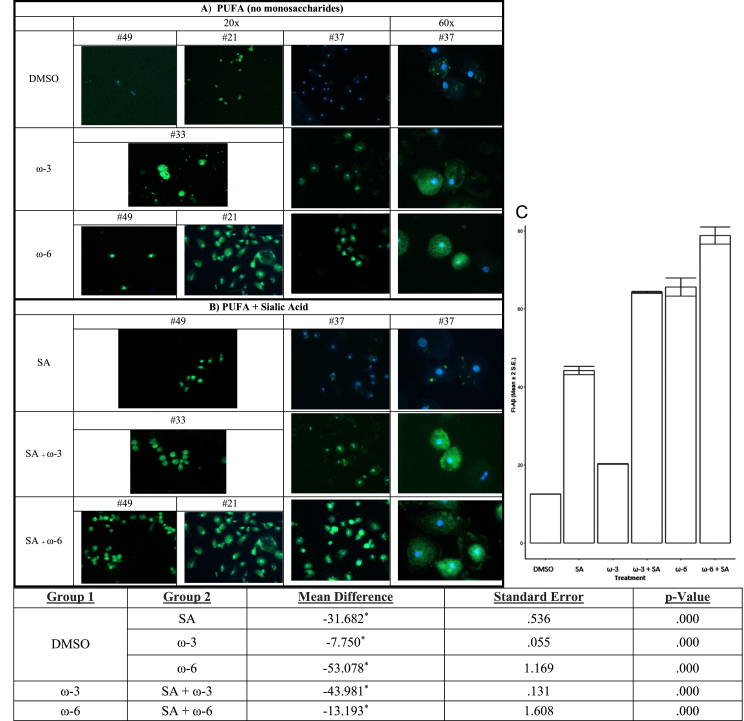
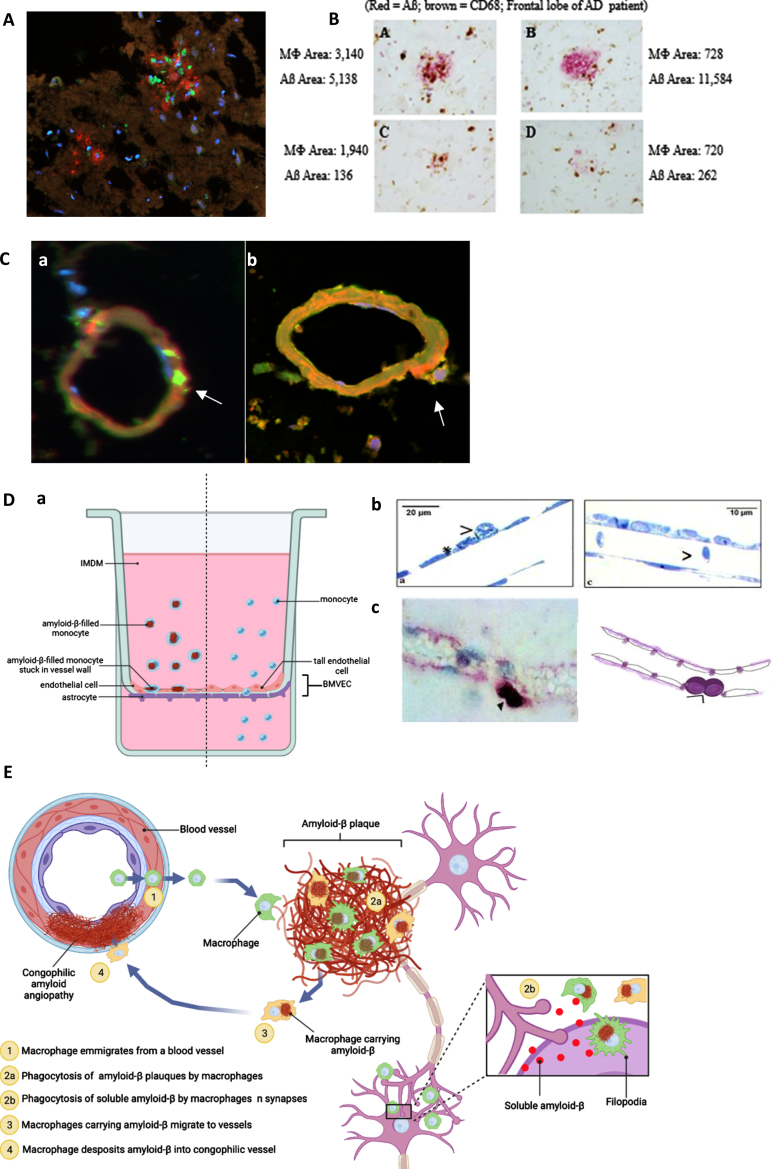
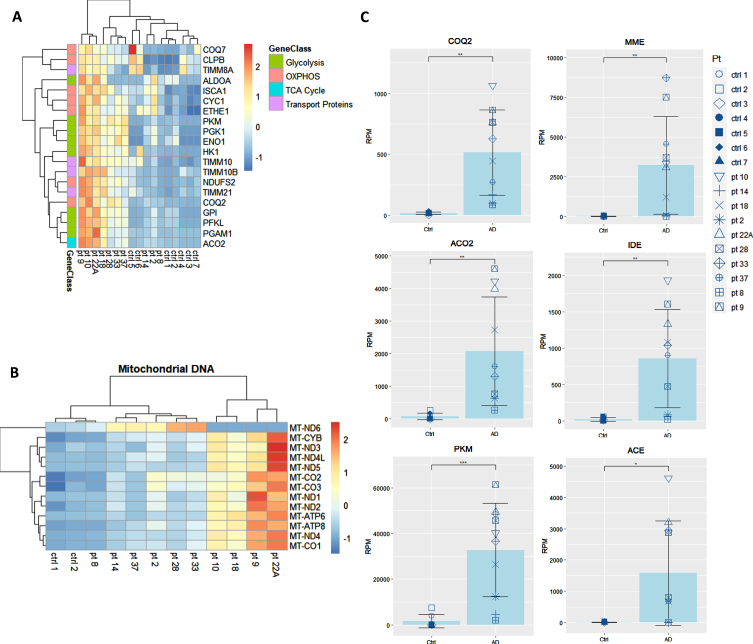
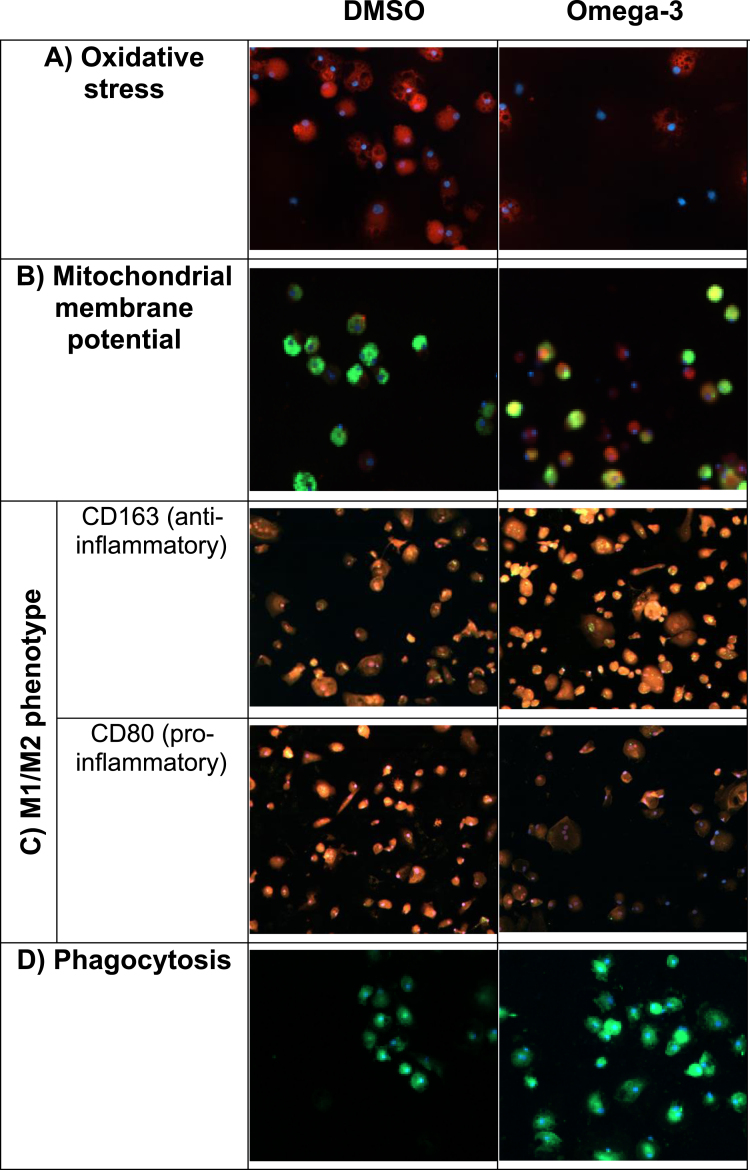
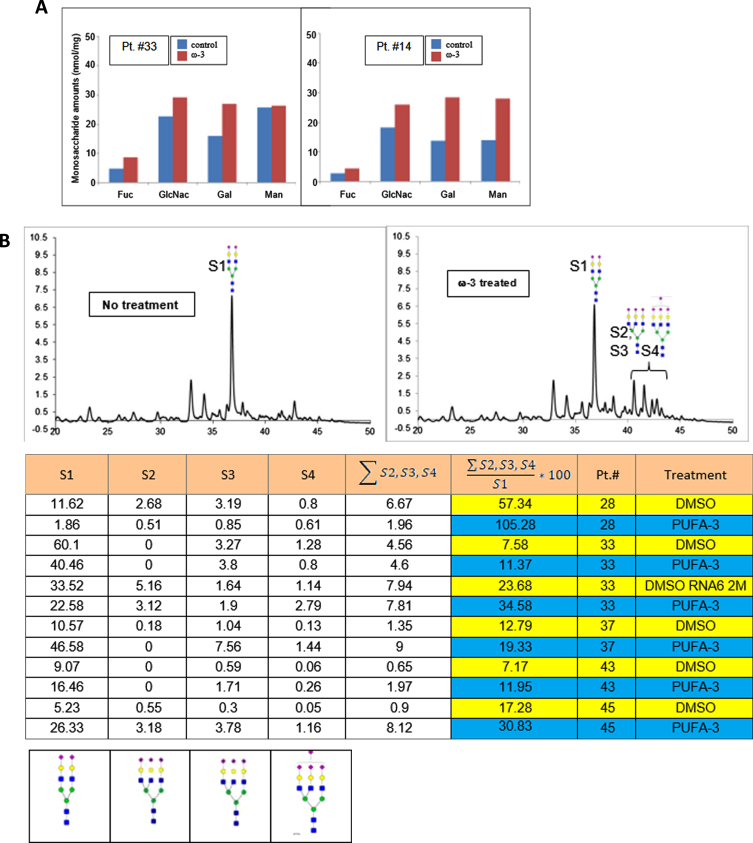
MM invade Aβ plaques, upload but do not degrade Aβ, and release Aβ into vessels, which develop cerebrovascular amyloid angiopathy (CAA); PUFA upregulate energy and Aβ degradation enzyme transcripts in macrophages; PUFA enhance sialylated N-glycans in macrophages; PUFA reduce oxidative stress and increase pro-resolution MM phenotype, mitochondrial membrane potential, and Aβ phagocytosis (p < 0.001).
Macrophages of SCI, MCI, and AD patients have interrelated defects in the transcriptome, glycome, Aβ phagocytosis, and Aβ degradation. PUFA mend macrophage transcriptome, enrich glycome, enhance Aβ clearance, and benefit the cognition of early-stage AD patients.
健康受试者的巨噬细胞具有促解决表型,将淀粉样蛋白-β(Aβ)上传到内体,并降解 Aβ,而阿尔茨海默病(AD)患者的巨噬细胞通常具有促炎表型,缺乏大脑清除 Aβ 的能量。
阐明散发性 AD 的发病机制以及多不饱和脂肪酸(PUFA)与维生素 B 和 D 及抗氧化剂对 AD 大脑中单核细胞/巨噬细胞(MM)迁移、能量和 Aβ 降解相关 MM 转录物、MM 聚糖和巨噬细胞清除 Aβ的治疗作用。
我们对 10 名接受 PUFA 补充的神经退行性疾病患者进行了 31.3 个月(平均)的随访:3 名有主观认知障碍(SCI),2 名有轻度认知障碍(MCI),3 名 MCI/血管性认知障碍,2 名路易体痴呆,7 名未接受补充的护理者。我们检查了:免疫化学和电子显微镜检测脑内和血脑屏障模型中的单核细胞迁移;通过 RNAseq 检测巨噬细胞转录组;通过 N-糖链谱和 LTQ-Orbitrap 质谱检测巨噬细胞聚糖;通过免疫荧光检测巨噬细胞表型和吞噬作用。
MM 侵袭 Aβ 斑块,上传但不降解 Aβ,并将 Aβ释放到血管中,导致脑血管淀粉样血管病(CAA);PUFA 上调巨噬细胞中与能量和 Aβ 降解酶相关的转录物;PUFA 增强巨噬细胞中的唾液酸化 N-聚糖;PUFA 减少氧化应激,增加促解决 MM 表型、线粒体膜电位和 Aβ吞噬作用(p<0.001)。
SCI、MCI 和 AD 患者的巨噬细胞在转录组、聚糖、Aβ 吞噬和 Aβ 降解方面存在相互关联的缺陷。PUFA 修复巨噬细胞转录组,丰富聚糖,增强 Aβ 清除,并有益于早期 AD 患者的认知。