Department of Environmental Biochemistry, Kyoto Pharmaceutical University, Kyoto; Department of Integrative Pharmaceutical Sciences, Faculty of Pharmaceutical Sciences, Setsunan University, Osaka.
Department of Environmental Biochemistry, Kyoto Pharmaceutical University, Kyoto .
Eur J Histochem. 2022 Nov 10;66(4):3534. doi: 10.4081/ejh.2022.3534.
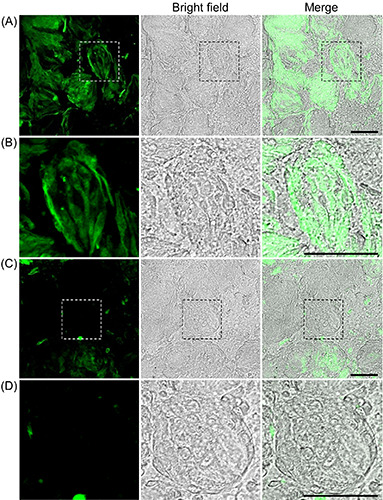
Zinc is an essential trace element, and its deficiency causes taste dysfunction. Zinc accumulates in zinc transporter (ZnT)3-expressing presynaptic vesicles in hippocampal neurons and acts as a neurotransmitter in the central nervous system. However, the distribution of zinc and its role as a signal transmitter in taste buds remain unknown. Therefore, we examined the distribution of zinc and expression profiles of ZnT3 in taste cells and evaluated zinc release from isolated taste cells upon taste stimuli. Taste cells with a spindle or pyriform morphology were revealed by staining with the fluorescent zinc dye ZnAF-2DA and autometallography in the taste buds of rat circumvallate papillae. Znt3 mRNA levels were detected in isolated taste buds. ZnT3-immunoreactivity was found in phospholipase-β2-immunopositive type II taste cells and aromatic amino acid decarboxylase-immunopositive type III cells but not in nucleoside triphosphate diphosphohydrolase 2-immunopositive type I cells. Moreover, we examined zinc release from taste cells using human transient receptor potential A1-overexpressing HEK293 as zinc-sensor cells. These cells exhibited a clear response to isolated taste cells exposed to taste stimuli. However, pretreatment with magnesium-ethylenediaminetetraacetic acid, an extracellular zinc chelator - but not with zinc-ethylenediaminetetraacetic acid, used as a negative control - significantly decreased the response ratio of zinc-sensor cells. These findings suggest that taste cells release zinc to the intercellular area in response to taste stimuli and that zinc may affect signaling within taste buds.
锌是一种必需的微量元素,其缺乏会导致味觉功能障碍。锌在海马神经元中表达锌转运体 (ZnT)3 的突触前小泡中积累,并在中枢神经系统中充当神经递质。然而,锌的分布及其作为味觉感受器中信号转导物的作用尚不清楚。因此,我们检查了锌在味觉细胞中的分布和 ZnT3 的表达谱,并评估了味觉刺激下分离的味觉细胞中锌的释放。用荧光锌染料 ZnAF-2DA 染色和味觉嵴环状乳头体的自动金属成像显示出具有梭形或梨形形态的味觉细胞。在分离的味觉芽中检测到 Znt3 mRNA 水平。ZnT3 免疫反应性存在于磷脂酶-β2 免疫阳性的 II 型味觉细胞和芳香族氨基酸脱羧酶免疫阳性的 III 型细胞中,但不存在于核苷酸三磷酸二磷酸水解酶 2 免疫阳性的 I 型细胞中。此外,我们使用过表达人类瞬时受体电位 A1 的 HEK293 作为锌传感器细胞来检查味觉细胞中锌的释放。这些细胞对暴露于味觉刺激的分离味觉细胞表现出明显的反应。然而,用细胞外锌螯合剂镁-乙二胺四乙酸预处理 - 而不是用作阴性对照的锌-乙二胺四乙酸 - 显著降低了锌传感器细胞的反应比。这些发现表明,味觉细胞在响应味觉刺激时向细胞间隙释放锌,并且锌可能影响味觉感受器内的信号转导。