Breast Cancer Department of Oncology Institute, The Fifth Medical Center of Chinese PLA General Hospital, Beijing, China.
Breast Cancer Department of Oncology Institute, The Fifth Medical Center of Chinese PLA General Hospital, Beijing, China.
Breast. 2022 Dec;66:255-261. doi: 10.1016/j.breast.2022.10.018. Epub 2022 Nov 2.
CDK4/6 inhibitors combined with endocrine therapy are standard first- or second-line treatment for patients with HR-positive and HER2-negative advanced breast cancer, however, there is currently no optimal recommendation for therapeutic strategies after progression on CDK4/6i. The aim of this study is to analyze the efficacy and safety of HDAC inhibitor Tucidinostat combined with endocrine therapy in patients after prior CDK4/6 inhibitor progression.
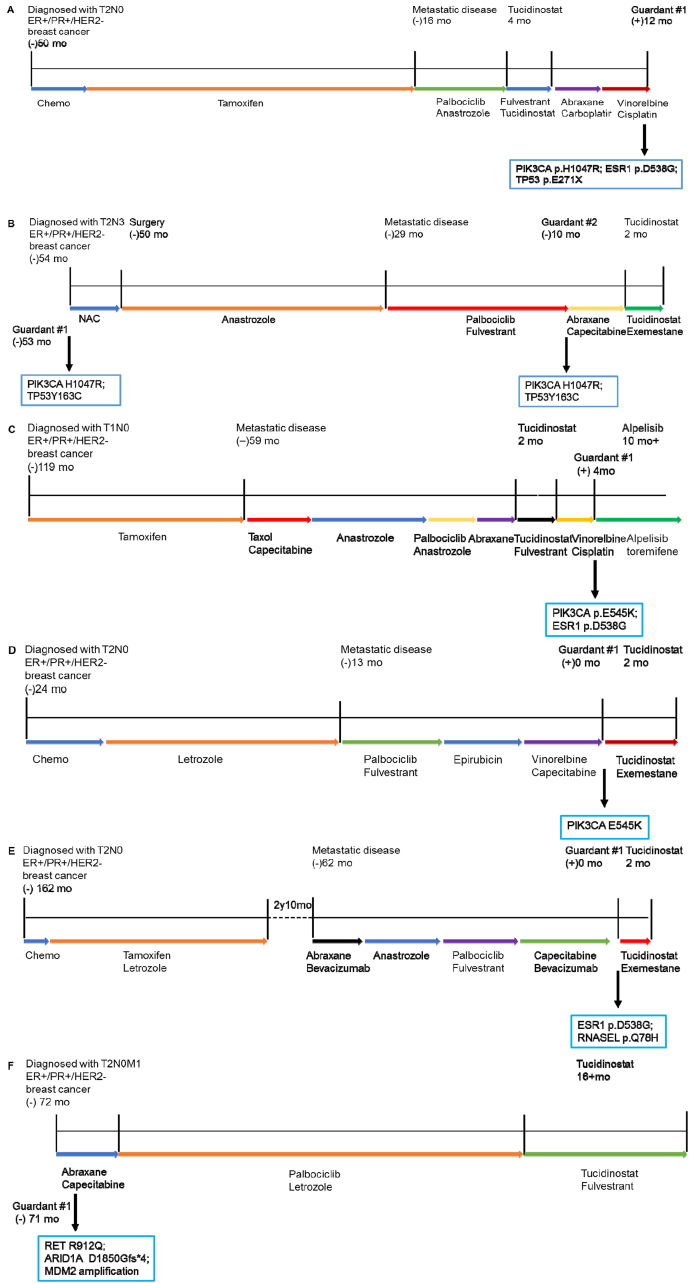
The pathological and clinical data of 44 HR-positive and HER2-negative breast cancer patients treated with tucidinostat after progression on CDK4/6i at the Breast Oncology Department of the Fifth Medical Center of the PLA General Hospital from July 2019 to October 2021 were retrospectively analyzed. Observation indexes included progression-free survival (PFS), overall survival (OS), clinical benefit rate (CBR), objective response rate (ORR) and adverse events. At the same time, we attempted to identify potential genomic predictors using available next-generation sequencing (NGS).
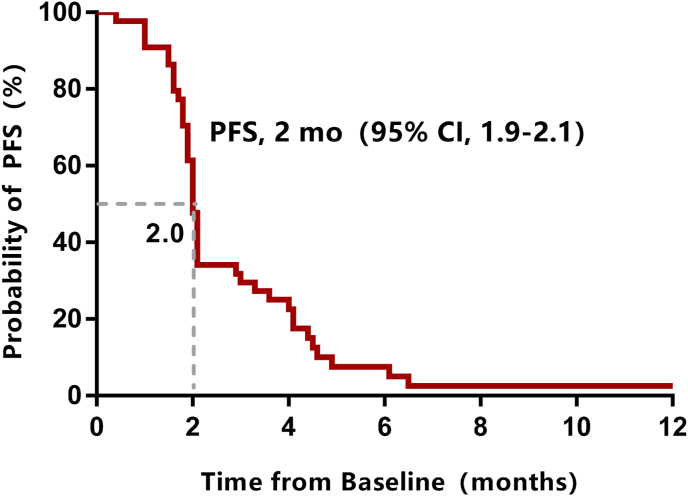
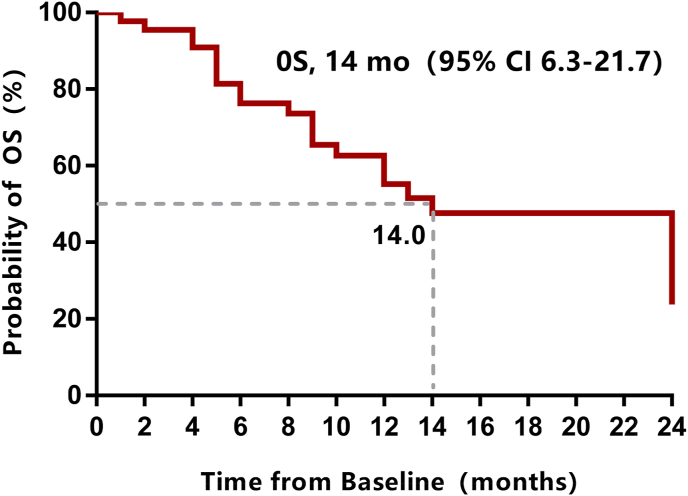
A total of 44 patients were enrolled in this study. Median follow-up was 10 months (1-26 months) by the data cutoff date (February 2022). The CBR was 6.8% (3/44), the median PFS was 2.0 months (95% CI 1.9-2.1), and the median OS was 14 months (95% CI 6.3-21.7). The mPFS was 4.1 months (95%CI: 0-8.2) in patients with 1 metastatic site, and the mPFS was 4.5 months (95%CI: 4.2-4.8) in patients who received sequential tucidinostat after CDK4/6i failure. Multivariate analysis showed that patients with 1 metastatic site or sequential tucidinostat treatment after failure of CDK4/6i were more likely to benefit from tucidinostat combined with endocrine therapy. Preliminary data showed PIK3CA mutation may be associated with resistance of tucidinostat therapy. No grade 4 adverse events and no treatment-related deaths were recorded in the study. Dose reductions because of adverse events occurred in 4 (9.1%) patients.
This study preliminarily shows that tucidinostat combined with endocrine therapy may be an optional sequential strategy for patients with HR+/HER2-advanced breast cancer that has progressed on CDK4/6 inhibitor, especially for these with lower tumor burden and fewer prior palliative treatment.
CDK4/6 抑制剂联合内分泌治疗是 HR 阳性、HER2 阴性晚期乳腺癌患者的标准一线或二线治疗方法,然而,目前对于 CDK4/6i 进展后的治疗策略尚无最佳推荐。本研究旨在分析 HDAC 抑制剂 Tucidinostat 联合内分泌治疗在 CDK4/6i 治疗进展后的 HR 阳性、HER2 阴性乳腺癌患者中的疗效和安全性。
回顾性分析 2019 年 7 月至 2021 年 10 月解放军总医院第五医学中心乳腺肿瘤科收治的 44 例 CDK4/6i 治疗进展后的 HR 阳性、HER2 阴性乳腺癌患者的病理和临床资料。观察指标包括无进展生存期(PFS)、总生存期(OS)、临床获益率(CBR)、客观缓解率(ORR)和不良事件。同时,我们试图使用可用的下一代测序(NGS)来识别潜在的基因组预测因子。
本研究共纳入 44 例患者。数据截止日期(2022 年 2 月)时的中位随访时间为 10 个月(1-26 个月)。CBR 为 6.8%(3/44),中位 PFS 为 2.0 个月(95%CI 1.9-2.1),中位 OS 为 14 个月(95%CI 6.3-21.7)。mPFS 在 1 个转移部位的患者中为 4.1 个月(95%CI:0-8.2),在 CDK4/6i 失败后序贯 Tucidinostat 治疗的患者中 mPFS 为 4.5 个月(95%CI:4.2-4.8)。多变量分析显示,有 1 个转移部位或 CDK4/6i 失败后序贯 Tucidinostat 治疗的患者更有可能从 Tucidinostat 联合内分泌治疗中获益。初步数据显示,PIK3CA 突变可能与 Tucidinostat 治疗耐药有关。研究中未记录 4 级不良事件和治疗相关死亡。因不良事件而减少剂量的患者有 4 例(9.1%)。
本研究初步表明,Tucidinostat 联合内分泌治疗可能是 CDK4/6 抑制剂治疗进展后的 HR 阳性、HER2 阴性晚期乳腺癌患者的一种可选序贯策略,尤其是对于肿瘤负荷较低和既往姑息治疗较少的患者。