Department of Fibre and Polymer Technology, Wallenberg Wood Science Center, KTH Royal Institute of Technology, Teknikringen 56, 100 44, Stockholm, Sweden.
Department of Chemistry, KTH Royal Institute of Technology, Teknikringen 30, 100 44, Stockholm, Sweden.
Nat Commun. 2022 Nov 14;13(1):6924. doi: 10.1038/s41467-022-34697-5.
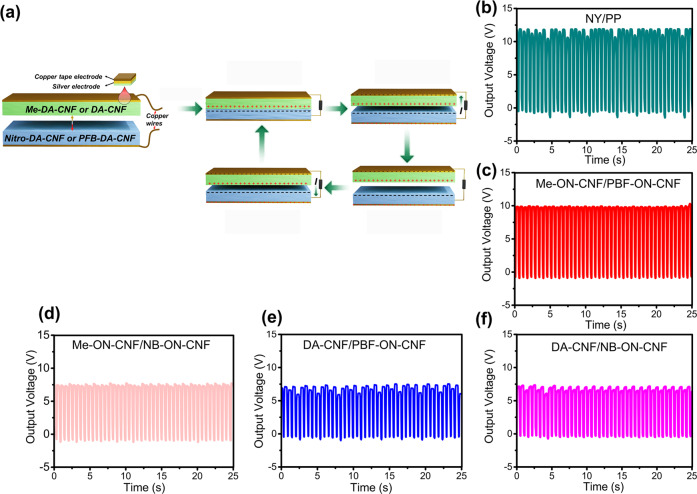
Cellulose nanofibril (CNF) materials are candidates for the sustainable development of high mechanical performance nanomaterials. Due to inherent hydrophilicity and limited functionality range, most applications require chemical modification of CNF. However, targeted transformations directly on CNF are cumbersome due to the propensity of CNF to aggregate in non-aqueous solvents at high concentrations, complicating the choice of suitable reagents and requiring tedious separations of the final product. This work addresses this challenge by developing a general, entirely water-based, and experimentally simple methodology for functionalizing CNF, providing aliphatic, allylic, propargylic, azobenzylic, and substituted benzylic functional groups. The first step is NaIO oxidation to dialdehyde-CNF in the wet cake state, followed by oxime ligation with O-substituted hydroxylamines. The increased hydrolytic stability of oximes removes the need for reductive stabilization as often required for the analogous imines where aldehyde groups react with amines in water. Overall, the process provides a tailored degree of nanofibril functionalization (2-4.5 mmol/g) with the possible reversible detachment of the functionality under mildly acidic conditions, resulting in the reformation of dialdehyde CNF. The modified CNF materials were assessed for potential applications in green electronics and triboelectric nanogenerators.
纤维素纳米纤维 (CNF) 材料是具有高机械性能的纳米材料可持续发展的候选材料。由于固有亲水性和有限的功能范围,大多数应用都需要对 CNF 进行化学改性。然而,由于 CNF 在高浓度下容易在非水溶剂中聚集,因此直接在 CNF 上进行靶向转化很麻烦,这使得合适的试剂选择变得复杂,并需要对最终产物进行繁琐的分离。本工作通过开发一种通用的、完全基于水的、实验上简单的方法来解决这一挑战,该方法可对 CNF 进行功能化,提供脂肪族、烯丙基、炔丙基、偶氮苯甲基和取代的苄基官能团。第一步是在湿饼状态下用 NaIO 氧化生成二醛-CNF,然后用 O-取代的羟胺进行肟键合。肟的水解稳定性增加,消除了通常醛基与水胺反应时所需的还原稳定化,因为在水胺中,醛基与水胺反应。总的来说,该过程提供了一定程度的纳米纤维功能化(2-4.5mmol/g),并且在温和酸性条件下,功能化可以可逆地脱离,从而重新形成二醛 CNF。对改性 CNF 材料进行了评估,以评估其在绿色电子和摩擦纳米发电机中的潜在应用。