Department of Diagnostic and Interventional Radiology, University Hospital Bonn, Venusberg-Campus 1, 53127, Bonn, Germany.
Quantitative Imaging Lab Bonn (QILaB), Bonn, Germany.
J Cardiovasc Magn Reson. 2022 Nov 17;24(1):55. doi: 10.1186/s12968-022-00895-9.
To evaluate the great vessels in young children with complex congenital heart disease (CHD) using non-contrast cardiovascular magnetic resonance angiography (CMRA) based on three-dimensional relaxation-enhanced angiography without contrast (REACT) in comparison to contrast-enhanced steady-state CMRA.
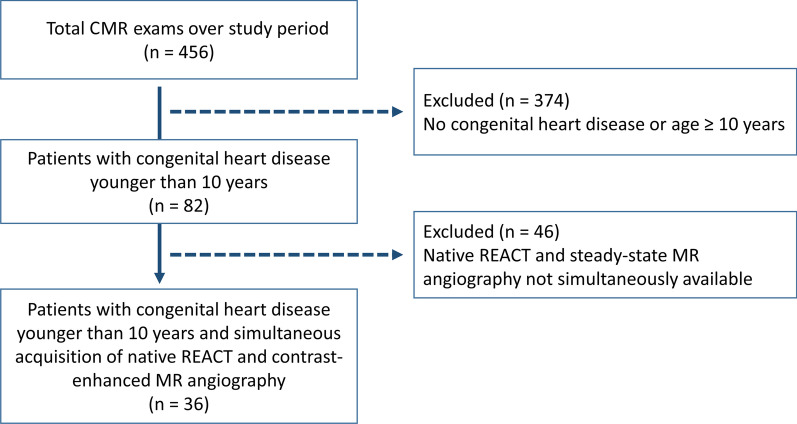
In this retrospective study from April to July 2021, respiratory- and electrocardiogram-gated native REACT CMRA was compared to contrast-enhanced single-phase steady-state CMRA in children with CHD who underwent CMRA at 3T under deep sedation. Vascular assessment included image quality (1 = non-diagnostic, 5 = excellent), vessel diameter, and diagnostic findings. For statistical analysis, paired t-test, Pearson correlation, Bland-Altman analysis, Wilcoxon test, and intraclass correlation coefficients (ICC) were applied.
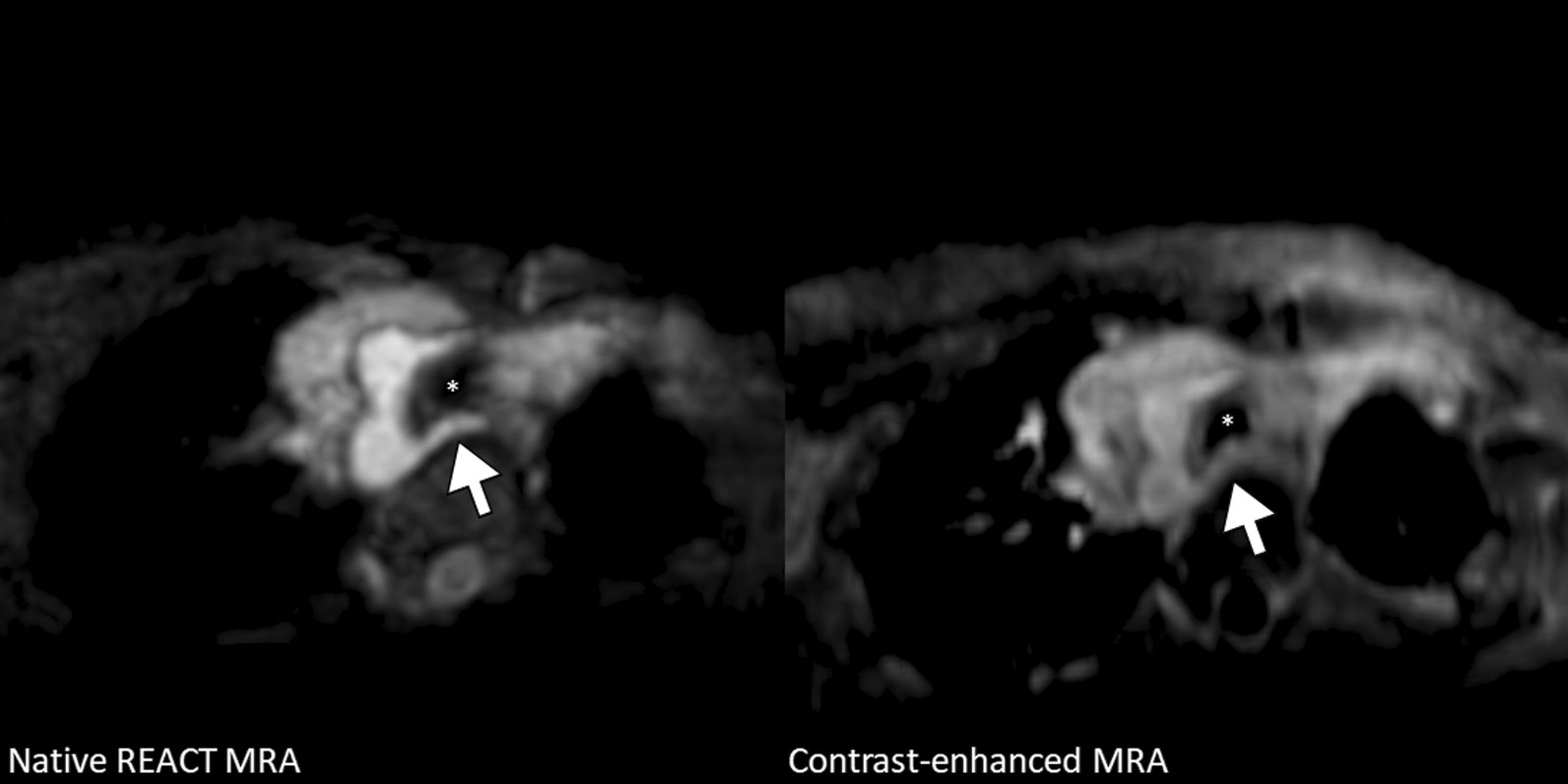
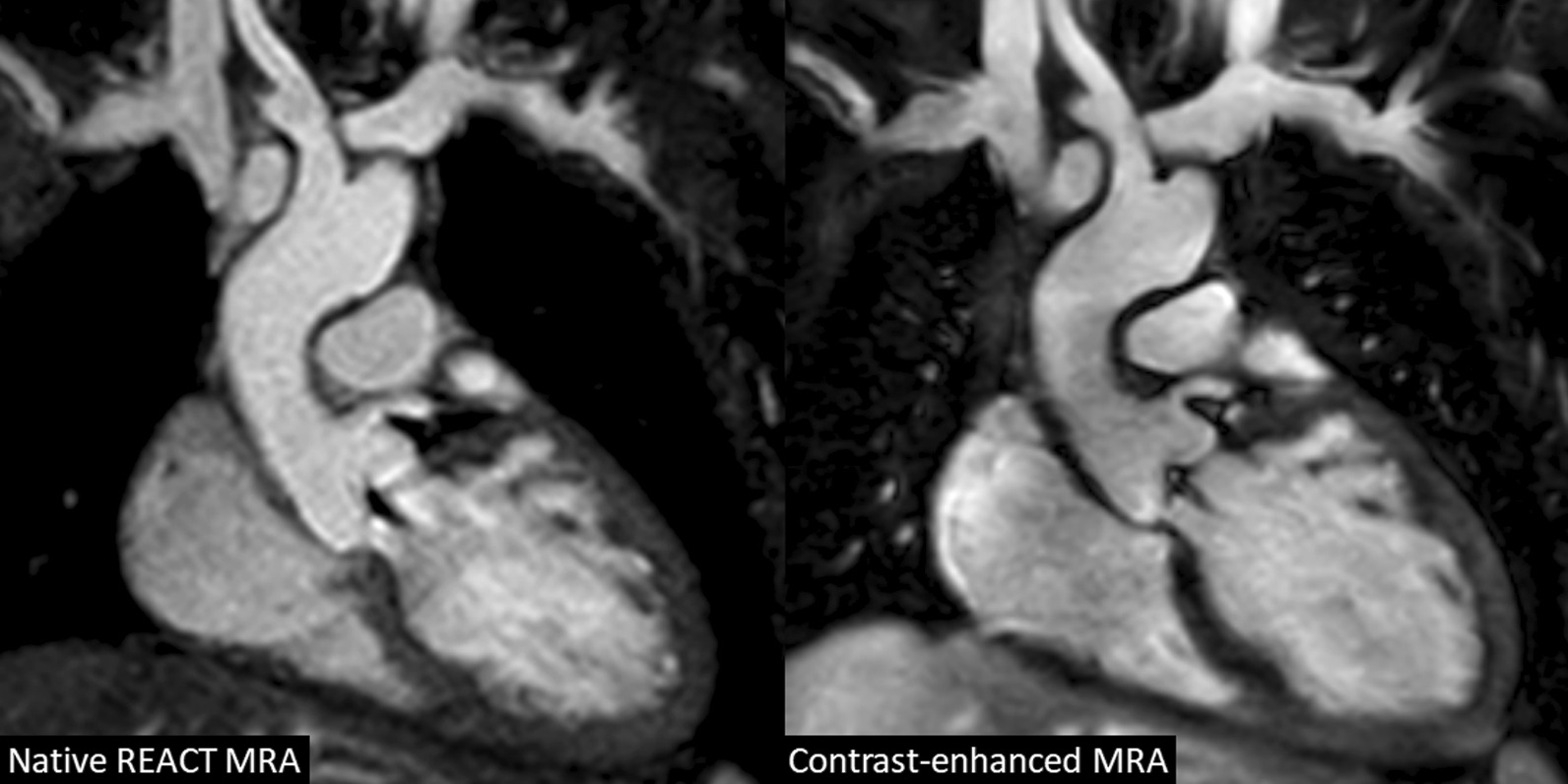
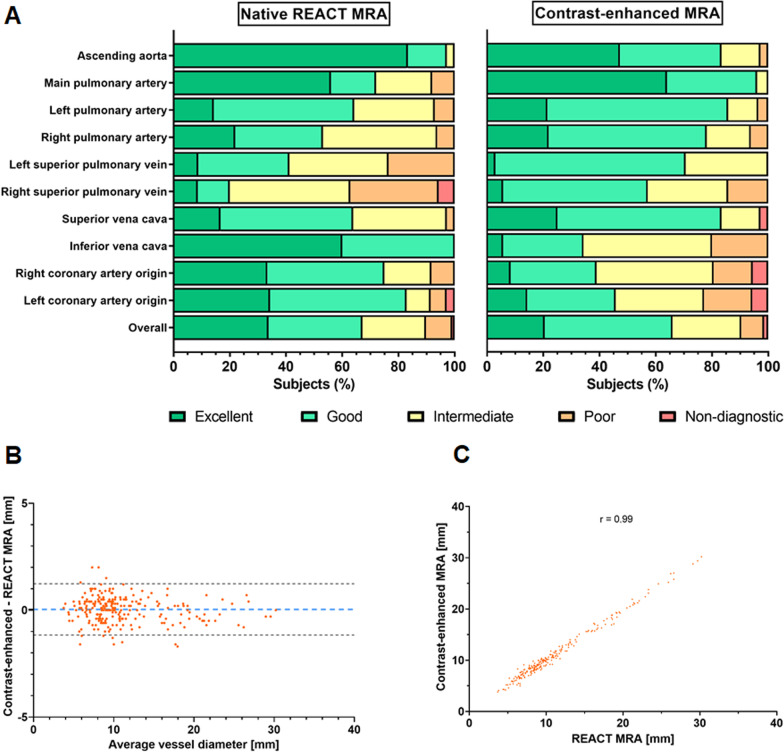
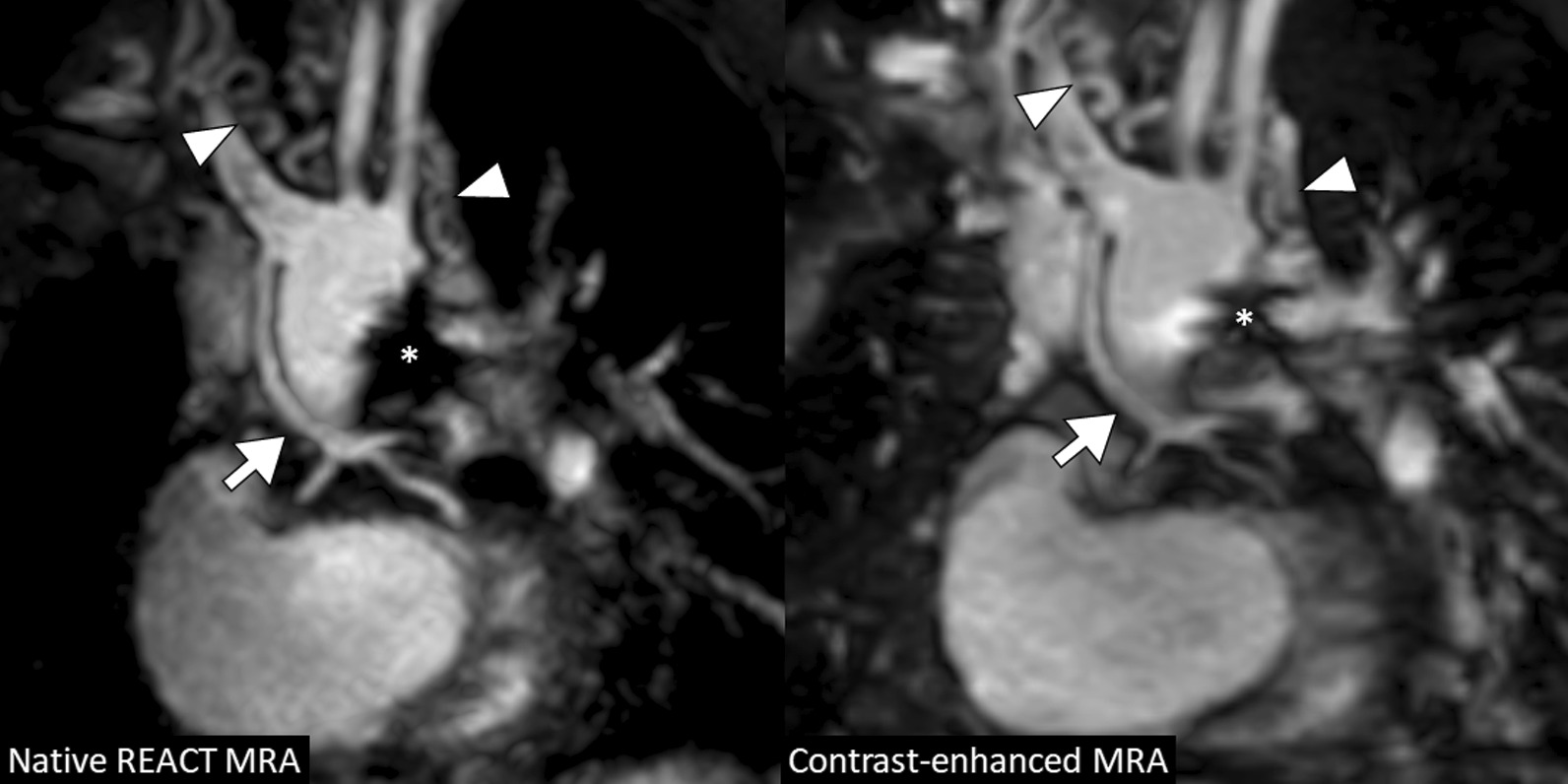
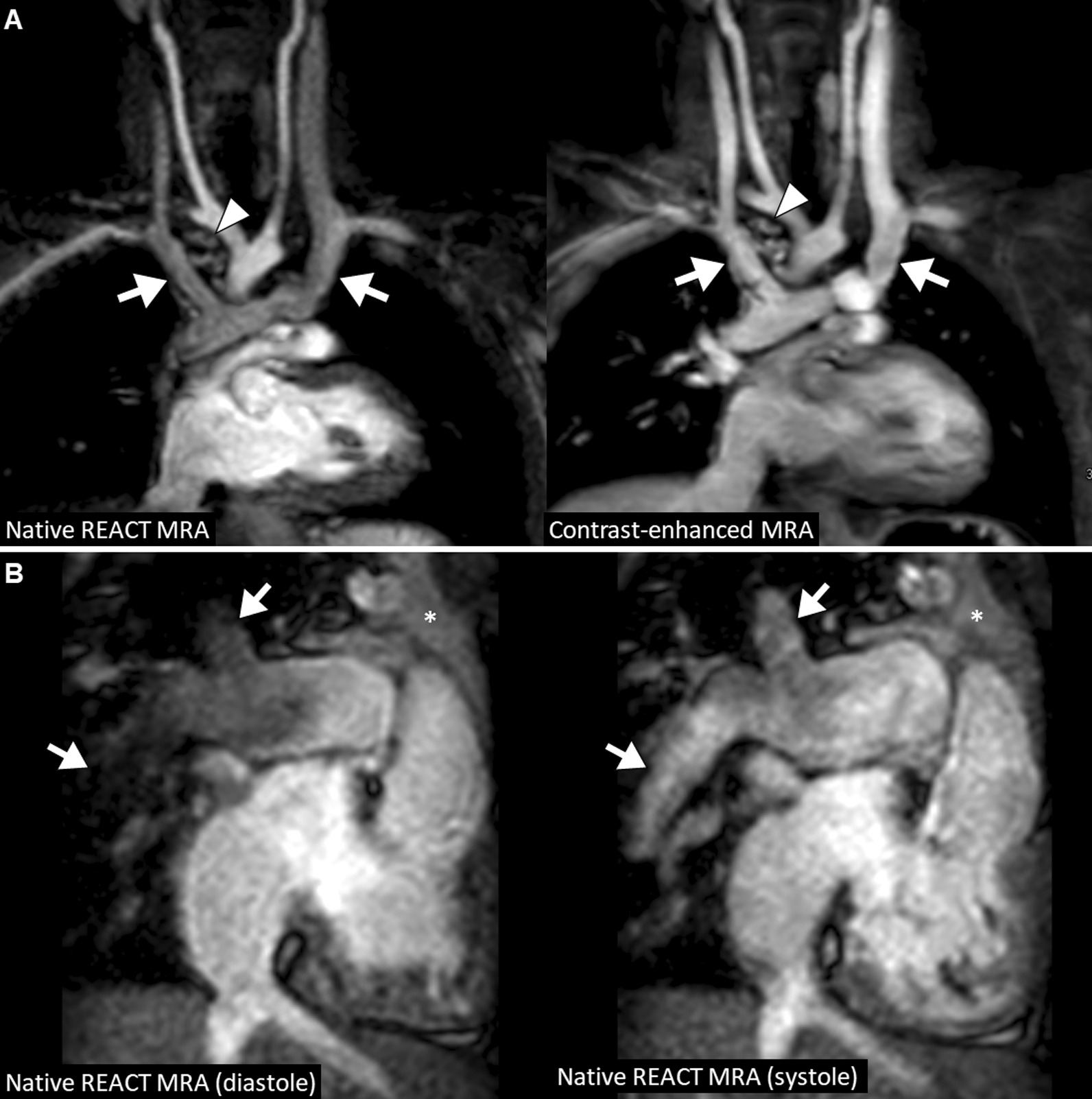
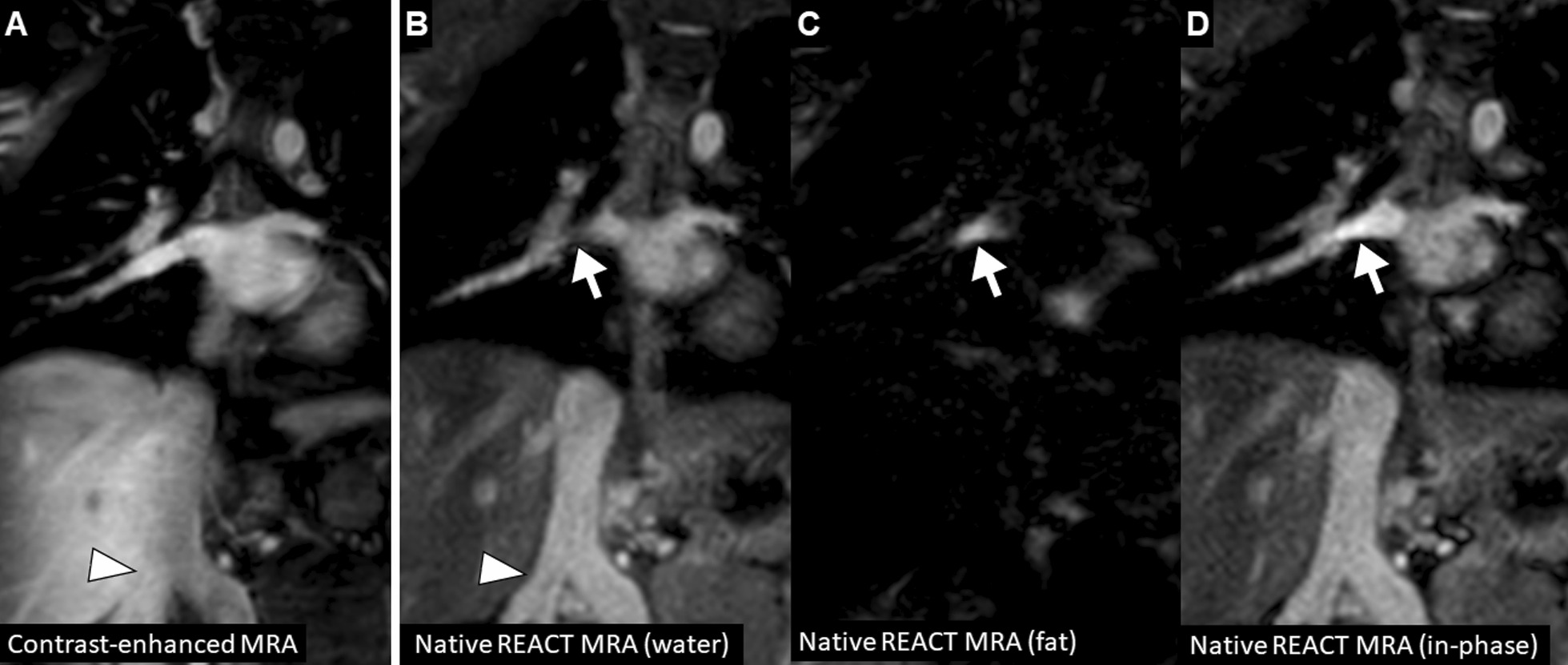
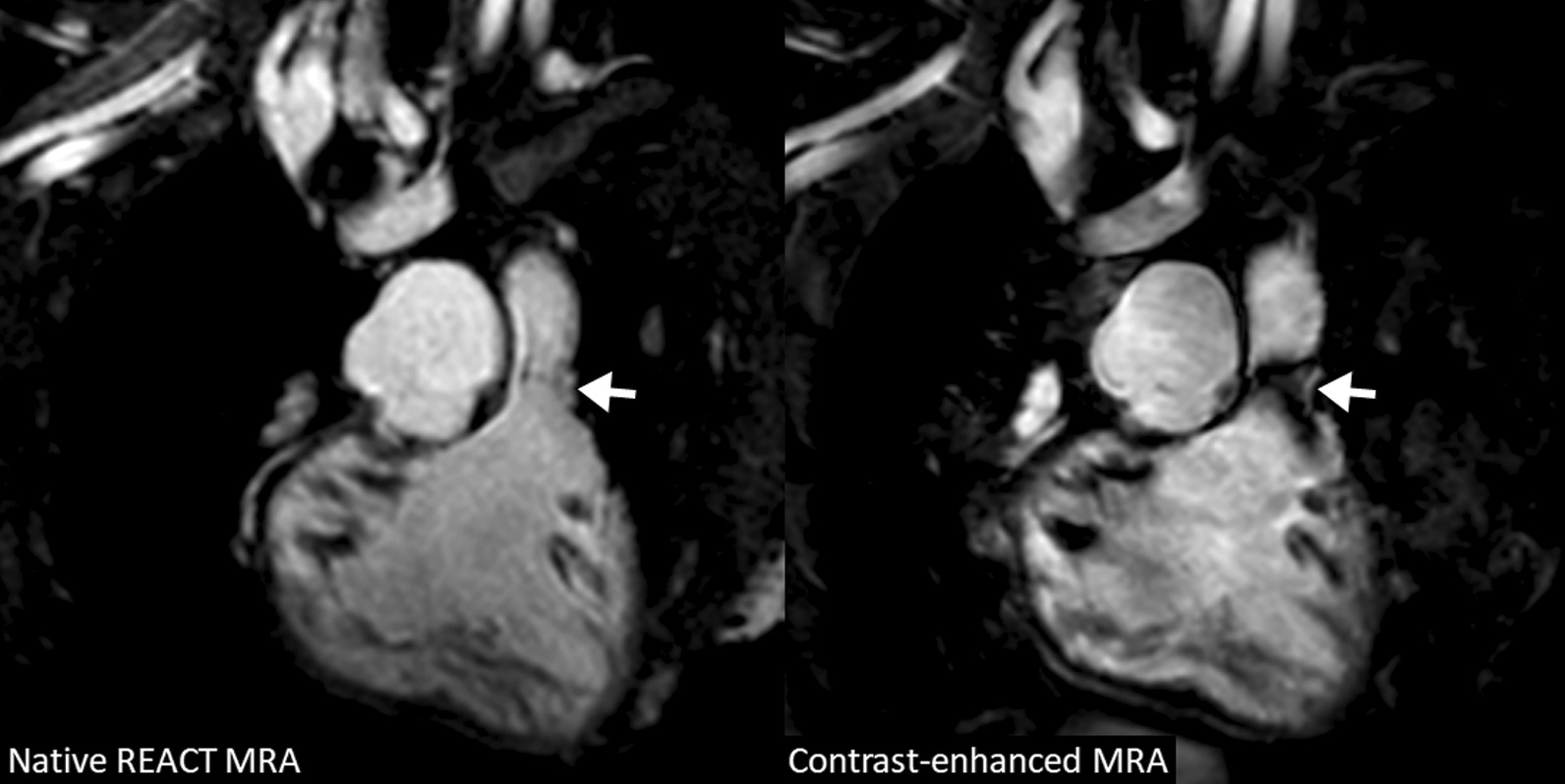
Thirty-six young children with complex CHD (median 4 years, interquartile range, 2-5; 20 males) were included. Native REACT CMRA was obtained successfully in all patients (mean scan time: 4:22 ± 1:44 min). For all vessels assessed, diameters correlated strongly between both methods (Pearson r = 0.99; bias = 0.04 ± 0.61 mm) with high interobserver reproducibility (ICC: 0.99 for both CMRAs). Native REACT CMRA demonstrated comparable overall image quality to contrast-enhanced CMRA (3.9 ± 1.0 vs. 3.8 ± 0.9, P = 0.018). With REACT CMRA, better image quality was obtained at the ascending aorta (4.8 ± 0.5 vs. 4.3 ± 0.8, P < 0.001), coronary roots (e.g., left: 4.1 ± 1.0 vs. 3.3 ± 1.1, P = 0.001), and inferior vena cava (4.6 ± 0.5 vs. 3.2 ± 0.8, P < 0.001). In all patients, additional vascular findings were assessed equally with native REACT CMRA and the contrast-enhanced reference standard (n = 6).
In young children with complex CHD, REACT CMRA can provide gadolinium-free high image quality, accurate vascular measurements, and equivalent diagnostic quality compared to standard contrast-enhanced CMRA.
为了评估患有复杂先天性心脏病(CHD)的幼儿的大血管,本研究使用基于三维弛豫增强血管造影(REACT)的无对比心血管磁共振血管造影(CMRA)与对比增强稳态 CMRA 进行比较。
本回顾性研究于 2021 年 4 月至 7 月期间进行,在 3T 下对镇静状态下接受 CMRA 的 CHD 患儿进行呼吸门控和心电图门控的原生 REACT CMRA 与单相对比增强稳态 CMRA 进行比较。血管评估包括图像质量(1=非诊断性,5=优秀)、血管直径和诊断结果。为了进行统计分析,采用配对 t 检验、Pearson 相关分析、Bland-Altman 分析、Wilcoxon 检验和组内相关系数(ICC)。
本研究共纳入 36 名患有复杂 CHD 的幼儿(中位数年龄 4 岁,四分位间距 2-5 岁;20 名男性)。所有患者均成功获得了原生 REACT CMRA(平均扫描时间:4:22±1:44 分钟)。对于所有评估的血管,两种方法之间的直径均具有很强的相关性(Pearson r=0.99;偏差=0.04±0.61 毫米),观察者间具有高度可重复性(两种 CMRA 的 ICC 均为 0.99)。原生 REACT CMRA 的整体图像质量与对比增强 CMRA 相当(3.9±1.0 与 3.8±0.9,P=0.018)。使用 REACT CMRA,可以在升主动脉(4.8±0.5 与 4.3±0.8,P<0.001)、冠状动脉根部(例如,左冠状动脉:4.1±1.0 与 3.3±1.1,P=0.001)和下腔静脉(4.6±0.5 与 3.2±0.8,P<0.001)获得更好的图像质量。在所有患者中,使用原生 REACT CMRA 和对比增强参考标准(n=6)同样可以评估额外的血管发现。
在患有复杂 CHD 的幼儿中,与标准对比增强 CMRA 相比,REACT CMRA 可以提供无钆的高质量图像、准确的血管测量和等效的诊断质量。