Hospital of Chengdu University of Traditional Chinese Medicine, Chengdu, 610072, China.
Sci Rep. 2022 Nov 16;12(1):19709. doi: 10.1038/s41598-022-24289-0.
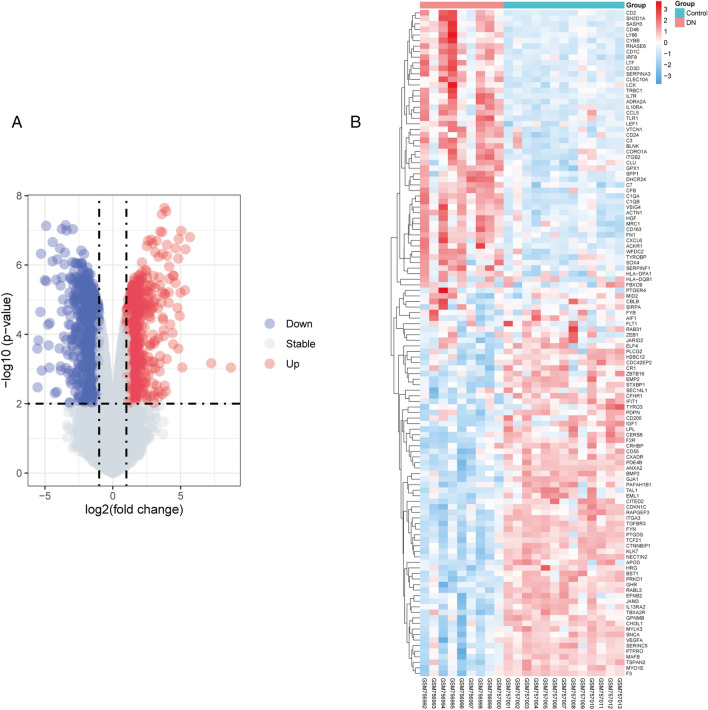
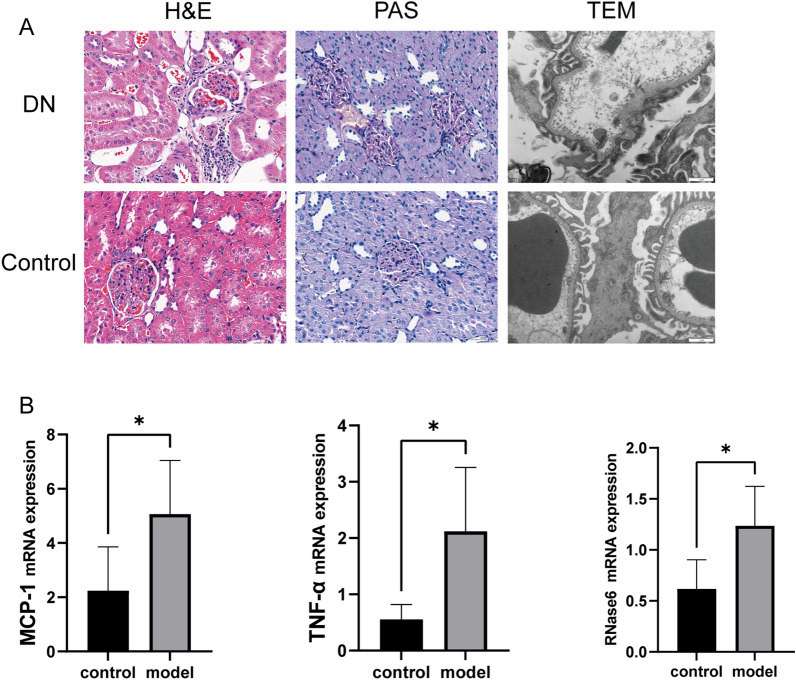
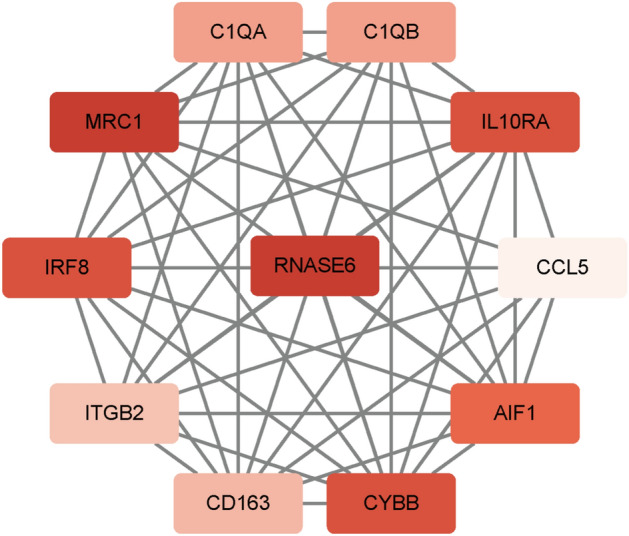
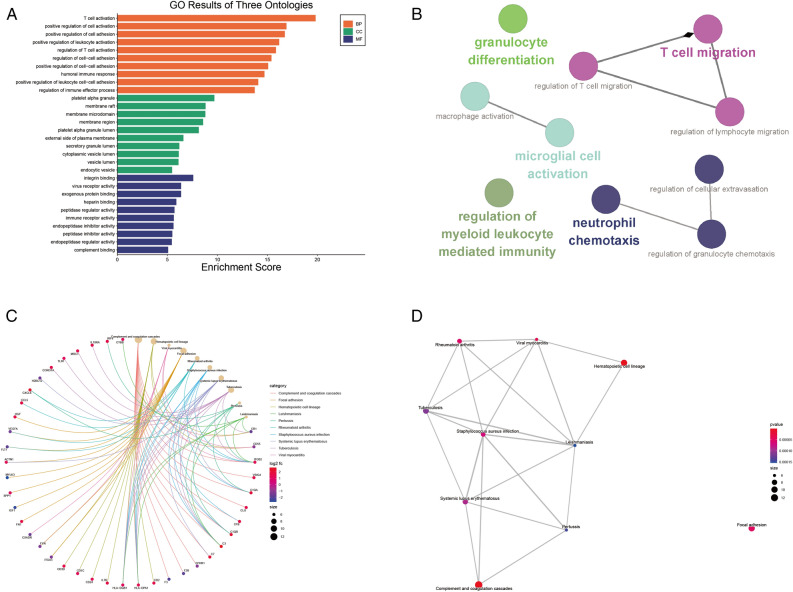
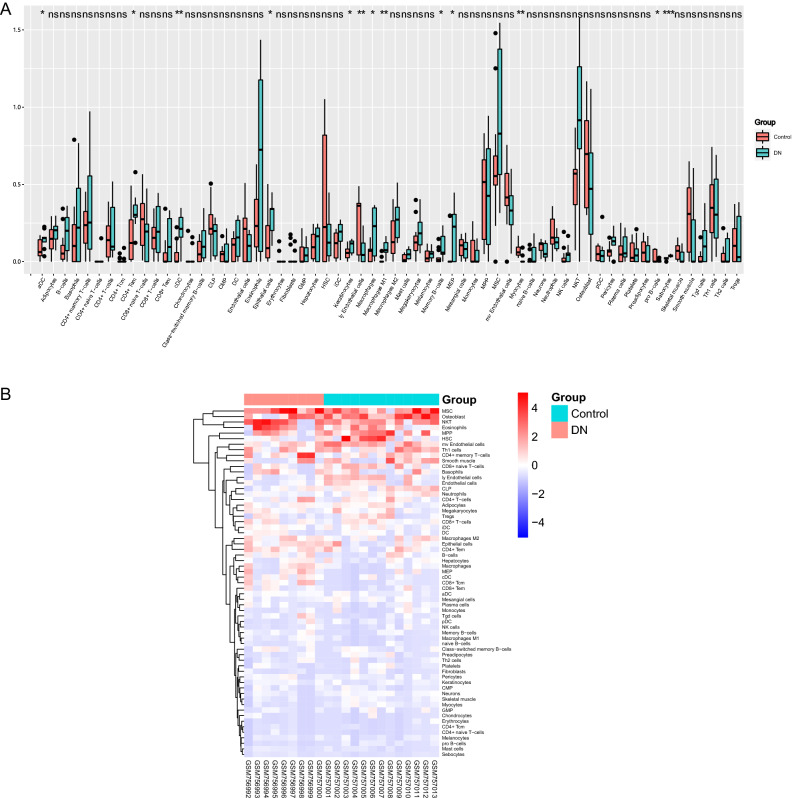
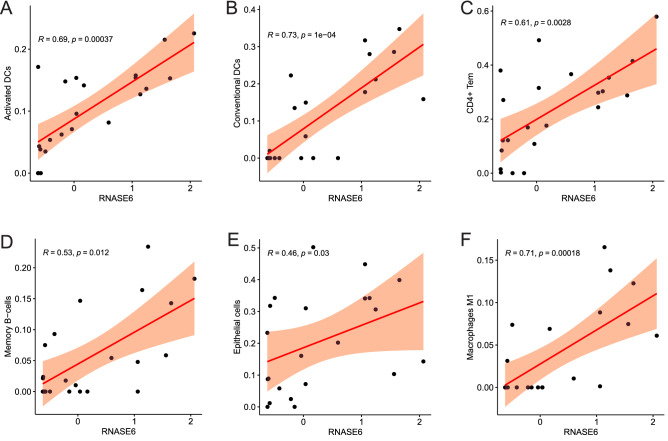
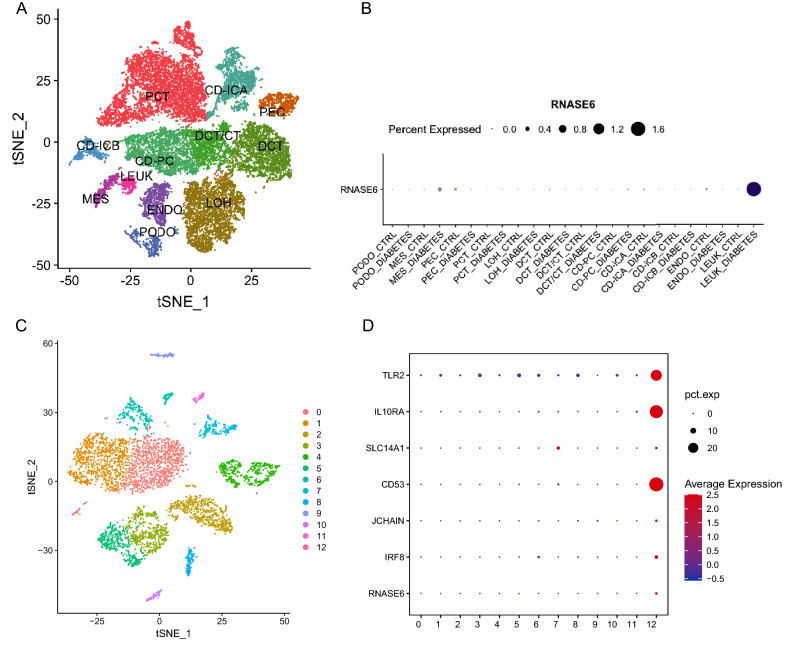
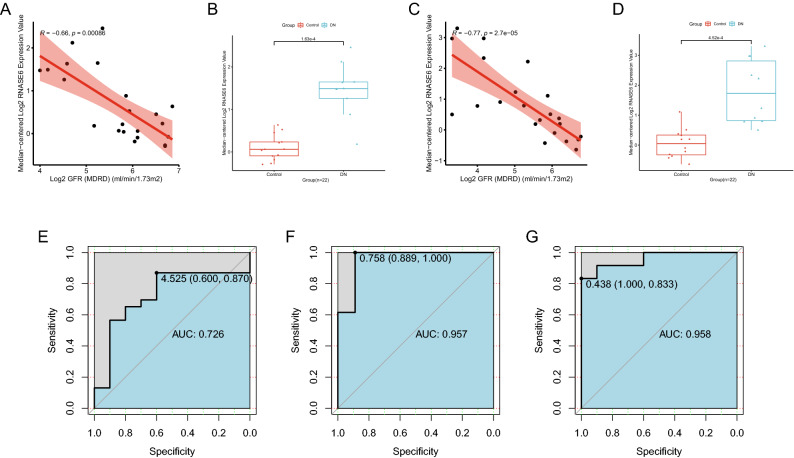
Diabetic nephropathy is one of the major causes of end-stage renal disease, and the pathogenesis of the disease has not been elucidated. While the immunoinflammatory response plays an essential role in the progression of diabetic nephropathy. Glomerular expression dataset in diabetic nephropathy was obtained from the GEO database. Differentially expressed genes were identified and functional enrichment analysis was performed to find genes associated with immunity and inflammation from them. The hub genes of immunoinflammatory were identified using MCODE after establishing the PPI network and gene expression was verified with diabetic nephropathy model rats. Xcell was used to assign immune cells to diabetic nephropathy glomerular samples to detect significant changes in immune cells and to analyze correlations with the hub gene. We found 120 DEGs associated with immunity and inflammation, Ribonuclease 6 was the Hub gene with the highest MCODE score. Xcell analysis revealed significant changes of immune cells in DN glomeruli, including upregulated Activated DCs, Conventional DCs, CD4+ Tem, Epithelial cells, Macrophages, Macrophages M1, and Memory B-cells. RNase6 expression showed the highest positive correlation with Macrophages M1, Activated DCs, and Conventional DCs. We verified through the Nephroseq v5 database that RNase6 expression was elevated in DN glomeruli and negatively correlated with glomerular filtration rate. Animal studies revealed that the kidney of DN model rats showed increased RNase6 expression together with inflammatory factor TNF-alpha and chemokine MCP-1. Our study identified RNase6 as a diagnostic and prognostic biomarker for diabetic nephropathy and found that it may play an essential role in the immunoinflammatory damage to the glomerulus.
糖尿病肾病是终末期肾病的主要病因之一,其发病机制尚未阐明。虽然免疫炎症反应在糖尿病肾病的进展中起着至关重要的作用。从 GEO 数据库中获得糖尿病肾病肾小球表达数据集。鉴定差异表达基因,并对其进行功能富集分析,以找到与免疫和炎症相关的基因。通过建立 PPI 网络确定免疫炎症的枢纽基因,并用糖尿病肾病模型大鼠验证基因表达。使用 Xcell 将免疫细胞分配到糖尿病肾病肾小球样本中,以检测免疫细胞的显著变化,并分析与枢纽基因的相关性。我们发现了 120 个与免疫和炎症相关的 DEGs,核糖核酸酶 6 是 MCODE 评分最高的枢纽基因。Xcell 分析显示 DN 肾小球中免疫细胞发生显著变化,包括上调的活化 DC、常规 DC、CD4+Tem、上皮细胞、巨噬细胞、M1 巨噬细胞和记忆 B 细胞。RNase6 表达与 M1 巨噬细胞、活化 DC 和常规 DC 呈最高正相关。我们通过 Nephroseq v5 数据库验证,DN 肾小球中 RNase6 的表达升高,与肾小球滤过率呈负相关。动物研究表明,DN 模型大鼠的肾脏中 RNase6 表达增加,同时炎症因子 TNF-α和趋化因子 MCP-1 也增加。我们的研究将 RNase6 鉴定为糖尿病肾病的诊断和预后生物标志物,并发现它可能在肾小球的免疫炎症损伤中起重要作用。