Wang Miao, Chen Huan, He Xu, Zhao Xiaopeng, Zhang Haoran, Wang Yu, Wang Hongyan
Department of Thoracic Surgery, Fourth Hospital of Hebei Medical University, Shijiazhuang, China.
Department of Ultrasound, Fourth Hospital of Hebei Medical University, Shijiazhuang, China.
J Gastrointest Oncol. 2022 Oct;13(5):2144-2153. doi: 10.21037/jgo-22-877.
China has a high incidence of esophageal cancer (EC), mainly squamous cell carcinoma, which is a serious threat to human life. Previous studies have shown that artemisinin can inhibit the proliferation and metastasis of cancer cells, thus inhibiting the progression of cancer. Aerobic glycolysis plays an important role in the uncontrolled growth of tumor cells. However, there are still different opinions on the anti-cancer mechanism, and there have been few studies involving EC. Our pre-experiment found that artemisinin can inhibit the progression of EC by directly regulating aerobic glycolysis.
The EC cell lines KYSE-150 and KYSE-170 were used to detect the effects of artemisinin on cell viability, proliferation, metastasis, and aerobic glycolysis. Network pharmacology technology was used to explore the potential molecular mechanism of artemisinin inhibiting the development of EC through aerobic glycolysis and the findings were verified by molecular docking.
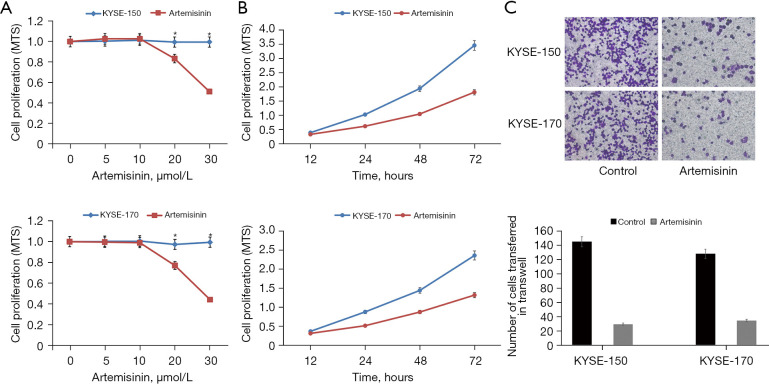
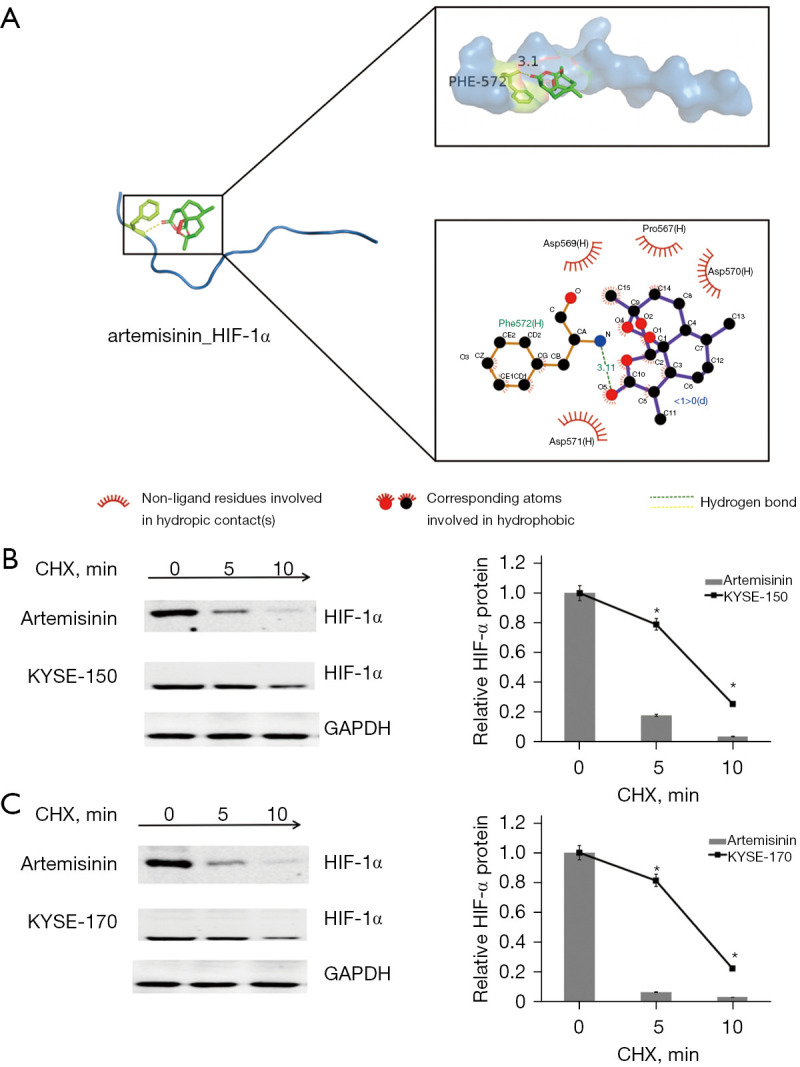
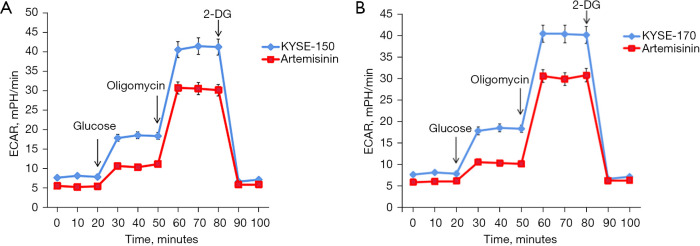
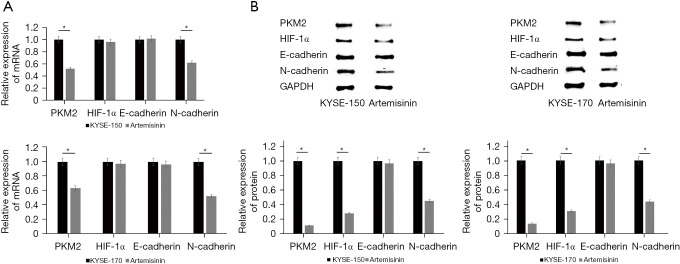
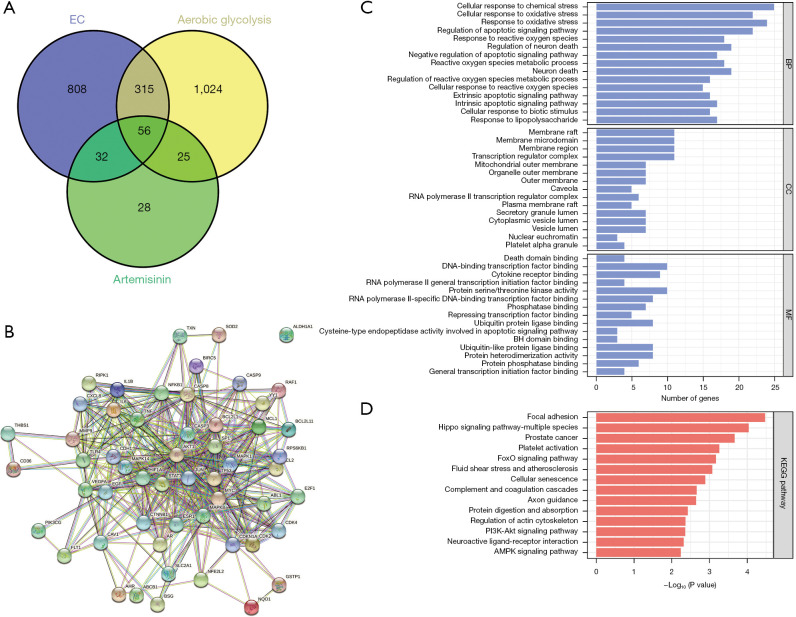
Artemisinin could inhibit the proliferation, metastasis, and glycolysis of esophageal squamous cell carcinoma (ESCC), and this was verified by the expression of key metastatic proteins (N-cadherin) and key enzymes of glycolysis [hypoxia-inducible factor-1α (HIF-1α), pyruvate kinase M2 (PKM2)]. Through network pharmacology, we found the potential therapeutic target of artemisinin, HIF-1α. The results of molecular docking showed that artemisinin could directly target HIF-1α and promote its degradation.
Artemisinin can target HIF-1α to reduce the level of glycolysis and inhibit the development of EC, which may become a targeted drug for the treatment of EC.
中国食管癌(EC)发病率高,主要为鳞状细胞癌,对人类生命构成严重威胁。以往研究表明,青蒿素可抑制癌细胞增殖和转移,从而抑制癌症进展。有氧糖酵解在肿瘤细胞的失控生长中起重要作用。然而,关于其抗癌机制仍存在不同观点,且涉及EC的研究较少。我们的前期实验发现,青蒿素可通过直接调节有氧糖酵解来抑制EC进展。
利用EC细胞系KYSE - 150和KYSE - 170检测青蒿素对细胞活力、增殖、转移及有氧糖酵解的影响。采用网络药理学技术探索青蒿素通过有氧糖酵解抑制EC发展的潜在分子机制,并通过分子对接进行验证。
青蒿素可抑制食管鳞状细胞癌(ESCC)的增殖、转移和糖酵解,这通过关键转移蛋白(N - 钙黏蛋白)和糖酵解关键酶[缺氧诱导因子 - 1α(HIF - 1α)、丙酮酸激酶M2(PKM2)]的表达得到验证。通过网络药理学,我们发现了青蒿素的潜在治疗靶点HIF - 1α。分子对接结果表明,青蒿素可直接作用于HIF - 1α并促进其降解。
青蒿素可靶向HIF - 1α以降低糖酵解水平并抑制EC发展,这可能成为治疗EC的靶向药物。