R & D, Baxalta Innovations GmbH, a member of the Takeda group of companies, Vienne, Austria.
Institute Krems Bioanalytics, University of Applied Sciences Krems, Krems, Austria.
Front Immunol. 2022 Oct 21;13:975680. doi: 10.3389/fimmu.2022.975680. eCollection 2022.
Hemophilia A is a severe bleeding disorder caused by the deficiency of functionally active coagulation factor VIII (FVIII). The induction of neutralizing anti-drug antibodies is a major complication in the treatment of hemophilia A patients with FVIII replacement therapies. Why some patients develop neutralizing antibodies (FVIII inhibitors) while others do not is not well understood. Previous studies indicated that the induction of FVIII inhibitors requires cognate interactions between FVIII-specific B cells and FVIII-specific CD4+ T cells in germinal center reactions. In this study, we investigated the FVIII peptide repertoire presented by antigen-presenting cells (APCs) under different microenvironment conditions that are expected to alter the uptake of FVIII by APCs. The aim of this study was to better understand the association between different microenvironment conditions during FVIII uptake and the FVIII peptide patterns presented by APCs.
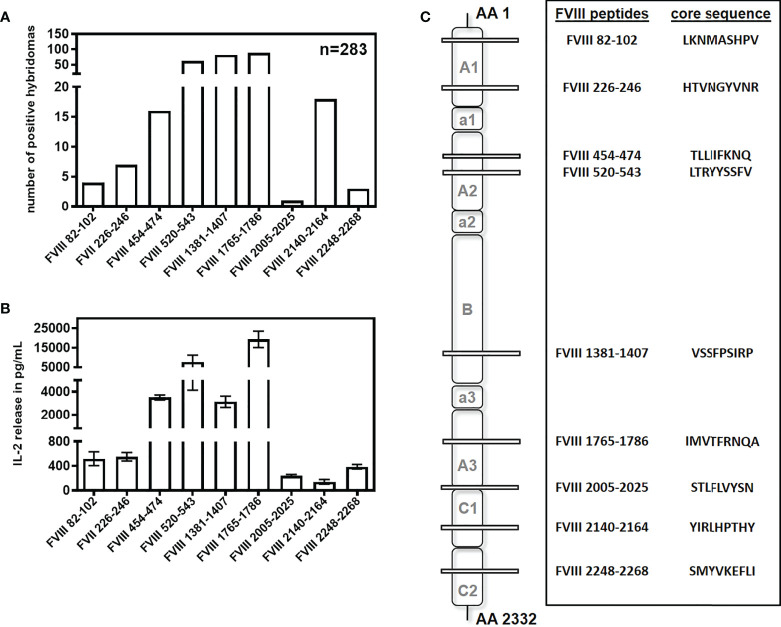
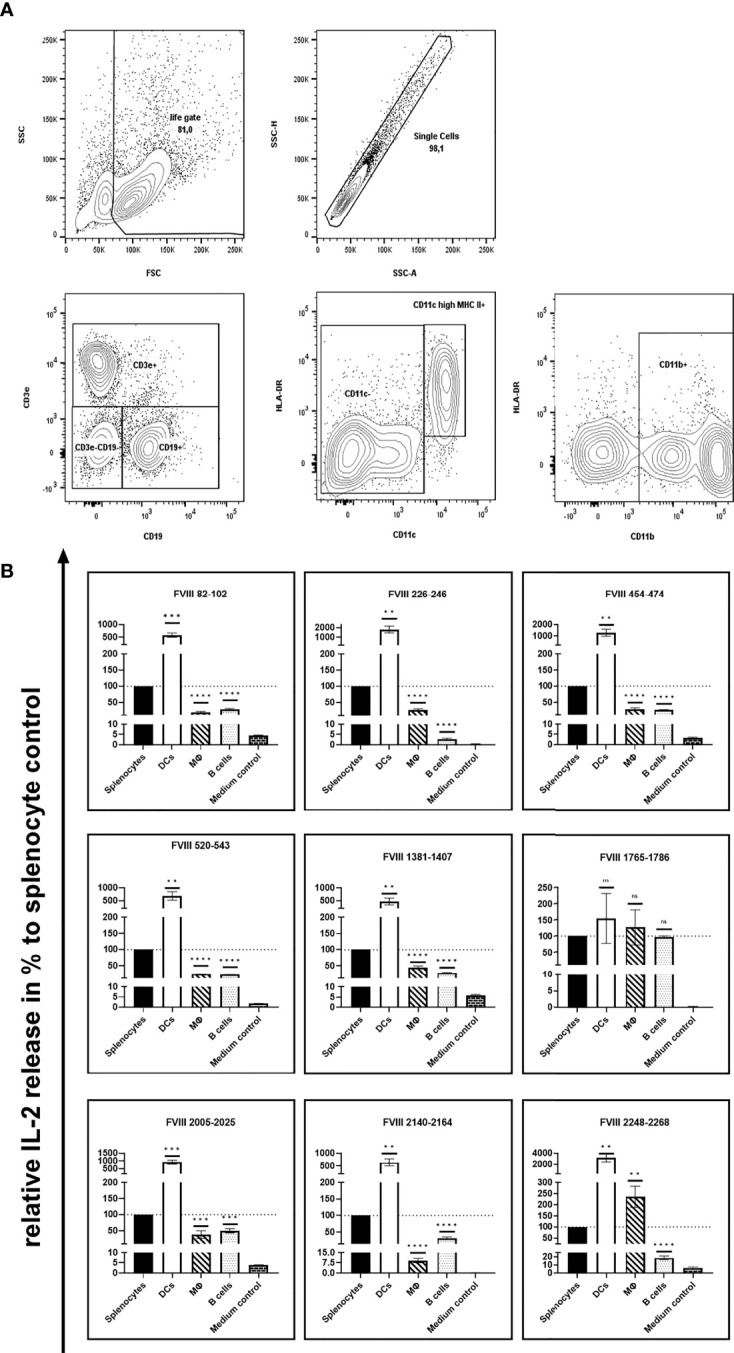
We used a FVIII-specific CD4+ T cell hybridoma library derived from humanized HLA-DRB1*1501 (human MHC class II) hemophilic mice that were treated with human FVIII. APCs obtained from the same mouse strain were preincubated with FVIII under different conditions which are expected to alter the uptake of FVIII by APCs. Subsequently, these preincubated APCs were used to stimulate the FVIII-specific CD4+ T cell hybridoma library. Stimulation of peptide-specific CD4+ T-cell hybridoma clones was assessed by analyzing the IL-2 release into cell culture supernatants.
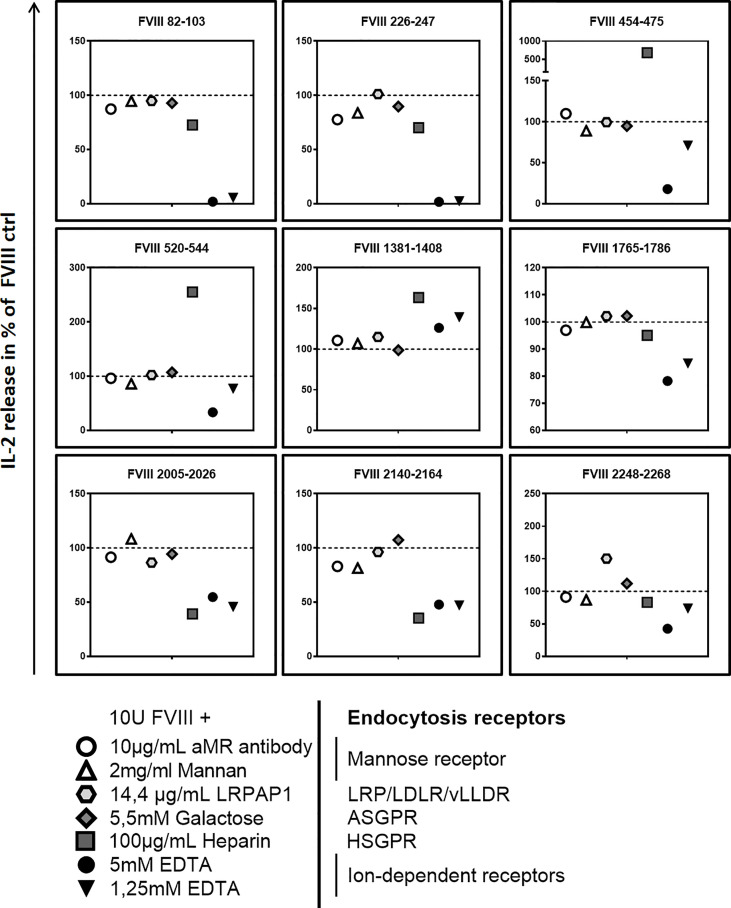
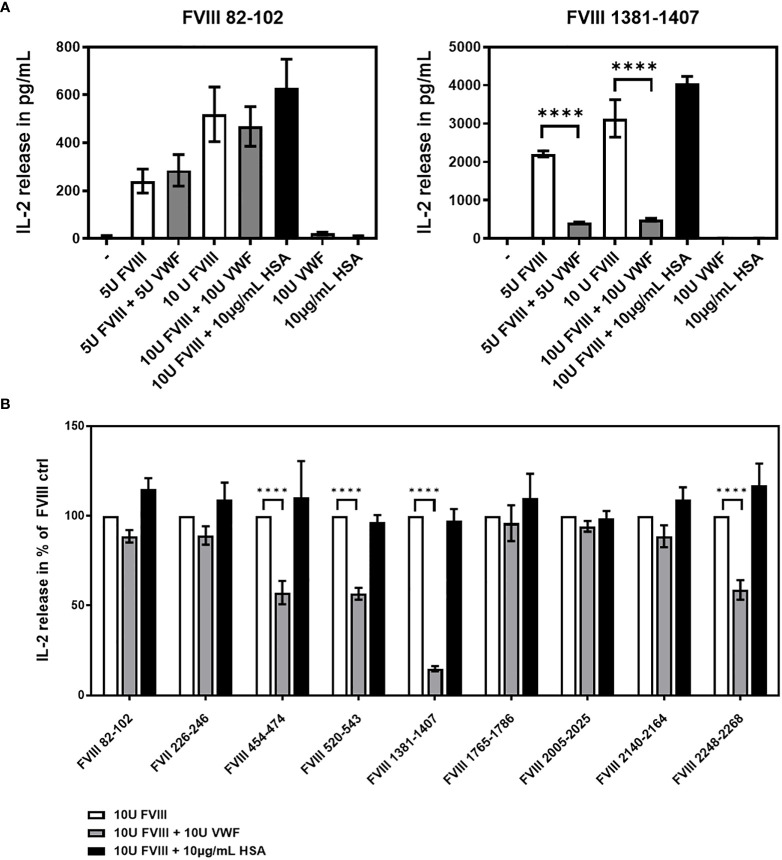
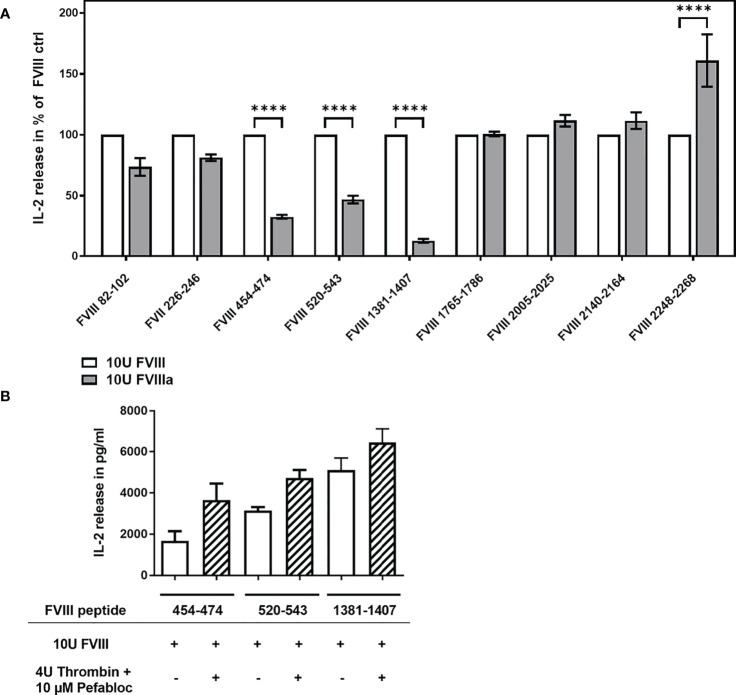
The results of this study indicate that the specific microenvironment conditions during FVIII uptake by APCs determine the peptide specificities of subsequently activated FVIII-specific CD4+ T cell hybridoma clones. Incubation of APCs with FVIII complexed with von Willebrand Factor, FVIII activated by thrombin or FVIII combined with a blockade of receptors on APCs previously associated with FVIII uptake and clearance, resulted in distinct peptide repertoires of subsequently activated hybridoma clones.
Based on our data we conclude that the specific microenvironment during FVIII uptake by APCs determines the FVIII peptide repertoire presented on MHC class II expressed by APCs and the peptide specificity of subsequently activated FVIII-specific CD4+ T cell hybridoma clones.
血友病 A 是一种严重的出血性疾病,由功能活跃的凝血因子 VIII(FVIII)缺乏引起。抗药物中和抗体的诱导是血友病 A 患者接受 FVIII 替代治疗的主要并发症。为什么一些患者会产生中和抗体(FVIII 抑制剂),而另一些患者则不会,这一点还不是很清楚。先前的研究表明,FVIII 抑制剂的诱导需要 FVIII 特异性 B 细胞和 FVIII 特异性 CD4+T 细胞在生发中心反应中的同源相互作用。在这项研究中,我们研究了抗原呈递细胞(APCs)在不同微环境条件下呈现的 FVIII 肽谱,这些条件预计会改变 APC 对 FVIII 的摄取。本研究的目的是更好地理解 FVIII 摄取过程中不同微环境条件与 APC 呈现的 FVIII 肽模式之间的关联。
我们使用了一种源自人源化 HLA-DRB1*1501(人类 MHC Ⅱ类)血友病小鼠的 FVIII 特异性 CD4+T 细胞杂交瘤文库,该文库经过人 FVIII 处理。从同一小鼠品系中获得的 APCs 在不同条件下与 FVIII 预孵育,这些条件预计会改变 APC 对 FVIII 的摄取。随后,将这些预孵育的 APCs 用于刺激 FVIII 特异性 CD4+T 细胞杂交瘤文库。通过分析细胞培养上清液中 IL-2 的释放来评估刺激肽特异性 CD4+T 细胞杂交瘤克隆的情况。
本研究的结果表明,APCs 摄取 FVIII 时的特定微环境条件决定了随后激活的 FVIII 特异性 CD4+T 细胞杂交瘤克隆的肽特异性。用与 von Willebrand 因子结合的 FVIII、用凝血酶激活的 FVIII 或与 APC 上先前与 FVIII 摄取和清除相关的受体结合的 FVIII 孵育 APCs,会导致随后激活的杂交瘤克隆呈现出不同的肽谱。
根据我们的数据,我们得出结论,APCs 摄取 FVIII 时的特定微环境决定了 APCs 上表达的 MHC Ⅱ类 FVIII 肽谱,以及随后激活的 FVIII 特异性 CD4+T 细胞杂交瘤克隆的肽特异性。