KEM | Evang. Kliniken Essen-Mitte gGmbH, Am Deimelsberg 34 a, 45276, Essen, Germany.
Loewenstein Medical Technology GmbH + Co. KG, Hamburg, Germany.
Sleep Breath. 2023 Aug;27(4):1639-1650. doi: 10.1007/s11325-022-02740-w. Epub 2022 Nov 17.
Monitored polysomnography (PSG) is considered the gold standard technique to diagnose obstructive sleep apnea (OSA) and titrate continuous positive airway pressure (CPAP), the accepted primary treatment method. Currently, the American Academy of Sleep Medicine (AASM) considers automatic PAP therapy initiation at home comparable to laboratory titration and recommends telemonitoring-guided interventions. Advanced CPAP devices evaluate and report the residual apnea-hypopnea index (AHI). However, in order to control the effectiveness of the prescribed therapy outside of a PSG setting, the automatic event detection must provide reliable data.
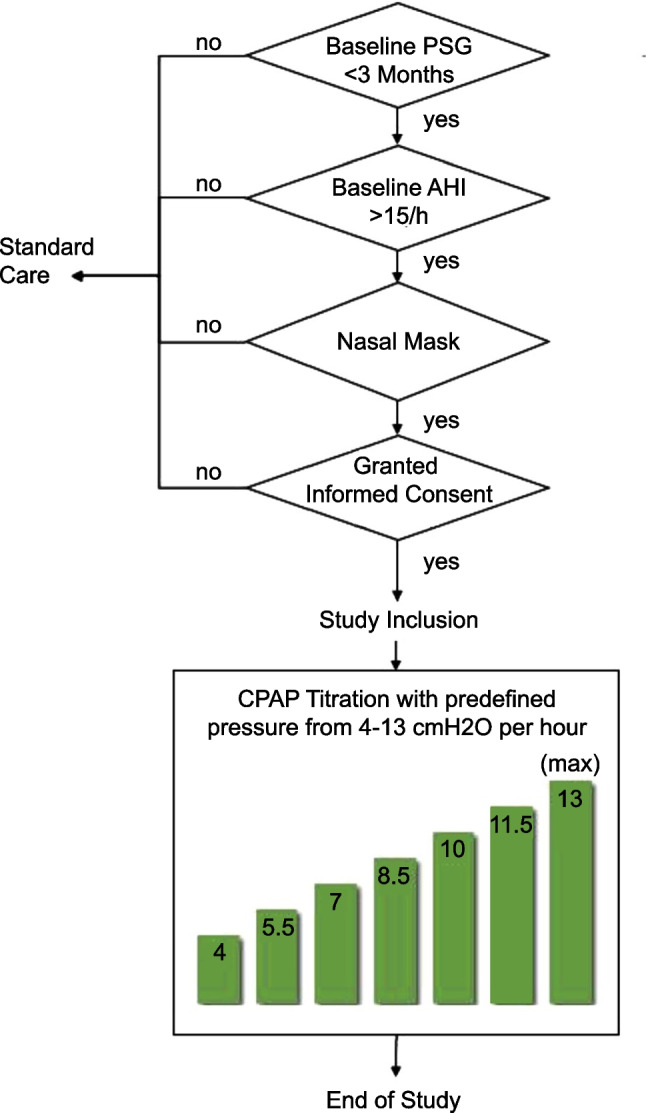
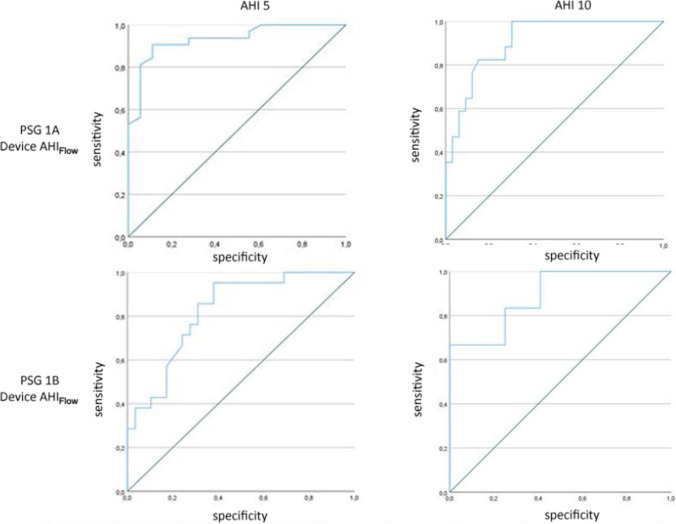
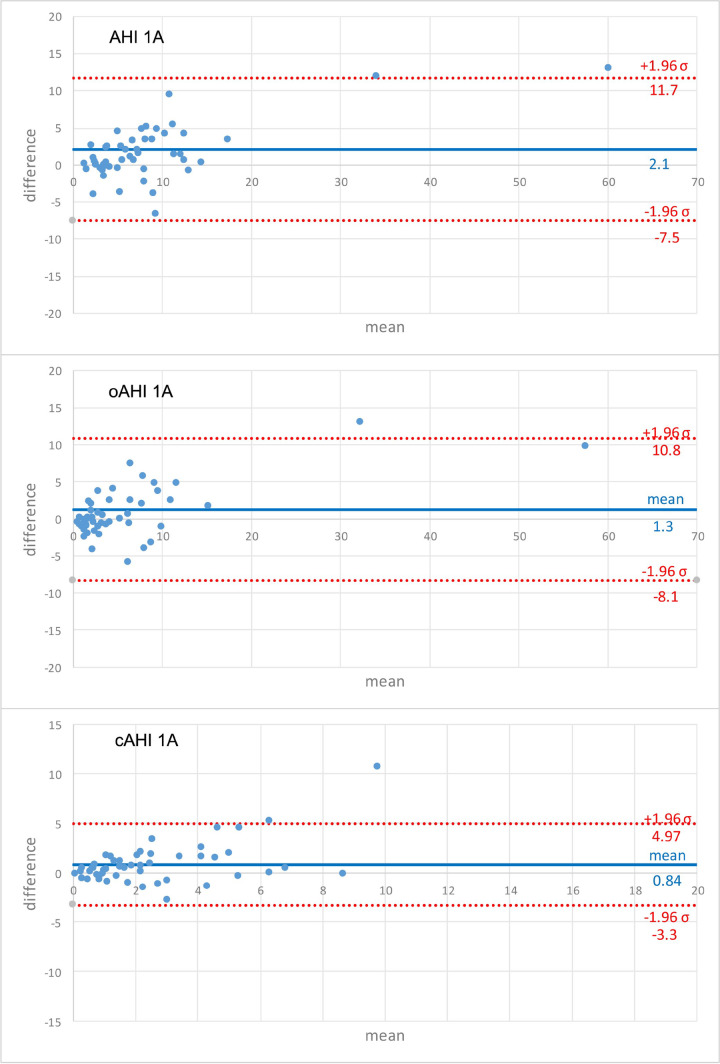
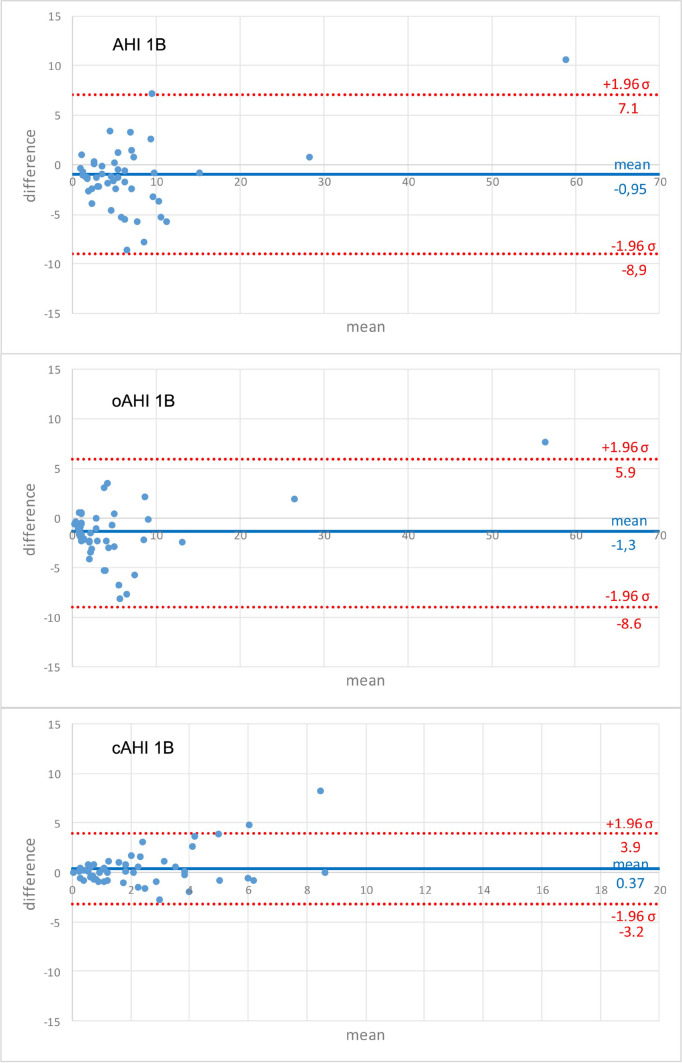
A CPAP titration was performed in the sleep laboratory by PSG in patients with OSA. The residual event indices detected by the tested device (prismaLine, Loewenstein Medical Technology) were compared to the manually scored PSG indices. Results of the device (AHI) were compared according to the AASM scoring criteria 1A (AHI, hypopneas with a flow signal reduction of ≥ 30% with ≥ 3% oxygen reduction and/or an arousal) and 1B (AHI, hypopneas with a flow signal decrease by ≥ 30% with a ≥ 4% oxygen desaturation).
In 50 patients with OSA, the mean PSG AHI was 10.5 ± 13.8/h and the PSG AHI was 7.4 ± 12.6/h compared to a mean device AHI of 8.4 ± 10.0/h. The correlation coefficient regarding PSG AHI and AHI was 0.968. The correlation regarding central hypopneas on the other hand was 0.153. There were few central events to be compared in this patient group.
The device-based analysis showed a high correlation in the determination of residual obstructive AHI under therapy. The recorded residual respiratory event indices in combination with the data about leakage and adherence of the studied device provide reliable information for the implementation and follow-up of CPAP therapy in a typical group of patients with OSA.
ClinicalTrials.gov Identifier: NCT04407949, May 29, 2020, retrospectively registered.
监测多导睡眠图(PSG)被认为是诊断阻塞性睡眠呼吸暂停(OSA)和调整持续气道正压通气(CPAP)的金标准技术,CPAP 是公认的主要治疗方法。目前,美国睡眠医学学会(AASM)认为家庭自动 PAP 治疗启动与实验室滴定相当,并推荐远程监测引导干预。先进的 CPAP 设备可评估和报告残余呼吸暂停-低通气指数(AHI)。然而,为了在 PSG 环境之外控制规定治疗的有效性,自动事件检测必须提供可靠的数据。
对 OSA 患者在睡眠实验室进行 PSG 监测下 CPAP 滴定。比较测试设备(prismaLine,Loewenstein Medical Technology)检测到的残余事件指数与手动评分 PSG 指数。根据 AASM 评分标准 1A(AHI,伴有气流信号降低≥30%,伴有≥3%的氧减少和/或觉醒的呼吸暂停)和 1B(AHI,伴有气流信号降低≥30%,伴有≥4%的氧去饱和的呼吸暂停),比较设备(AHI)的结果。
在 50 例 OSA 患者中,PSG AHI 平均为 10.5±13.8/h,PSG AHI 为 7.4±12.6/h,而设备 AHI 平均为 8.4±10.0/h。PSG AHI 和 AHI 的相关系数为 0.968。另一方面,中枢性呼吸暂停的相关性为 0.153。在这个患者组中,可比较的中枢事件较少。
基于设备的分析在确定治疗下残留的阻塞性 AHI 方面显示出高度相关性。记录的残余呼吸事件指数与研究设备的泄漏和顺应性数据相结合,为 OSA 典型患者 CPAP 治疗的实施和随访提供了可靠的信息。
ClinicalTrials.gov 标识符:NCT04407949,2020 年 5 月 29 日,回顾性注册。