Leeds Cancer Research UK Clinical Trials Unit, Leeds Insitute of Clinical Trials Research, University of Leeds, Leeds, UK
Leeds Cancer Research UK Clinical Trials Unit, Leeds Insitute of Clinical Trials Research, University of Leeds, Leeds, UK.
BMJ Open. 2022 Nov 17;12(11):e063037. doi: 10.1136/bmjopen-2022-063037.
Multiple myeloma is a plasma cell malignancy that accounts for 1%-2% of newly diagnosed cancers.At diagnosis, approximately 20% of patients can be identified, using cytogenetics, to have inferior survival (high-risk). Additionally, standard-risk patients, with detectable disease (minimal residual disease (MRD)-positive) postautologus stem cell transplant (ASCT), fare worse compared with those who do not (MRD-negative). Research is required to determine whether a risk-adapted approach post-ASCT could further improve patient outcomes.
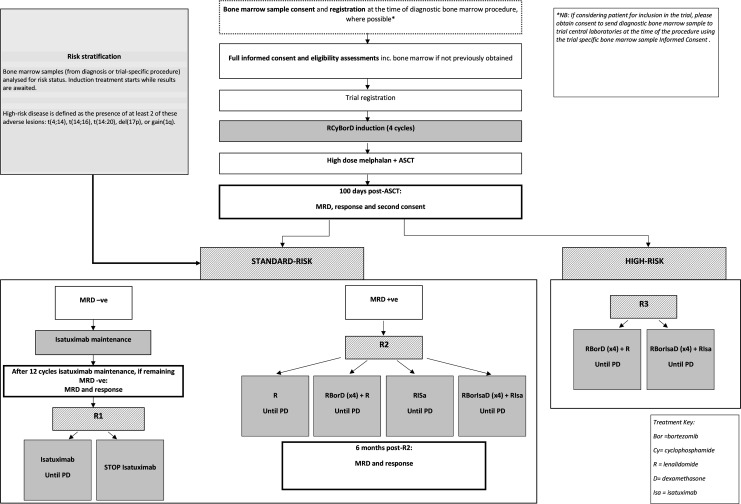
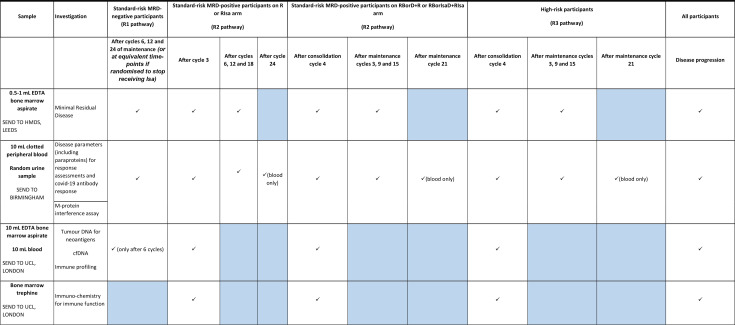
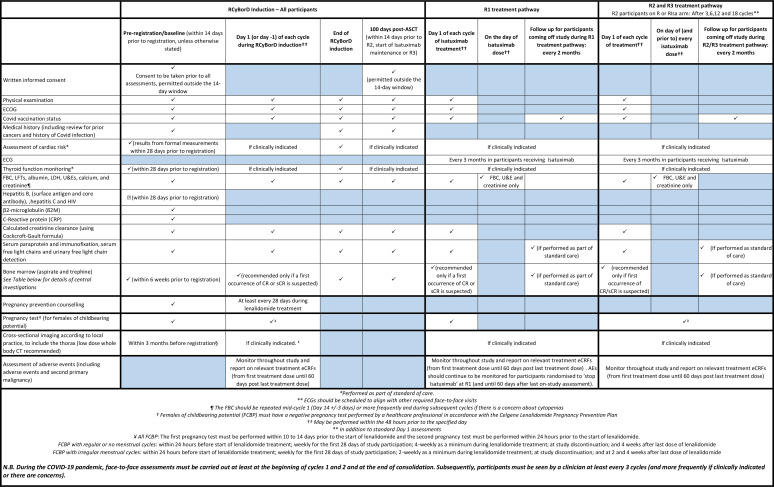
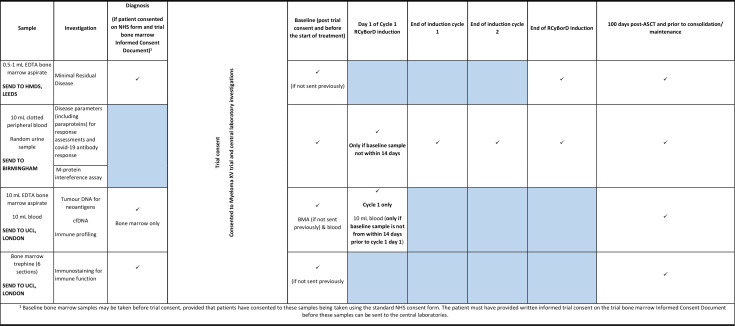
RADAR is a UK, multicentre, risk-adapted, response-guided, open-label, randomised controlled trial for transplant-eligible newly diagnosed multiple myeloma patients, using combinations of lenalidomide (R), cyclophosphamide (Cy), bortezomib (Bor), dexamethasone (D) and isatuximab (Isa).Participants receive RCyBorD(x4) induction therapy, followed by high-dose melphalan and ASCT. Post-ASCT, there are three pathways as follows:A phase III discontinuation design to assess de-escalating therapy in standard-risk MRD-negative patients. Participants receive 12 cycles of Isa maintenance. Those who remain MRD-negative are randomised to either continue or stop treatment.A phase II/III multiarm multistage design to test treatment strategies for treatment escalation in standard-risk MRD-positive patients. Participants are randomised to either; R, RBorD(x4) +R, RIsa, or RBorIsaD(x4) + RIsa.A phase II design to assess the activity of intensive treatment strategies in high-risk patients. Participants are randomised to RBorD(x4) +R or RBorIsaD(x4) + RIsa.1400 participants will be registered to allow for 500, 450 and 172 participants in each pathway. Randomisations are equal and treatment is given until disease progression or intolerance.
Ethical approval was granted by the London-Central Research Ethics Committee (20/LO/0238) and capacity and capability confirmed by the appropriate local research and development department for each participating centre prior to opening recruitment. Participant informed consent is required before trial registration and reconfirmed post-ASCT. Results will be disseminated by conference presentations and peer-reviewed publications.
ISCRTN46841867.
多发性骨髓瘤是一种浆细胞恶性肿瘤,占新诊断癌症的 1%-2%。在诊断时,大约 20%的患者可以通过细胞遗传学确定其生存率较低(高危)。此外,与未检测到疾病(微小残留病(MRD)阴性)的患者相比,标准风险患者在自体干细胞移植(ASCT)后,检测到疾病(MRD 阳性)的患者预后更差。需要研究是否可以在 ASCT 后采用风险适应方法进一步改善患者的结局。
RADAR 是一项英国多中心风险适应、基于反应指导、开放标签、随机对照临床试验,适用于有移植适应证的新诊断多发性骨髓瘤患者,使用来那度胺(R)、环磷酰胺(Cy)、硼替佐米(Bor)、地塞米松(D)和伊沙妥昔单抗(Isa)的组合。患者接受 RCyBorD(x4)诱导治疗,然后进行高剂量美法仑和 ASCT。ASCT 后有以下三种途径:
一项 3 期停药设计,用于评估标准风险 MRD 阴性患者的治疗降级。患者接受 12 周期的 Isa 维持治疗。如果仍为 MRD 阴性,则随机继续或停止治疗。
一项 2/3 期多臂多阶段设计,用于测试标准风险 MRD 阳性患者的治疗升级治疗策略。患者随机分为以下三组:R、RBorD(x4) + R、RIsa 或 RBorIsaD(x4) + RIsa。
一项 2 期设计,用于评估高危患者强化治疗策略的疗效。患者随机分为 RBorD(x4) + R 或 RBorIsaD(x4) + RIsa。
将有 1400 名患者入组,以确保在每个途径中有 500、450 和 172 名患者。随机分组均衡,治疗直至疾病进展或不耐受。
伦敦中心研究伦理委员会(20/LO/0238)批准了伦理审查,每个参与中心在开始招募前,均通过适当的当地研究和发展部门确认了能力和资格。在试验登记前,需要获得参与者的知情同意,并在 ASCT 后再次确认。结果将通过会议演讲和同行评审出版物进行传播。
ISCRTN46841867。