Department of Microbiology, Faculty of Medicine, Universitas Diponegoro, Jl. Prof. H. Soedarto, SH, Tembalang, Semarang, 50275, Indonesia.
Diponegoro National Hospital, Semarang, Indonesia.
BMC Infect Dis. 2022 Nov 17;22(1):860. doi: 10.1186/s12879-022-07851-z.
Our understanding of the influence of severe acute respiratory syndrome coronavirus 2 (SARS-CoV-2) infection on bacterial colonization in the children's upper nasopharyngeal tract during the coronavirus infectious disease (COVID-19) pandemic is limited. This study aimed to determine whether there were any differences in bacterial colonization between asymptomatic children with or without a positive SARS-CoV-2 quantitative reverse transcriptase-polymerase chain reaction (RT-qPCR) results in the community setting.
A cross-sectional community-based exploratory study was conducted from March to May 2021 in Semarang, Central Java Province, Indonesia. Using stored nasopharyngeal swabs collected from children under 18 years as a contact tracing program, we performed a real-time quantitative (qPCR) for the most important bacterial colonizing pathogens: Streptococcus pneumoniae, Haemophilus influenzae, Staphylococcus aureus, and Klebsiella pneumoniae.
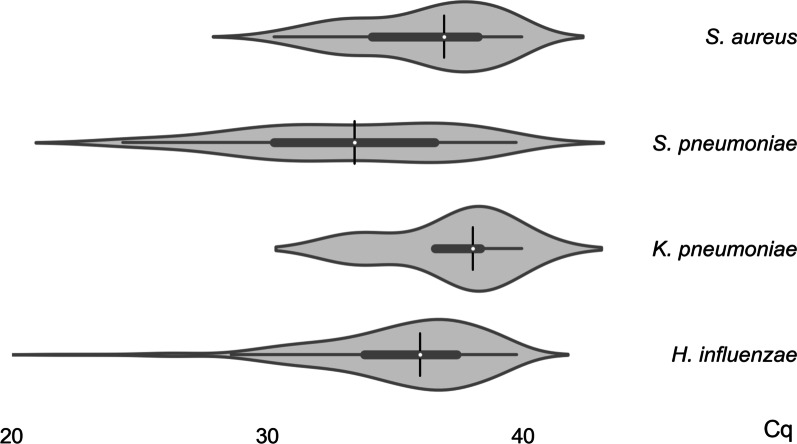
Swabs from a total of 440 children were included in this study, of which 228 (51.8%) were RT-qPCR-confirmed SARS-CoV-2 positive. In the 440 children, colonization rates were highest for H. influenzae (61.4%), followed by S. pneumoniae (17.5%), S. aureus (12.0%), and K. pneumoniae (1.8%). The co-occurrence of both S. pneumoniae and H. influenzae in the upper respiratory tract was significantly associated with a SARS-CoV-2 negative RT-qPCR. In contrast, colonization with only S. aureus was more common in SARS-CoV-2-positive children.
Overall, this exploratory study concludes that there is a significant difference in the bacterial nasopharyngeal colonization pattern between SARS-CoV-2 positive and negative in asymptomatic children in the community in Indonesia.
我们对于在冠状病毒病(COVID-19)大流行期间,严重急性呼吸综合征冠状病毒 2(SARS-CoV-2)感染对上呼吸道鼻咽部细菌定植的影响了解有限。本研究旨在确定在社区环境中,无症状儿童中 SARS-CoV-2 定量逆转录-聚合酶链反应(RT-qPCR)结果阳性与阴性者的细菌定植是否存在差异。
本研究为 2021 年 3 月至 5 月在印度尼西亚中爪哇省三宝垄市进行的一项基于社区的横断面探索性研究。使用作为接触者追踪计划收集的来自 18 岁以下儿童的鼻咽拭子,我们对最重要的定植细菌病原体进行实时定量(qPCR):肺炎链球菌、流感嗜血杆菌、金黄色葡萄球菌和肺炎克雷伯菌。
本研究共纳入 440 名儿童的拭子,其中 228 名(51.8%)为 SARS-CoV-2 RT-qPCR 阳性。在这 440 名儿童中,定植率最高的是流感嗜血杆菌(61.4%),其次是肺炎链球菌(17.5%)、金黄色葡萄球菌(12.0%)和肺炎克雷伯菌(1.8%)。上呼吸道同时存在肺炎链球菌和流感嗜血杆菌与 SARS-CoV-2 RT-qPCR 阴性显著相关。相比之下,仅金黄色葡萄球菌定植在 SARS-CoV-2 阳性儿童中更为常见。
总体而言,本探索性研究得出结论,在印度尼西亚社区中,无症状儿童中 SARS-CoV-2 阳性与阴性者的鼻咽部细菌定植模式存在显著差异。