Department of Hematology, Radboud Institute for Health Sciences, Radboud University Medical Center, Nijmegen, The Netherlands.
Princess Máxima Centre for Pediatric Oncology, Utrecht, The Netherlands.
Cancer Med. 2023 Mar;12(6):7414-7426. doi: 10.1002/cam4.5445. Epub 2022 Nov 17.
Childhood cancer survivors (CCSs) have an increased risk of developing chronic health conditions. Evidence suggests that poor health behaviors further increase health risks. Healthcare professionals (HCPs) involved in survivorship care have a key role in providing health behavior support (HBS) but can feel limited in their ability to do so. This study aims to explore European HCPs perceived facilitators and barriers to providing HBS to CCSs.
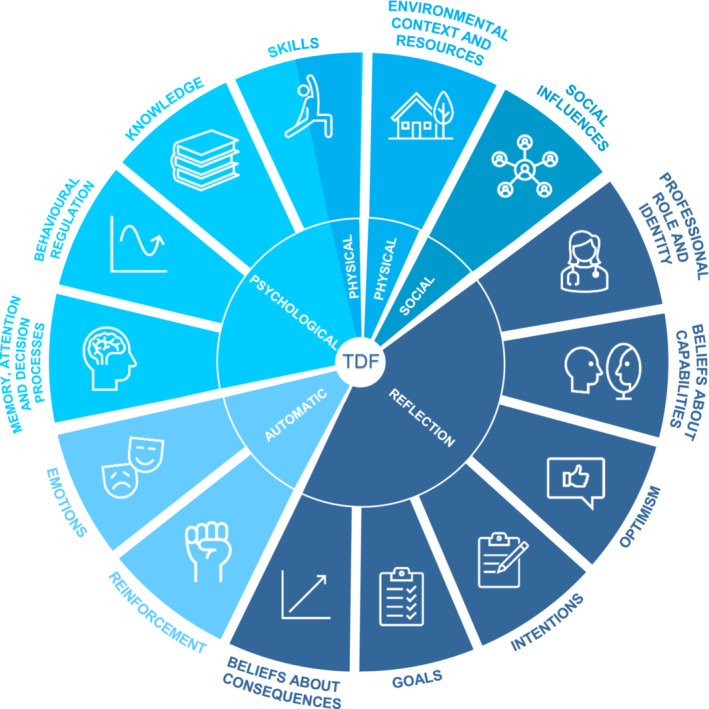
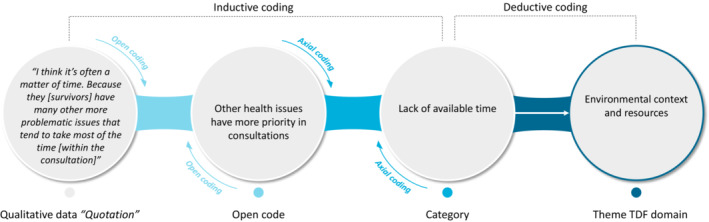
Five focus groups with 30 HCPs from survivorship care clinics across Europe were conducted. Topic guides were informed by the Theoretical Domains Framework (TDF) to capture domains that may influence provision of HBS. Focus groups were analyzed with thematic analysis. Transcripts were inductively coded, after which axial coding was applied to organize codes into categories. Finally, categories were mapped onto the TDF domains.
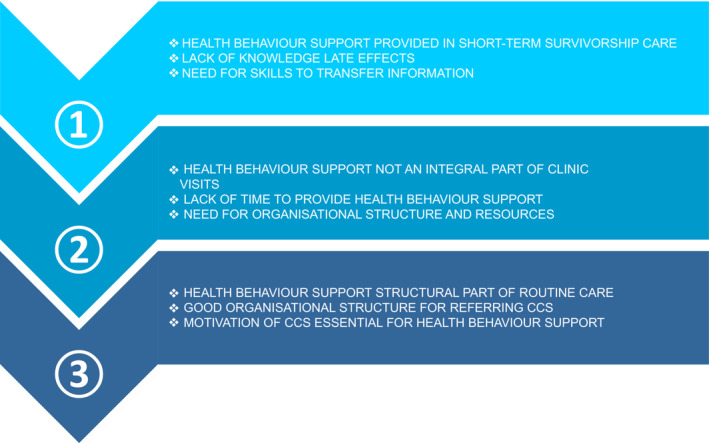
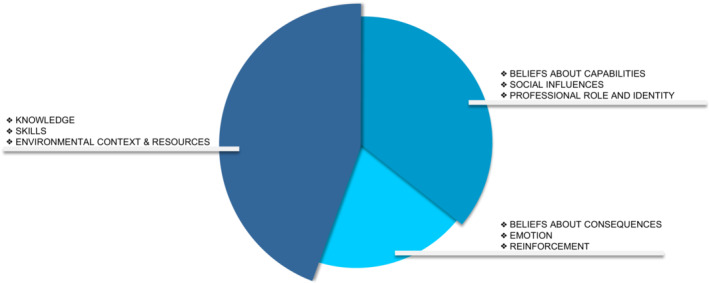
Nine TDF domains were identified in the data. The most commonly reported TDF domains were "Knowledge", "Skills", and "Environmental context and resources". HCPs indicated that their lack of knowledge of the association between late effects and health behaviors, besides time restrictions, were barriers to HBS. Facilitators for HBS included possession of skills needed to pass on health behavior information, good clinic organization, and an established network of HCPs.
This study identified education and training of HCPs as key opportunities to improve HBS. Survivorship care clinics should work towards establishing well-integrated structured care with internal and external networks including HBS being part of routine care. Proper understanding of facilitators and barriers should lead to better survivorship care for CCSs.
儿童癌症幸存者(CCS)患慢性健康问题的风险增加。有证据表明,不良健康行为会进一步增加健康风险。参与生存护理的医疗保健专业人员(HCP)在提供健康行为支持(HBS)方面发挥着关键作用,但他们可能觉得自己的能力有限。本研究旨在探讨欧洲 HCP 认为向 CCS 提供 HBS 的促进因素和障碍。
在欧洲的生存护理诊所进行了 5 次有 30 名 HCP 参加的焦点小组。主题指南受理论领域框架(TDF)的启发,以捕获可能影响 HBS 提供的领域。使用主题分析对焦点小组进行分析。对转录本进行归纳编码,然后对代码进行轴向编码,将代码组织成类别。最后,将类别映射到 TDF 领域。
在数据中确定了 9 个 TDF 领域。报告最多的 TDF 领域是“知识”、“技能”和“环境背景和资源”。HCP 表示,他们缺乏关于晚期效应与健康行为之间关联的知识,除了时间限制外,这也是 HBS 的障碍。HBS 的促进因素包括拥有传递健康行为信息所需的技能、良好的诊所组织以及建立 HCP 网络。
本研究确定了 HCP 的教育和培训是改善 HBS 的关键机会。生存护理诊所应努力建立良好整合的结构化护理,包括内部和外部网络,将 HBS 作为常规护理的一部分。对促进因素和障碍的正确理解应导致更好的 CCS 生存护理。