Tan Chunyan, Qin Yan, Liao Chunlian, Liu Jihong, Peng Qian, Jiang Wei, Gan Xiuni
Urinary Nephropathy Center, The Second Affiliated Hospital of Chongqing Medical University, ChongQing, 400000, China.
Neurology Department, The Second Affiliated Hospital of Chongqing Medical University, ChongQing, 400000, China.
Iran J Public Health. 2022 May;51(5):1040-1048. doi: 10.18502/ijph.v51i5.9419.
To analyze the effect of continuous nursing model based on WeChat public health education on self-management level and treatment compliance of stroke patients.
Overall, 98 stroke patients admitted to the Second Affiliated Hospital of Chongqing Medical University, ChongQing, 400000,China from Feb 2018 to Feb 2019 were enrolled as the research objects. They were randomly and equally divided into experimental group and control group. The control group received routine nursing management model while the experimental group received continuous nursing model based on WeChat public health education to compare the self-management level, treatment compliance, life quality and other indexes between the two groups.
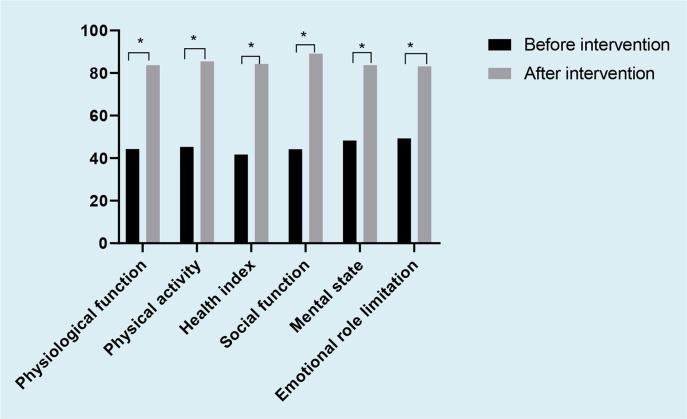
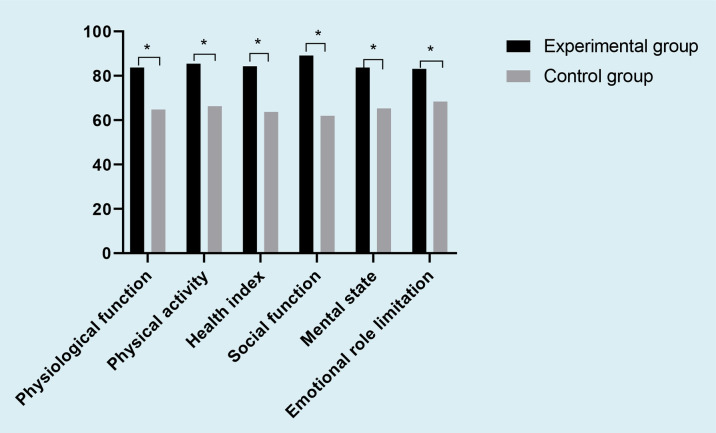
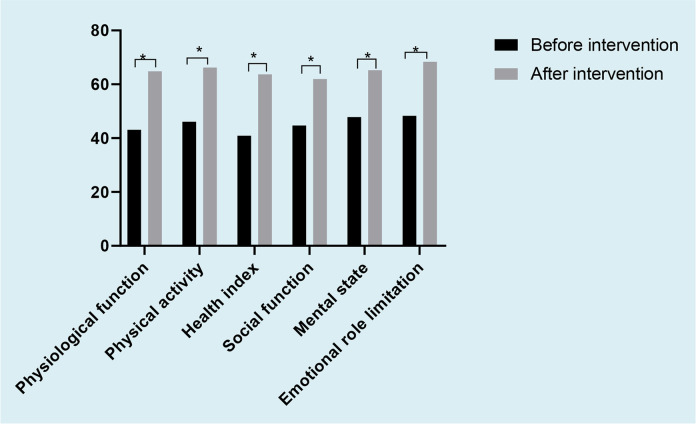
The overall self-management level in the experimental group was significantly higher than that in the control group (<0.05). The life quality scores in both groups after nursing intervention increased, and the scores in the experimental group after nursing intervention were significantly higher than those in the control group (<0.001). The total treatment compliance rate in the experimental group was higher than that in the control group (=0.001). After nursing intervention, the readmission rate and complication rate in the experimental group were significantly lower than those in the control group (<0.05).
The implementation of continuous nursing model based on WeChat public health education for stroke patients can significantly enhance the self-management level, improve the cognitive level on stroke related-health knowledge, improve treatment compliance of patients in the nursing process, promote their physical and mental health, improve the life quality and effectively reduce the complication rate and readmission rate.
分析基于微信公众健康教育的延续性护理模式对脑卒中患者自我管理水平及治疗依从性的影响。
选取2018年2月至2019年2月在重庆医科大学附属第二医院(中国重庆,400000)收治的98例脑卒中患者作为研究对象。将其随机等分为实验组和对照组。对照组采用常规护理管理模式,实验组采用基于微信公众健康教育的延续性护理模式,比较两组患者的自我管理水平、治疗依从性、生活质量等指标。
实验组患者的总体自我管理水平显著高于对照组(<0.05)。两组护理干预后的生活质量得分均有所提高,且实验组护理干预后的得分显著高于对照组(<0.001)。实验组的总治疗依从率高于对照组(=0.001)。护理干预后,实验组的再入院率和并发症发生率显著低于对照组(<0.05)。
对脑卒中患者实施基于微信公众健康教育的延续性护理模式,可显著提高其自我管理水平,提升对脑卒中相关健康知识的认知水平,在护理过程中提高患者的治疗依从性,促进其身心健康,提高生活质量,并有效降低并发症发生率和再入院率。