National Neuroscience Institute, 11 Jalan Tan Tock Seng, Singapore, 308433, Singapore.
Duke-NUS Graduate Medical School, Signature Research Program in Neuroscience and Behavioural Disorders, 8 College Road, Singapore, 169857, Singapore.
Cell Mol Life Sci. 2022 Nov 21;79(12):599. doi: 10.1007/s00018-022-04574-x.
Parkinson's disease (PD) is characterized by selective and progressive dopamine (DA) neuron loss in the substantia nigra and other brain regions, with the presence of Lewy body formation. Most PD cases are sporadic, whereas monogenic forms of PD have been linked to multiple genes, including Leucine kinase repeat 2 (LRRK2) and PTEN-induced kinase 1 (PINK1), two protein kinase genes involved in multiple signaling pathways. There is increasing evidence to suggest that endogenous DA and DA-dependent neurodegeneration have a pathophysiologic role in sporadic and familial PD.
We generated patient-derived dopaminergic neurons and human midbrain-like organoids (hMLOs), transgenic (TG) mouse and Drosophila models, expressing both mutant and wild-type (WT) LRRK2 and PINK1. Using these models, we examined the effect of LRRK2 and PINK1 on tyrosine hydroxylase (TH)-DA pathway.
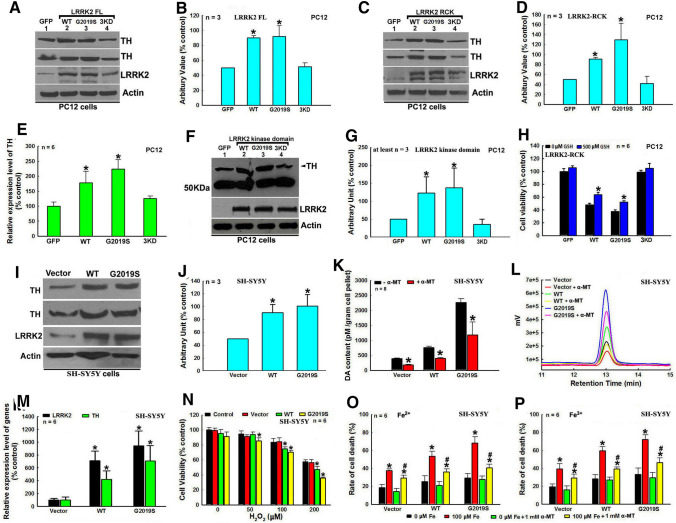
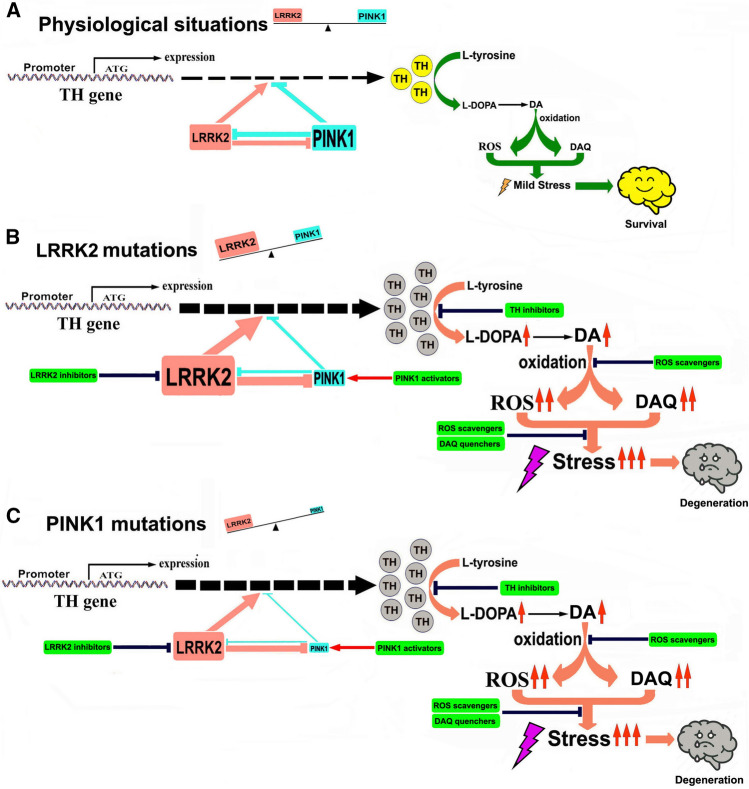
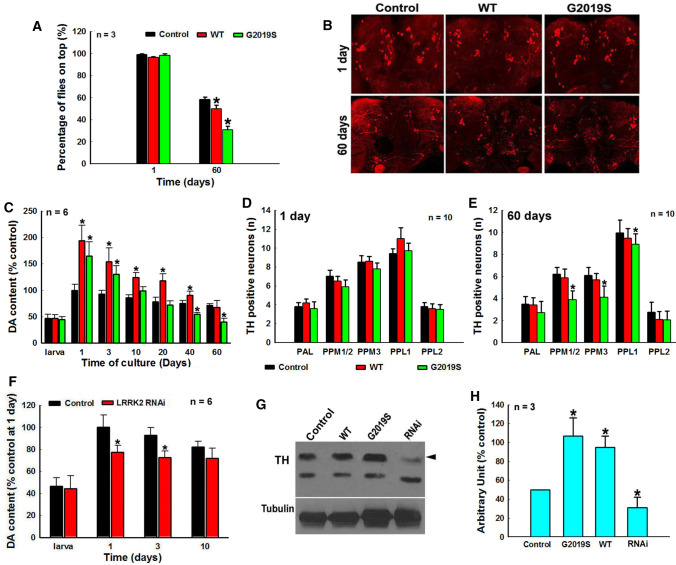
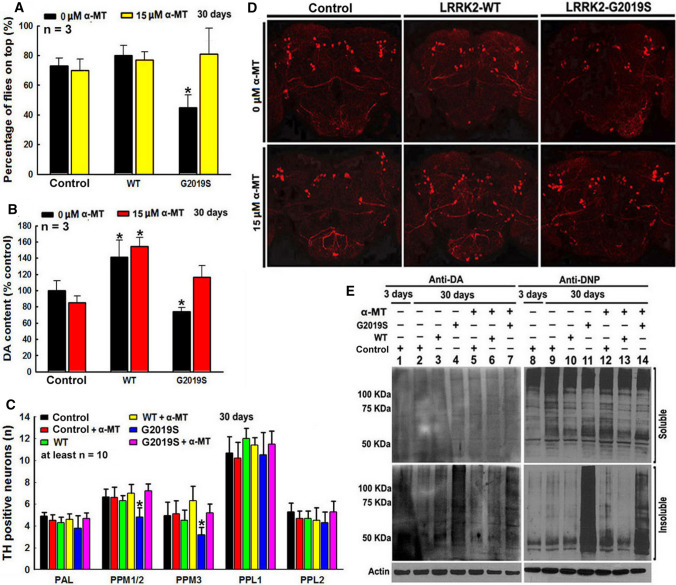
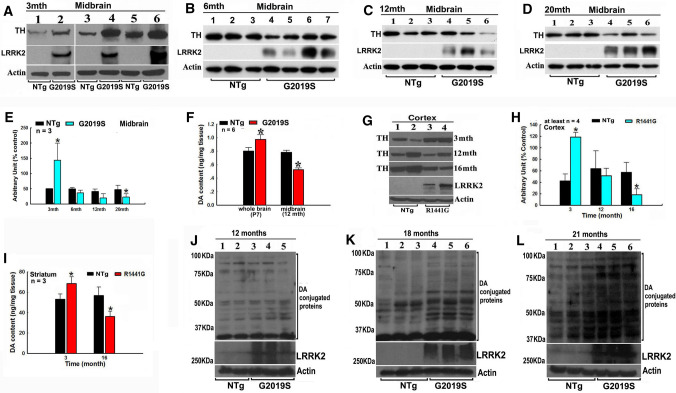
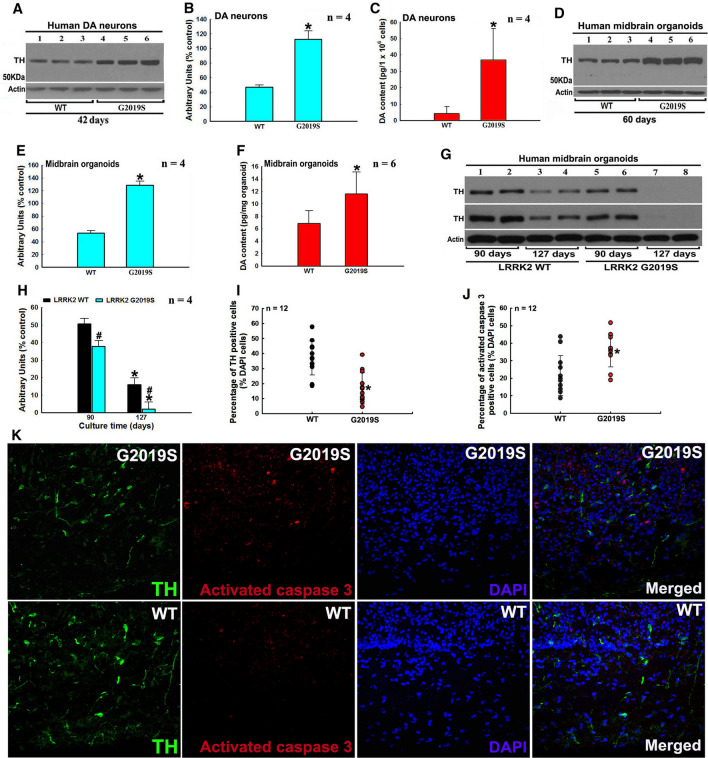
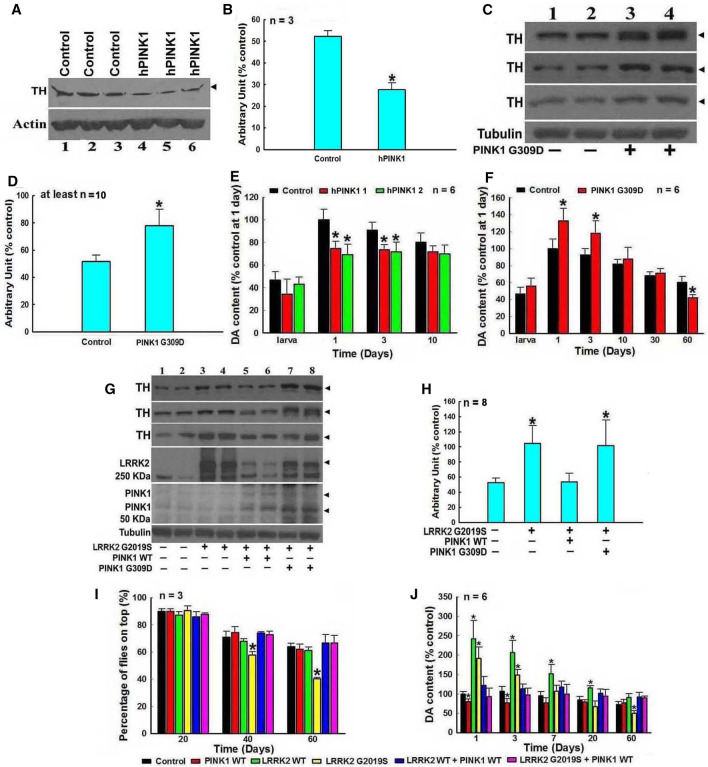
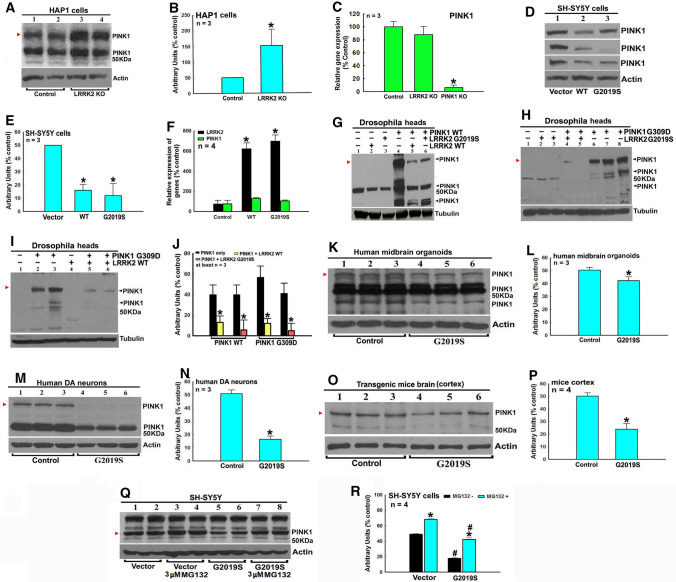
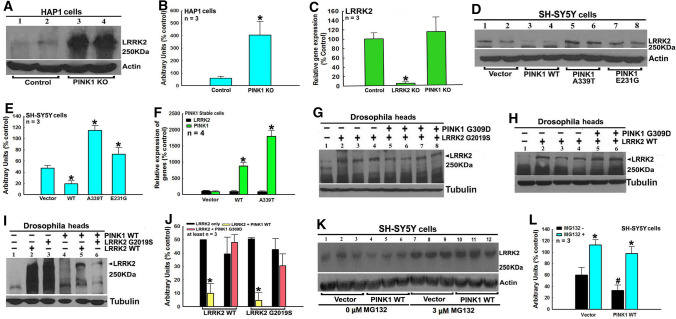
We demonstrated that PD-linked LRRK2 mutations were able to modulate TH-DA pathway, resulting in up-regulation of DA early in the disease which subsequently led to neurodegeneration. The LRRK2-induced DA toxicity and degeneration were abrogated by wild-type (WT) PINK1 (but not PINK1 mutations), and early treatment with a clinical-grade drug, α-methyl-L-tyrosine (α-MT), a TH inhibitor, was able to reverse the pathologies in human neurons and TG Drosophila models. We also identified opposing effects between LRRK2 and PINK1 on TH expression, suggesting that functional balance between these two genes may regulate the TH-DA pathway.
Our findings highlight the vital role of the TH-DA pathway in PD pathogenesis. LRRK2 and PINK1 have opposing effects on the TH-DA pathway, and its balance affects DA neuron survival. LRRK2 or PINK1 mutations can disrupt this balance, promoting DA neuron demise. Our findings provide support for potential clinical trials using TH-DA pathway inhibitors in early or prodromic PD.
帕金森病(PD)的特征是黑质和其他脑区的多巴胺(DA)神经元选择性和进行性丧失,伴有路易体形成。大多数 PD 病例为散发性,而 PD 的单基因形式与多个基因有关,包括亮氨酸重复激酶 2(LRRK2)和 PTEN 诱导的激酶 1(PINK1),这两个蛋白激酶基因参与多个信号通路。越来越多的证据表明,内源性 DA 和 DA 依赖性神经退行性变在散发性和家族性 PD 中具有病理生理作用。
我们生成了患者来源的多巴胺能神经元和人中脑类器官(hMLO)、转基因(TG)小鼠和果蝇模型,表达突变型和野生型(WT)LRRK2 和 PINK1。使用这些模型,我们研究了 LRRK2 和 PINK1 对酪氨酸羟化酶(TH)-DA 通路的影响。
我们证明了 PD 相关的 LRRK2 突变能够调节 TH-DA 通路,导致疾病早期 DA 的上调,随后导致神经退行性变。野生型(WT)PINK1(而非 PINK1 突变)可消除 LRRK2 诱导的 DA 毒性和变性,早期使用临床级药物α-甲基-L-酪氨酸(α-MT),一种 TH 抑制剂,能够逆转人神经元和 TG 果蝇模型的病理学。我们还发现 LRRK2 和 PINK1 对 TH 表达有相反的影响,这表明这两个基因之间的功能平衡可能调节 TH-DA 通路。
我们的研究结果强调了 TH-DA 通路在 PD 发病机制中的重要作用。LRRK2 和 PINK1 对 TH-DA 通路有相反的影响,其平衡影响 DA 神经元的存活。LRRK2 或 PINK1 突变可破坏这种平衡,促进 DA 神经元死亡。我们的研究结果为使用 TH-DA 通路抑制剂在早期或前驱 PD 中进行潜在临床试验提供了支持。