Zohar Keren, Giladi Eliran, Eliyahu Tsiona, Linial Michal
Department of Biological Chemistry, The Institute of Life Sciences, The Hebrew University of Jerusalem, Jerusalem 91904, Israel.
Noncoding RNA. 2022 Oct 25;8(6):72. doi: 10.3390/ncrna8060072.
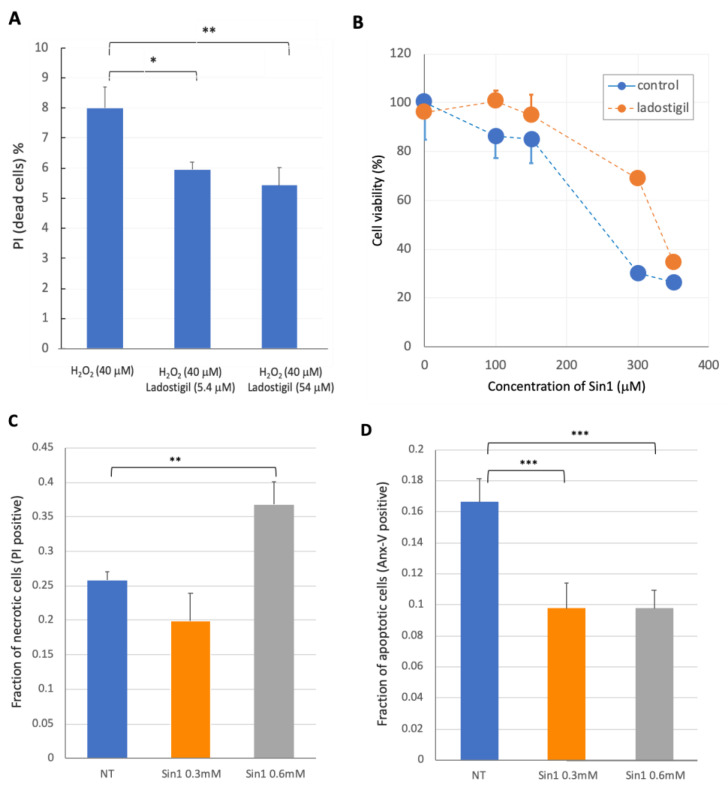
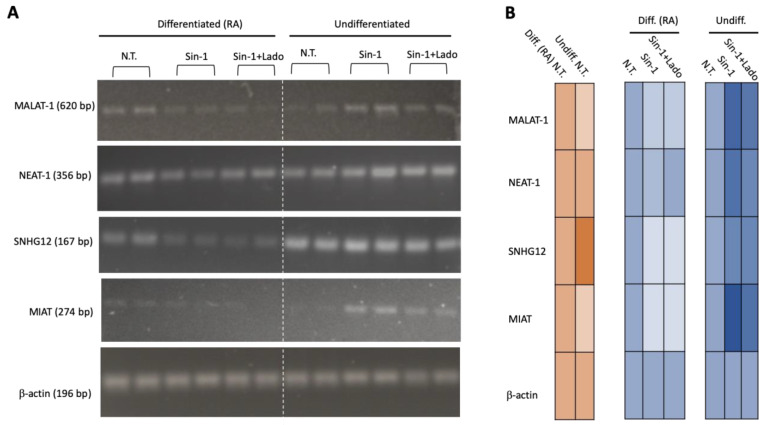
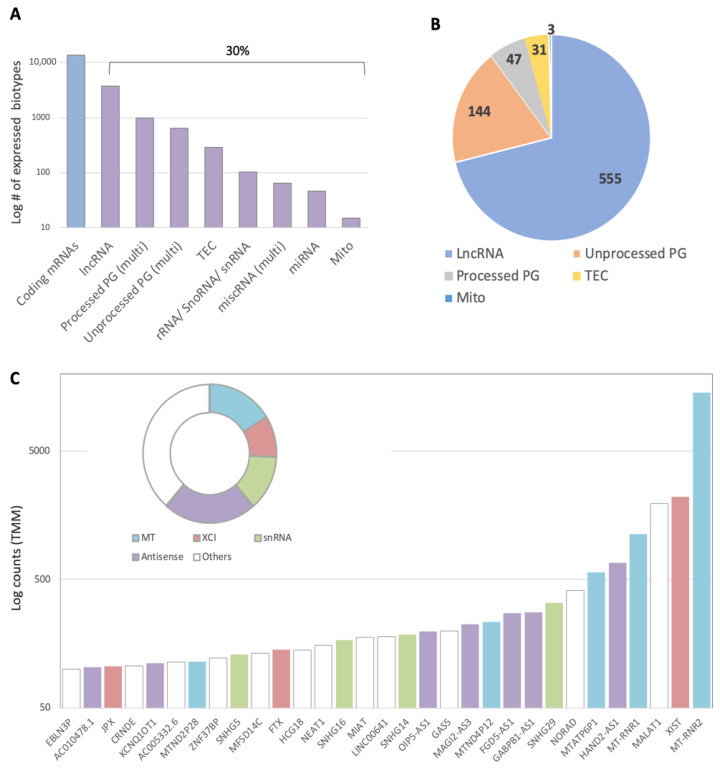
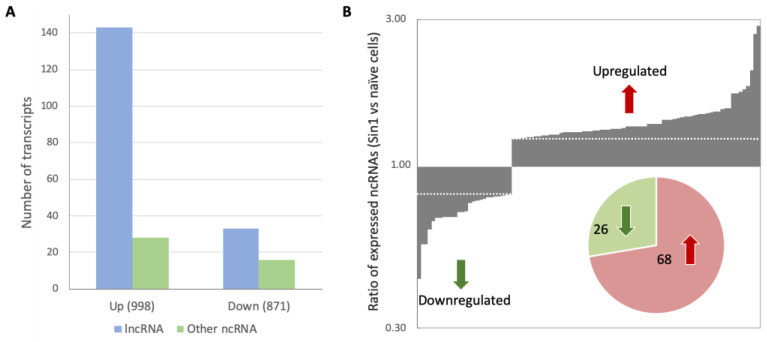
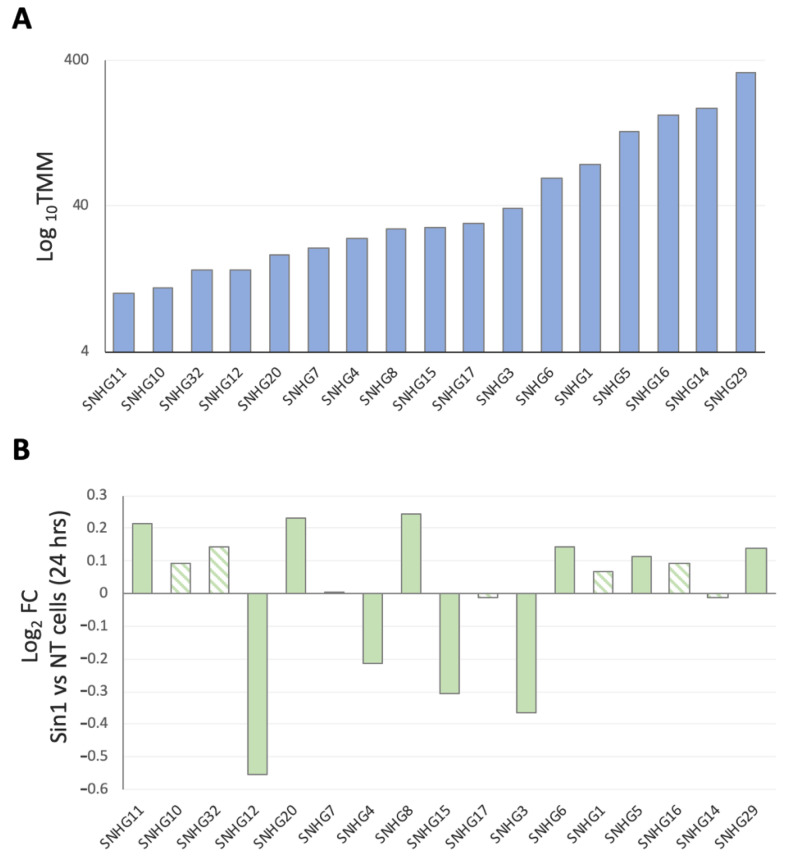
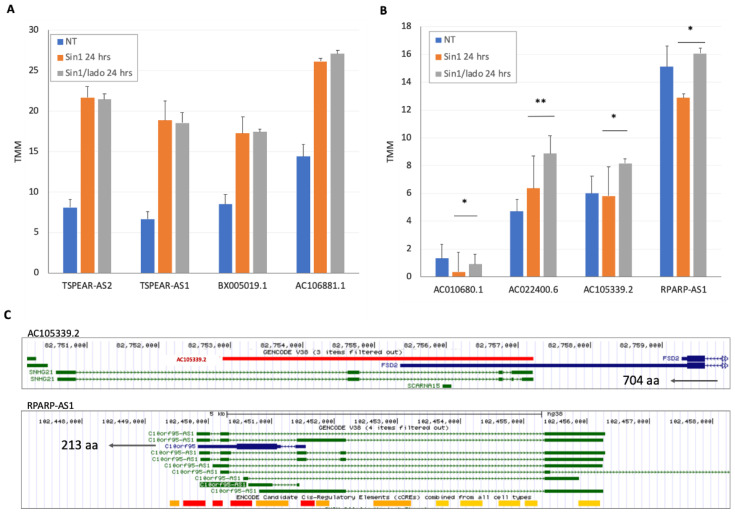
Neurodegenerative disorders, brain injury, and the decline in cognitive function with aging are accompanied by a reduced capacity of cells in the brain to cope with oxidative stress and inflammation. In this study, we focused on the response to oxidative stress in SH-SY5Y, a human neuroblastoma cell line. We monitored the viability of the cells in the presence of oxidative stress. Such stress was induced by hydrogen peroxide or by Sin1 (3-morpholinosydnonimine) that generates reactive oxygen and nitrogen species (ROS and RNS). Both stressors caused significant cell death. Our results from the RNA-seq experiments show that SH-SY5Y cells treated with Sin1 for 24 h resulted in 94 differently expressed long non-coding RNAs (lncRNAs), including many abundant ones. Among the abundant lncRNAs that were upregulated by exposing the cells to Sin1 were those implicated in redox homeostasis, energy metabolism, and neurodegenerative diseases (e.g., MALAT1, MIAT, GABPB1-AS1, NEAT1, MIAT, GABPB1-AS1, and HAND2-AS1). Another group of abundant lncRNAs that were significantly altered under oxidative stress included cancer-related SNHG family members. We tested the impact of ladostigil, a bifunctional reagent with antioxidant and anti-inflammatory properties, on the lncRNA expression levels. Ladostigil was previously shown to enhance learning and memory in the brains of elderly rats. In SH-SY5Y cells, several lncRNAs involved in transcription regulation and the chromatin structure were significantly induced by ladostigil. We anticipate that these poorly studied lncRNAs may act as enhancers (eRNA), regulating transcription and splicing, and in competition for miRNA binding (ceRNA). We found that the induction of abundant lncRNAs, such as MALAT1, NEAT-1, MIAT, and SHNG12, by the Sin1 oxidative stress paradigm specifies only the undifferentiated cell state. We conclude that a global alteration in the lncRNA profiles upon stress in SH-SY5Y may shift cell homeostasis and is an attractive in vitro system to characterize drugs that impact the redox state of the cells and their viability.
神经退行性疾病、脑损伤以及随着年龄增长认知功能的衰退,都伴随着大脑细胞应对氧化应激和炎症的能力下降。在本研究中,我们聚焦于人类神经母细胞瘤细胞系SH-SY5Y对氧化应激的反应。我们监测了氧化应激存在时细胞的活力。这种应激由过氧化氢或能产生活性氧和氮物种(ROS和RNS)的Sin1(3-吗啉代亚磺酰亚胺)诱导。两种应激源都导致了显著的细胞死亡。我们RNA测序实验的结果表明,用Sin1处理24小时的SH-SY5Y细胞产生了94种差异表达的长链非编码RNA(lncRNA),包括许多丰度较高的lncRNA。在通过将细胞暴露于Sin1而上调的丰度较高的lncRNA中,有那些与氧化还原稳态、能量代谢和神经退行性疾病相关的lncRNA(例如MALAT1、MIAT、GABPB1-AS1、NEAT1、MIAT、GABPB1-AS1和HAND2-AS1)。另一组在氧化应激下显著改变的丰度较高的lncRNA包括与癌症相关的SNHG家族成员。我们测试了具有抗氧化和抗炎特性的双功能试剂拉多替吉对lncRNA表达水平的影响。拉多替吉此前已被证明能增强老年大鼠大脑中的学习和记忆。在SH-SY5Y细胞中,几种参与转录调控和染色质结构的lncRNA被拉多替吉显著诱导。我们预计这些研究较少的lncRNA可能作为增强子(eRNA),调节转录和剪接,并参与竞争miRNA结合(ceRNA)。我们发现,Sin1氧化应激模式对诸如MALAT1、NEAT-1、MIAT和SHNG12等丰度较高的lncRNA的诱导仅表明未分化的细胞状态。我们得出结论,SH-SY5Y细胞在应激时lncRNA谱的全局改变可能会改变细胞稳态,并且是一种用于表征影响细胞氧化还原状态及其活力的药物的有吸引力的体外系统。