Fawaz Shereen I, Izumi Shin-Ichi, Hamada Soha M, Omara Abir A, Wassef Ghada O, Saber Heba Gamal, Salama Sherihan M
Physical Medicine, Rheumatology and Rehabilitation, Ain Shams University, Egypt.
Physical Medicine and Rehabilitation, Tohoku University, Sendai, Japan.
Rehabil Res Pract. 2022 Nov 21;2022:6009104. doi: 10.1155/2022/6009104. eCollection 2022.
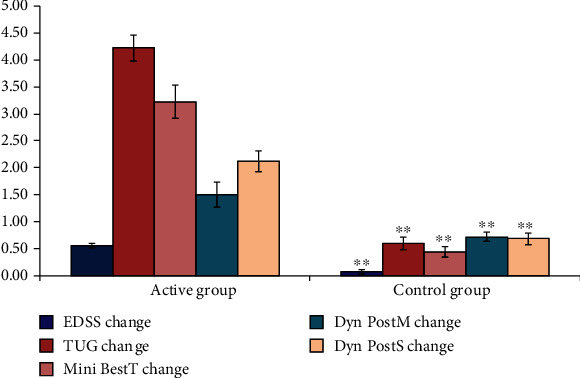
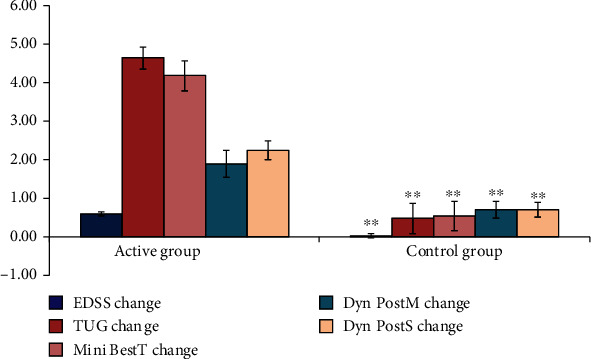
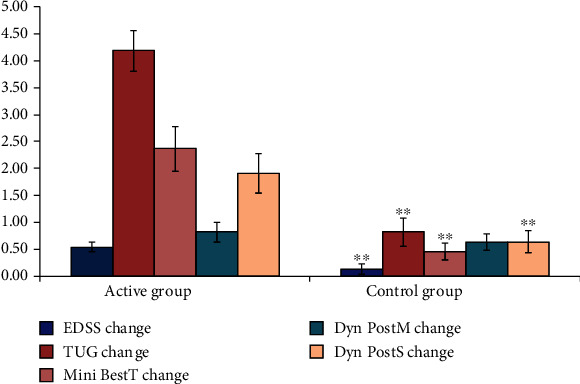
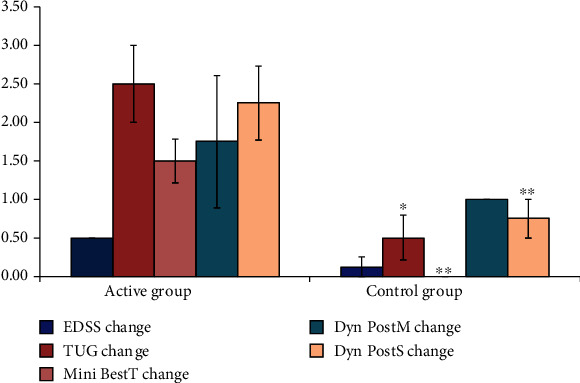
Balance impairment is one of the hallmarks of early MS. Proprioceptive deficit was found to be one of the main causes of this imbalance. The cervical enlargement has a strong proprioceptive system, with its projections to the reticular formation and the central pattern generators, helping in rhythmic pattern generation and alternate leg movements. Repetitive trans-spinal magnetic stimulation (rTSMS) is a noninvasive technique, which can trigger massive proprioceptive afferents. Therefore, it has the potential of improving proprioceptive deficits and motor control. . To determine the effectiveness of repetitive cervical magnetic stimulation in improving functional ambulation of patients with relapsing remitting multiple sclerosis (RRMS). . Prospective sequential clinical trial. . University and academic hospital. . A total of 32 participants ( = 32) with RRMS. . Outpatient rehabilitation. The 32 patients received 10 sessions over two weeks of 20 Hz cervical spinal magnetic stimulation (SMS). Both groups were assessed at baseline, after 2 weeks, then one month later. Patients were enrolled as a control group at first and received Sham SMS, and then a wash out period of one month was done for all the patients, followed by a baseline assessment. Second, the same 32 patients rejoined as the active group, which received real magnetic stimulation. Both groups performed an intensive physical therapy program with the spinal magnetic stimulation. . Extended Disability status score (EDSS), Timed up and Go test (TUG), Mini-Best test, dynamic posturography sensory organization composite score, and motor composite score. . Thirty-two RRMS patients with EDSS range from 1.5 to 6. They showed statistically significant difference between active and control groups in Mini-Best test score. We divided our patients according to EDSS into 3 subgroups: (a) mild: ≤2.5, (b) moderate: 3-5.5, and (c) severe: ≥6. Mild cases showed significant differences in EDSS score, TUG test, Mini-Best test, and dynamic posturography sensory composite scale. The effect size between the different patient subgroups was also measured and showed highly significant improvements in all measured parameters among our mild patients, indicating that this subgroup could be the best responders to cervical repetitive high-frequency magnetic stimulation. Moderate cases showed highly significant improvement in TUG score and Mini-Best test and significant change in EDSS score and the dynamic posturography sensory composite score. Severe cases showed only significant improvements in TUG, Mini-Best test, and sensory composite score. . Cervical repetitive magnetic stimulation can help improve balance and functional ambulation and decreases the risk of falls in RRMS patients, especially in the mild, low disability cases.
平衡障碍是早期多发性硬化症的标志之一。本体感觉缺陷被发现是这种失衡的主要原因之一。颈膨大拥有强大的本体感觉系统,其投射至网状结构和中枢模式发生器,有助于产生节律性模式和交替腿部运动。重复经脊髓磁刺激(rTSMS)是一种非侵入性技术,可触发大量本体感觉传入神经。因此,它有改善本体感觉缺陷和运动控制的潜力。 为了确定重复颈部磁刺激对改善复发缓解型多发性硬化症(RRMS)患者功能性步行能力的有效性。 前瞻性序贯临床试验。 大学和学术医院。 共有32名RRMS参与者(n = 32)。 门诊康复。32名患者在两周内接受了10次20Hz的颈髓磁刺激(SMS)。两组在基线、2周后以及1个月后进行评估。患者首先作为对照组入组,接受假SMS,然后所有患者进行1个月的洗脱期,随后进行基线评估。其次,同样的32名患者作为治疗组重新入组,接受真正的磁刺激。两组在接受脊髓磁刺激的同时进行强化物理治疗项目。 扩展残疾状态评分(EDSS)、计时起立行走测试(TUG)、Mini-Best测试、动态姿势描记法感觉组织综合评分和运动综合评分。 32例RRMS患者的EDSS范围为1.5至6。在Mini-Best测试评分中,治疗组和对照组之间存在统计学显著差异。我们根据EDSS将患者分为3个亚组:(a)轻度:≤2.5,(b)中度:3 - 5.5,(c)重度:≥6。轻度病例在EDSS评分、TUG测试、Mini-Best测试和动态姿势描记法感觉综合量表方面存在显著差异。还测量了不同患者亚组之间的效应大小,结果显示轻度患者的所有测量参数均有高度显著改善,表明该亚组可能是颈部重复高频磁刺激的最佳反应者。中度病例在TUG评分和Mini-Best测试中有高度显著改善,在EDSS评分和动态姿势描记法感觉综合评分中有显著变化。重度病例仅在TUG、Mini-Best测试和感觉综合评分中有显著改善。 颈部重复磁刺激有助于改善RRMS患者的平衡和功能性步行能力,并降低跌倒风险,尤其是在轻度、低残疾病例中。