State Key Laboratory of Microbial Resources, Institute of Microbiology, Chinese Academy of Sciences, Beijing 100101, China.
College of Life Sciences, University of the Chinese Academy of Sciences, Beijing 100049, China.
Proc Natl Acad Sci U S A. 2022 Dec 6;119(49):e2215990119. doi: 10.1073/pnas.2215990119. Epub 2022 Dec 1.
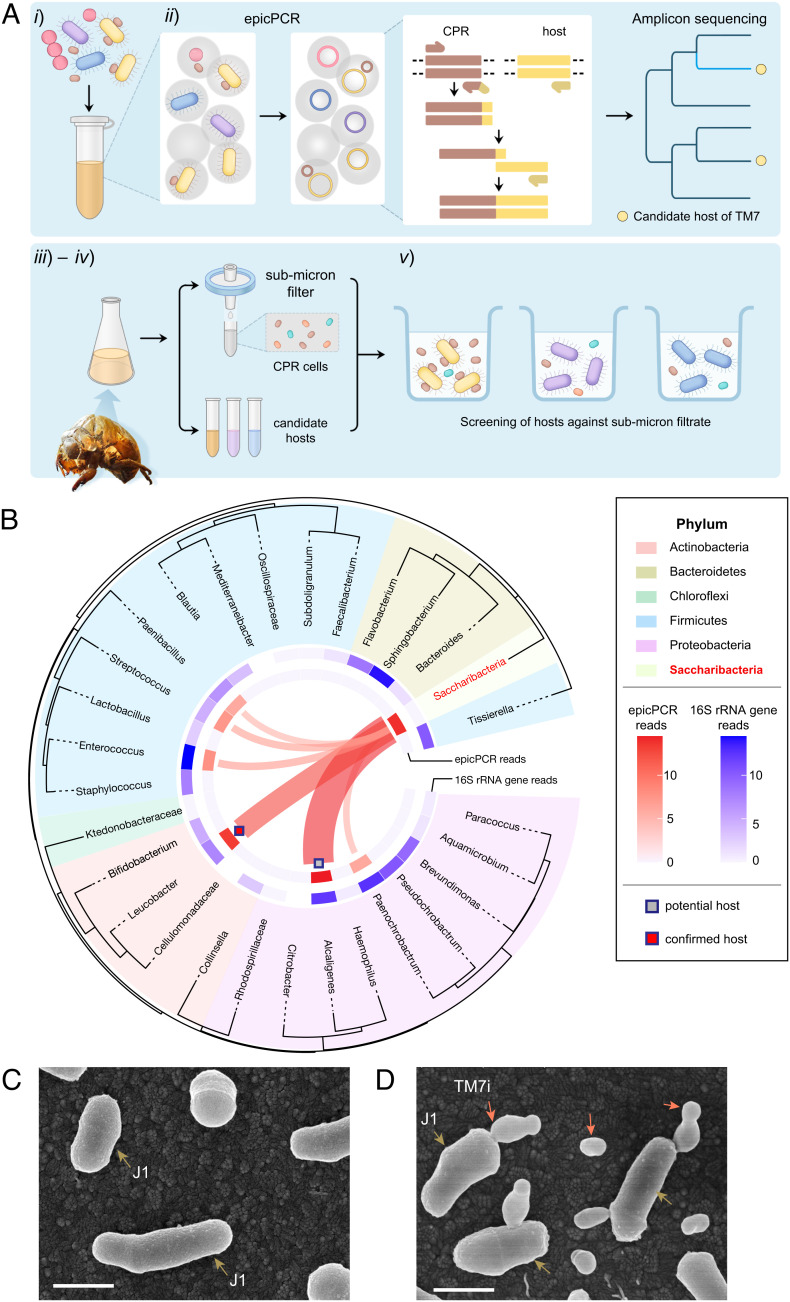
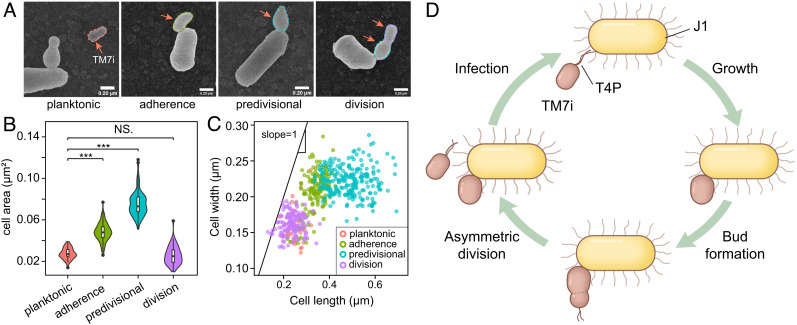
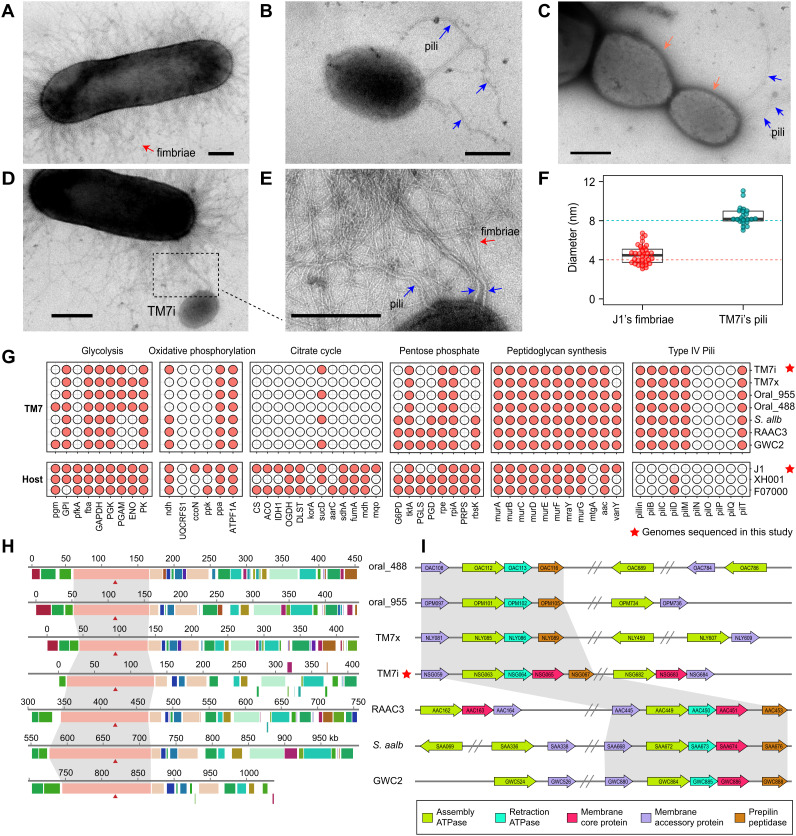
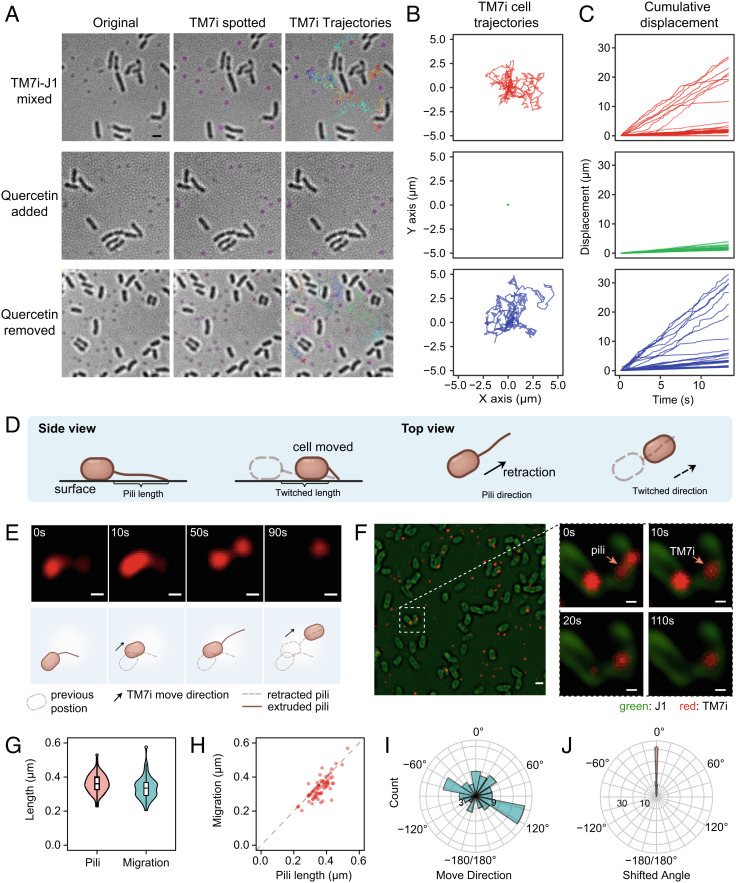
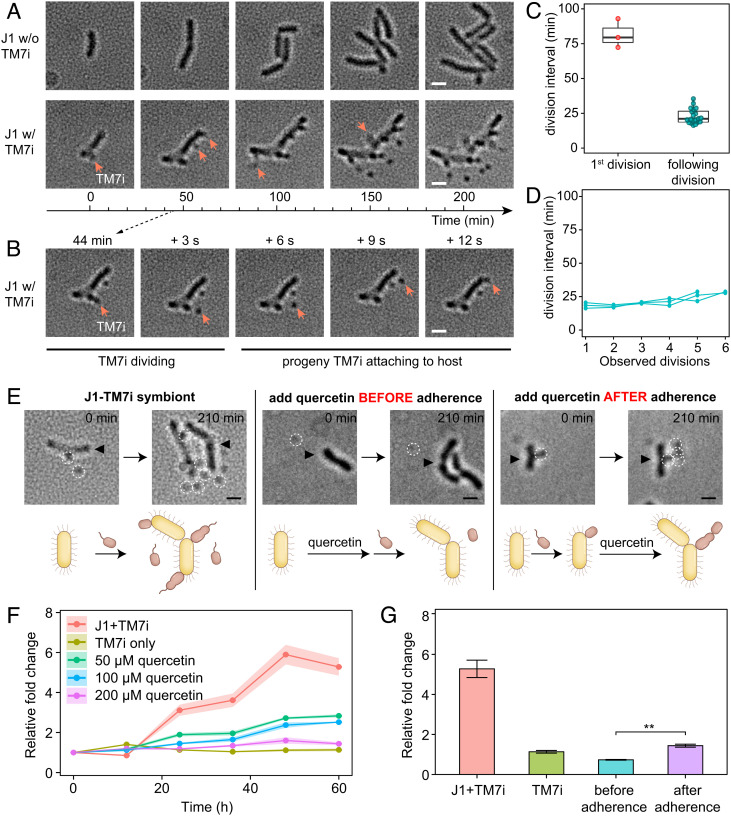
Recent characterization of the obligate episymbiont Saccharibacteria (TM7) belonging to the candidate phyla radiation (CPR) has expanded the extent of microbial diversity. However, the episymbiotic lifestyle of TM7 is still underexploited due to the deficiency of cultivated representatives. Here, we describe gene-targeted TM7 cultivation guided by repurposing epicPCR (emulsion, paired isolation, and concatenation PCR) to capture in situ TM7‒host associations. Using this method, we obtained a novel Saccharibacteria isolate TM7i and its host J1 from Cicadae Periostracum, the castoff shell of cicada. Genomic analyses and microscopic characterizations revealed that TM7i could bind to J1 through twitching-like motility mediated by type IV pili (T4P). We further showed that the inhibition of T4P extrusion suppressed the motility and host adherence of TM7i, resulting in its reduced growth. However, the inactivation of T4P had little effect on the growth of TM7i that had already adhered to J1, suggesting the essential role of T4P in host recognition by TM7i. By capturing CPR‒host association and elaborating the T4P-dependent episymbiotic association mechanism, our studies shed light on the distinct yet widespread lifestyle of CPR bacteria.
最近对候选门(CPR)中严格专性共生菌 Saccharibacteria(TM7)的特征描述扩大了微生物多样性的范围。然而,由于缺乏可培养的代表,TM7 的共生生活方式仍然没有得到充分利用。在这里,我们描述了一种受 TM7 共生关系启发的靶向基因培养方法,该方法通过重新利用 epicPCR(乳液、配对分离和串联 PCR)来捕获原位 TM7-宿主关联。使用这种方法,我们从蝉蜕 Cicadae Periostracum 中获得了一种新型的 Saccharibacteria 分离株 TM7i 和它的宿主 J1。基因组分析和显微镜特征表明,TM7i 可以通过 IV 型菌毛(T4P)介导的扭动样运动与 J1 结合。我们进一步表明,T4P 外排的抑制抑制了 TM7i 的运动和宿主黏附,导致其生长减少。然而,T4P 的失活对已经黏附在 J1 上的 TM7i 的生长几乎没有影响,这表明 T4P 在 TM7i 识别宿主方面的重要作用。通过捕获 CPR-宿主关联并阐述 T4P 依赖的共生关联机制,我们的研究揭示了 CPR 细菌独特而广泛的生活方式。