Department of Neurology, Affiliated ZhongDa Hospital, School of Medicine, Southeast University, Nanjing, 210009, Jiangsu, China.
Institute of Neuropsychiatry, Affiliated ZhongDa Hospital, Southeast University, Nanjing, 210009, Jiangsu, China.
J Transl Med. 2022 Dec 6;20(1):567. doi: 10.1186/s12967-022-03786-w.
Although lipid metabolite dysfunction contributes substantially to clinical signs and pathophysiology of Alzheimer's disease (AD), how dyslipidemia promoting neuropathological processes and brain functional impairment subsequently facilitates the progression of AD remains unclear.
We combined large-scale brain resting-state networks (RSNs) approaches with canonical correlation analysis to explore the accumulating effects of lipid gene- and protein-centric levels on cerebrospinal fluid (CSF) biomarkers, dynamic trajectory of large-scale RSNs, and cognitive performance across entire AD spectrum. Support vector machine model was used to distinguish AD spectrum and pathway analysis was used to test the influences among these variables.
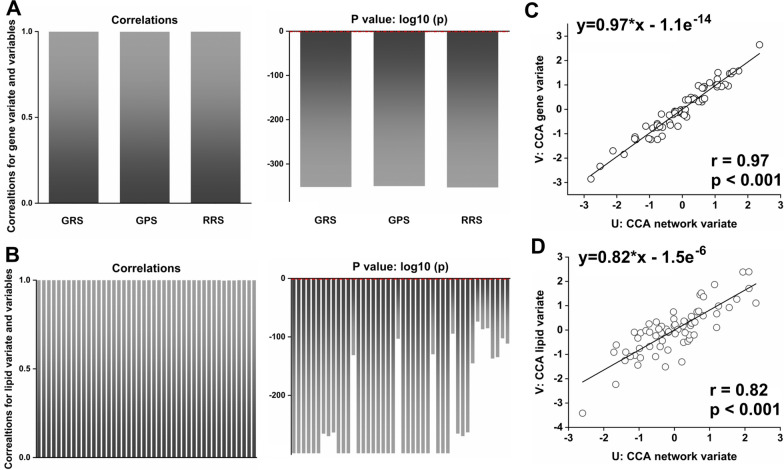
We found that the effects of accumulation of lipid-pathway genetic variants and lipoproteins were significantly correlated with CSF biomarkers levels and cognitive performance across the AD spectrum. Dynamic trajectory of large-scale RSNs represented a rebounding mode, which is characterized by a weakened network cohesive connector role and enhanced network incohesive provincial role following disease progression. Importantly, the fluctuating large-scale RSNs connectivity was significantly correlated with the summative effects of lipid-pathway genetic variants and lipoproteins, CSF biomarkers, and cognitive performance. Moreover, SVM model revealed that the lipid-associated twenty-two brain network connections represented higher capacity to classify AD spectrum. Pathway analysis further identified dyslipidemia directly influenced brain network reorganization or indirectly affected the CSF biomarkers and subsequently caused cognitive decline.
Dyslipidemia exacerbated cognitive decline and increased the risk of AD via mediating large-scale brain networks integrity and promoting neuropathological processes. These findings reveal a role for lipid metabolism in AD pathogenesis and suggest lipid management as a potential therapeutic target for AD.
尽管脂质代谢物功能障碍对阿尔茨海默病(AD)的临床症状和病理生理学有很大贡献,但血脂异常如何促进神经病理过程和大脑功能障碍,进而促进 AD 的进展尚不清楚。
我们结合了大规模脑静息态网络(RSNs)方法和典型相关分析,以探索脂质基因和蛋白水平对脑脊液(CSF)生物标志物、大规模 RSN 动态轨迹和整个 AD 谱认知表现的累积影响。支持向量机模型用于区分 AD 谱,路径分析用于测试这些变量之间的影响。
我们发现脂质途径遗传变异和脂蛋白的积累效应与 CSF 生物标志物水平和 AD 谱中的认知表现显著相关。大规模 RSN 的动态轨迹代表了一种反弹模式,其特征是疾病进展后网络内聚连接作用减弱,网络不连贯的省域作用增强。重要的是,波动的大规模 RSN 连接性与脂质途径遗传变异和脂蛋白、CSF 生物标志物和认知表现的累积效应显著相关。此外,SVM 模型表明,与脂质相关的 22 个大脑网络连接具有更高的分类 AD 谱的能力。路径分析进一步确定了血脂异常通过调节大脑网络完整性直接影响大脑网络重组或间接影响 CSF 生物标志物,进而导致认知能力下降。
血脂异常通过介导大脑网络完整性和促进神经病理过程,加重认知能力下降和增加 AD 风险。这些发现揭示了脂质代谢在 AD 发病机制中的作用,并表明脂质管理作为 AD 的潜在治疗靶点。