Kliem Peter, Ebel Sebastian, Werdehausen Robert, Girrbach Felix, Bösemann Denis, van Bömmel Florian, Denecke Timm, Stehr Sebastian, Struck Manuel F
Klinik und Poliklinik für Anästhesiologie und Intensivtherapie, Universitätsklinikum Leipzig, Liebigstr. 20, 04103, Leipzig, Deutschland.
Klinik und Poliklinik für Diagnostische und Interventionelle Radiologie, Universitätsklinikum Leipzig, Leipzig, Deutschland.
Anaesthesiologie. 2023 Feb;72(2):113-120. doi: 10.1007/s00101-022-01235-3. Epub 2022 Dec 7.
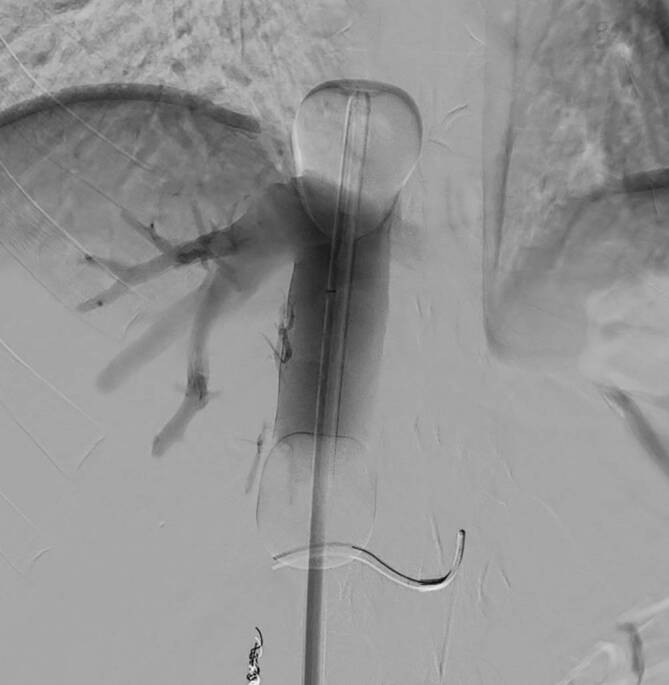
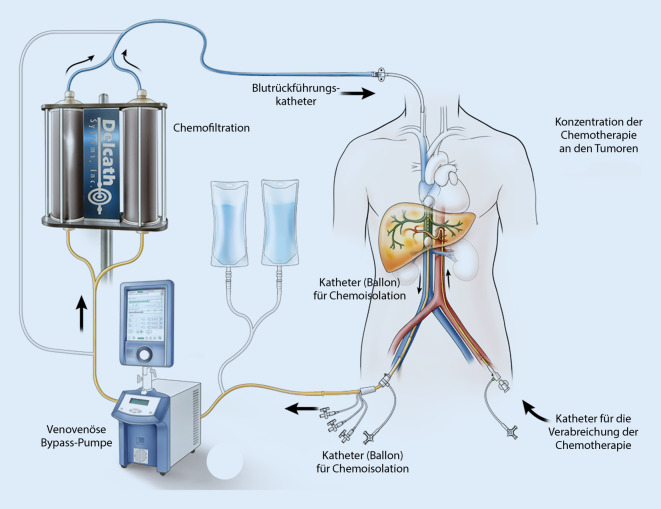
Percutaneous hepatic melphalan perfusion (PHMP) is a last-line treatment of inoperable primary or secondary liver tumors. Selective perfusion and saturation (chemosaturation) of the liver with the chemotherapeutic agent melphalan is performed via catheterization of the hepatic artery without affecting the rest of the body with its cytotoxic properties. Using an extracorporeal circulation and balloon occlusion of the inferior vena cava, the venous hepatic blood is filtered and returned using a bypass procedure. During the procedure, considerable circulatory depression and coagulopathy are frequent. The purpose of this article is to review the anesthesiological and postprocedural management of patients undergoing PHMP with consideration of the pitfalls and special circumstances.
经皮肝美法仑灌注(PHMP)是不可切除的原发性或继发性肝肿瘤的一线治疗方法。通过肝动脉插管,用化疗药物美法仑对肝脏进行选择性灌注和饱和(化学饱和),其细胞毒性特性不会影响身体其他部位。利用体外循环和下腔静脉球囊闭塞,对肝静脉血进行过滤,并通过旁路程序返回。在该过程中,经常会出现明显的循环抑制和凝血病。本文的目的是回顾接受PHMP患者的麻醉和术后管理,同时考虑到其中的陷阱和特殊情况。