VCU Philips Institute, School of Dentistry and Massey Cancer Center; Richmond, Virginia 23298.
Department of Pathology, Virginia Commonwealth University School of Medicine, Richmond, VA 23220.
Cancer Res Commun. 2022 Sep;2(9):1061-1074. doi: 10.1158/2767-9764.crc-21-0137. Epub 2022 Sep 26.
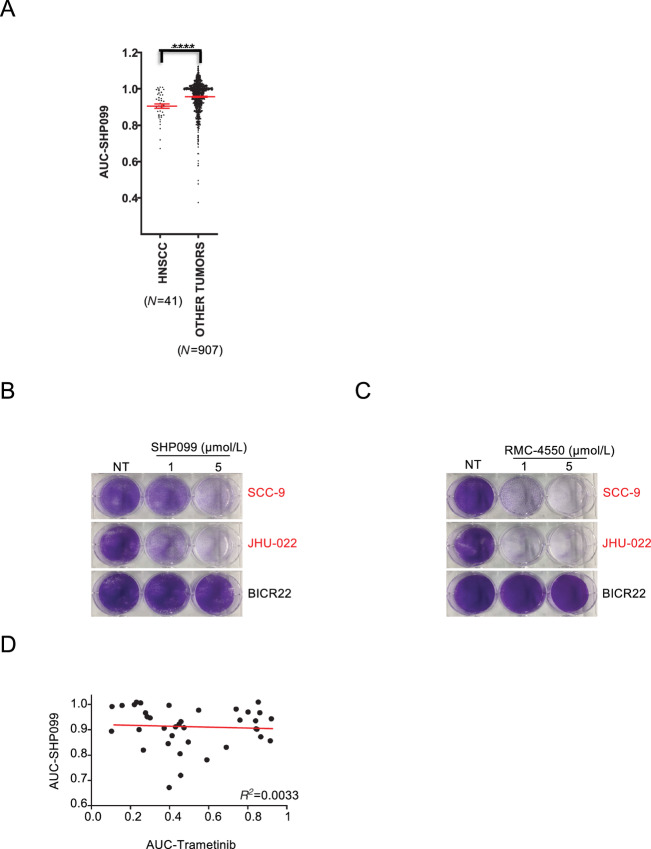
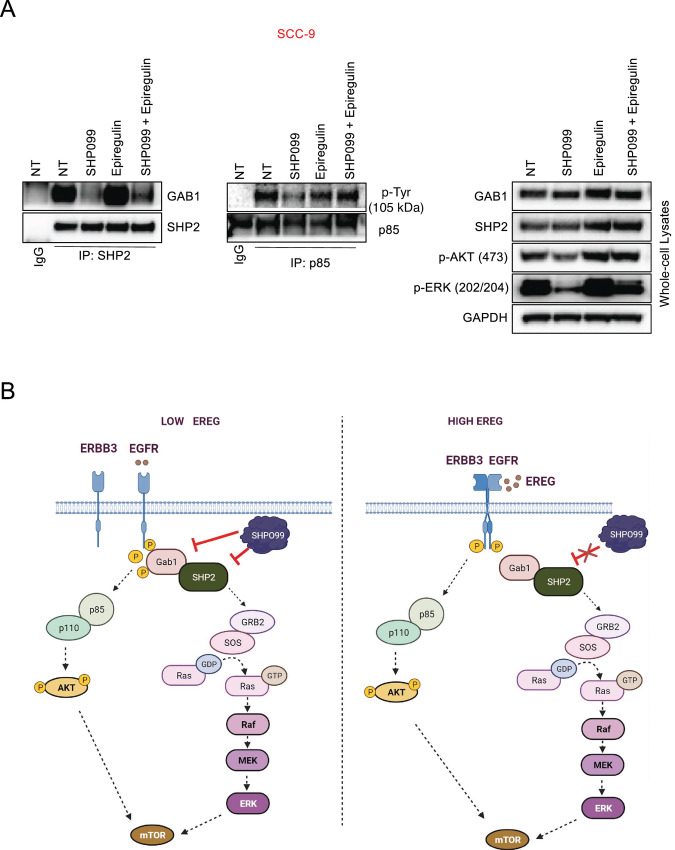
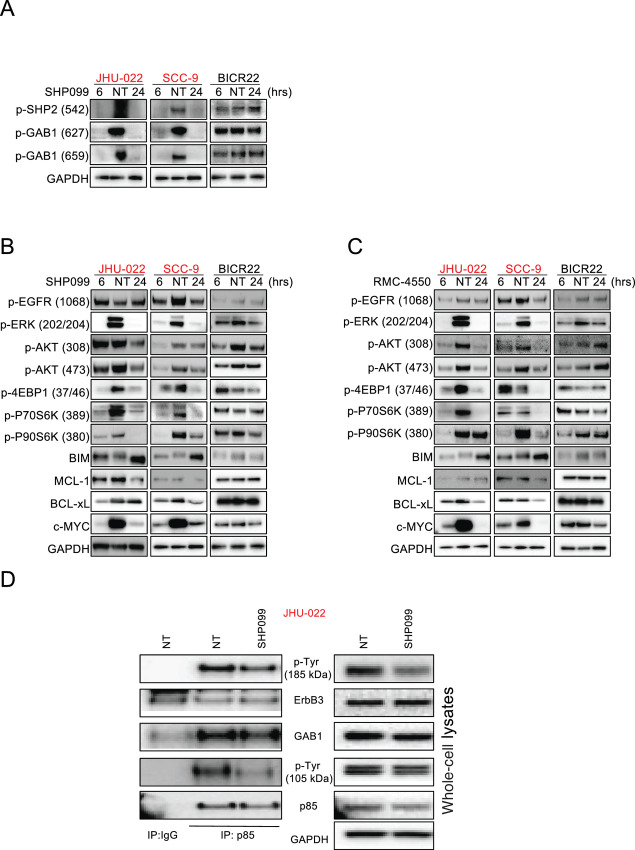
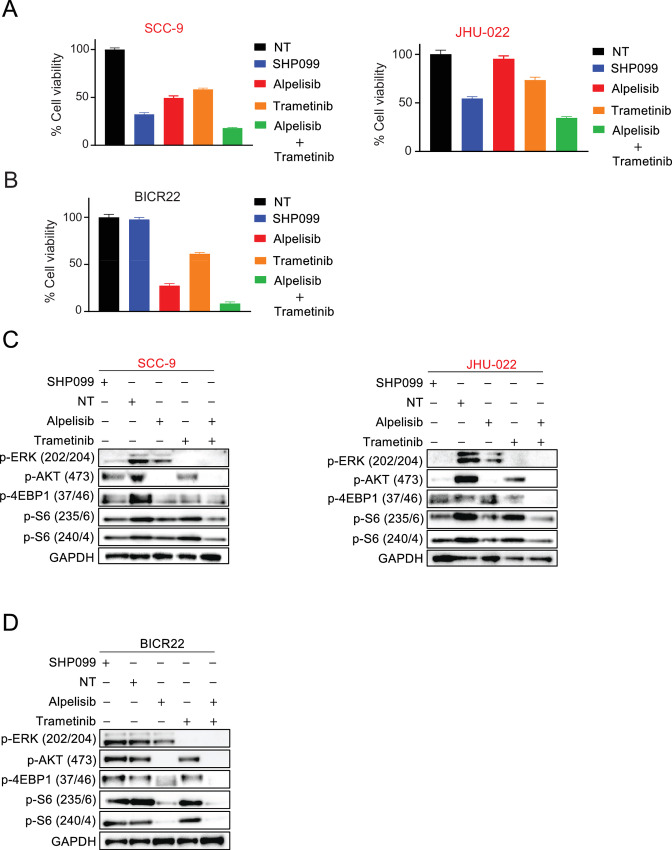
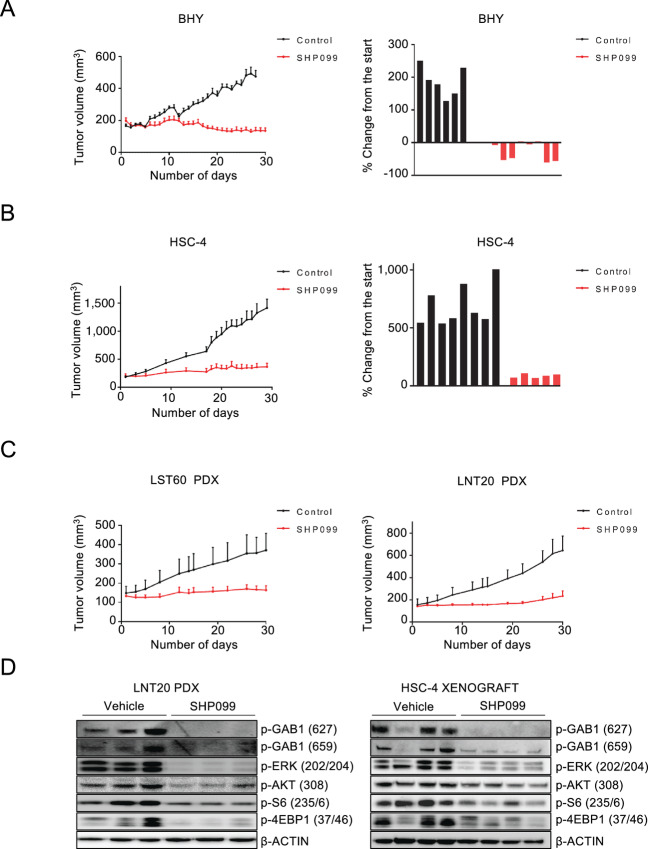
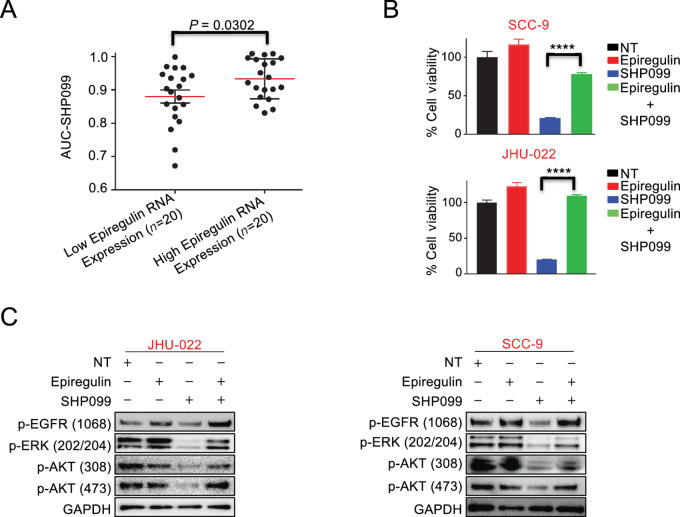
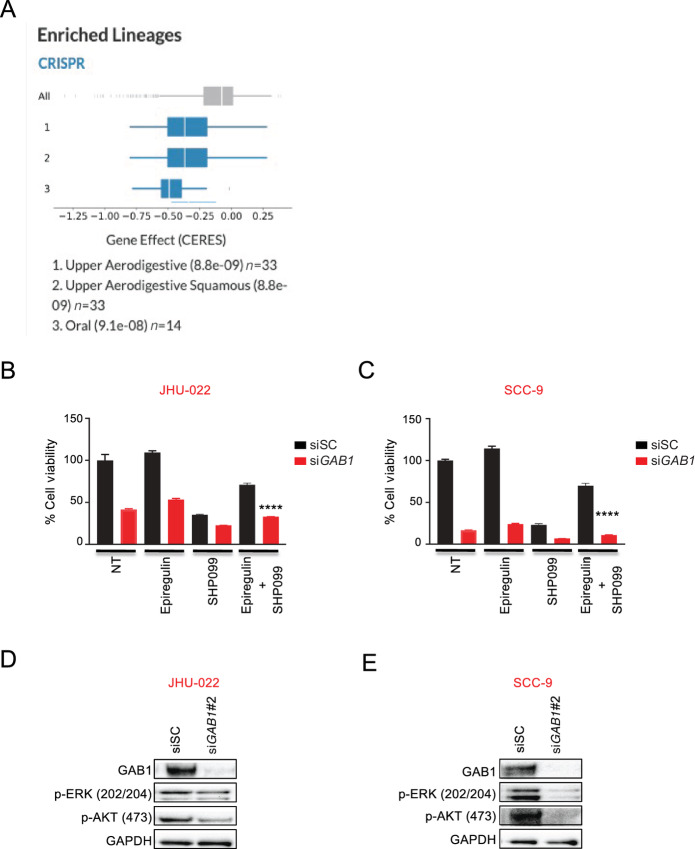
Preclinical and clinical studies have evidenced that effective targeted therapy treatment against receptor tyrosine kinases (RTKs) in different solid tumor paradigms is predicated on simultaneous inhibition of both the PI3K and MEK intracellular signaling pathways. Indeed, re-activation of either pathway results in resistance to these therapies. Recently, oncogenic phosphatase SHP2 inhibitors have been developed with some now reaching clinical trials. To expand on possible indications for SHP099, we screened over 800 cancer cell lines covering over 25 subsets of cancer. We found HNSCC was the most sensitive adult subtype of cancer to SHP099. We found that, in addition to the MEK pathway, SHP2 inhibition blocks the PI3K pathway in sensitive HNSCC, resulting in downregulation of mTORC signaling and anti-tumor effects across several HNSCC mouse models, including an HPV+ patient-derived xenograft (PDX). Importantly, we found low levels of the RTK ligand epiregulin identified HNSCCs that were sensitive to SHP2 inhibitor, and, adding exogenous epiregulin mitigated SHP099 efficacy. Mechanistically, epiregulin maintained SHP2-GAB1 complexes in the presence of SHP2 inhibition, preventing downregulation of the MEK and PI3K pathways. We demonstrate HNSCCs were highly dependent on GAB1 for their survival and knockdown of GAB1 is sufficient to block the ability of epiregulin to rescue MEK and PI3K signaling. These data connect the sensitivity of HNSCC to SHP2 inhibitors and to a broad reliance on GAB1-SHP2, revealing an important and druggable signaling axis. Overall, SHP2 inhibitors are being heavily developed and may have activity in HNSCCs, and in particular those with low levels of epiregulin.
临床前和临床研究表明,在不同的实体瘤范例中,针对受体酪氨酸激酶(RTKs)的有效靶向治疗取决于同时抑制 PI3K 和 MEK 细胞内信号通路。事实上,任一路径的重新激活都会导致对这些治疗的耐药性。最近,已经开发出了致癌磷酸酶 SHP2 抑制剂,其中一些已经进入临床试验。为了扩大 SHP099 的可能适应症,我们筛选了超过 800 种癌细胞系,涵盖了 25 种以上的癌症亚型。我们发现 HNSCC 是对 SHP099 最敏感的成人癌症亚型。我们发现,除了 MEK 通路外,SHP2 抑制还会阻断敏感 HNSCC 中的 PI3K 通路,导致 mTORC 信号下调和几种 HNSCC 小鼠模型中的抗肿瘤作用,包括 HPV+ 患者衍生的异种移植(PDX)。重要的是,我们发现低水平的 RTK 配体 epiregulin 确定了对 SHP2 抑制剂敏感的 HNSCC,并且添加外源性 epiregulin 减轻了 SHP099 的疗效。从机制上讲,epiregulin 在 SHP2 抑制存在的情况下维持 SHP2-GAB1 复合物,防止 MEK 和 PI3K 通路的下调。我们证明 HNSCC 对 GAB1 的生存高度依赖,并且 GAB1 的敲低足以阻止 epiregulin 挽救 MEK 和 PI3K 信号的能力。这些数据将 HNSCC 对 SHP2 抑制剂的敏感性与对 GAB1-SHP2 的广泛依赖联系起来,揭示了一个重要且可药物治疗的信号轴。总的来说,SHP2 抑制剂正在被大力开发,并且可能对 HNSCC 具有活性,特别是那些 epiregulin 水平较低的 HNSCC。