School of Chemical and Materials Engineering (SCME), National University of Sciences and Technology (NUST), H-12, Islamabad, Pakistan.
Department of Mechanical Engineering, CEMMPRE - Centre for Mechanical Engineering Materials and Processes, University of Coimbra, Rua Luís Reis Santos, 3030-788, Coimbra, Portugal.
Sci Rep. 2022 Dec 12;12(1):21486. doi: 10.1038/s41598-022-25734-w.
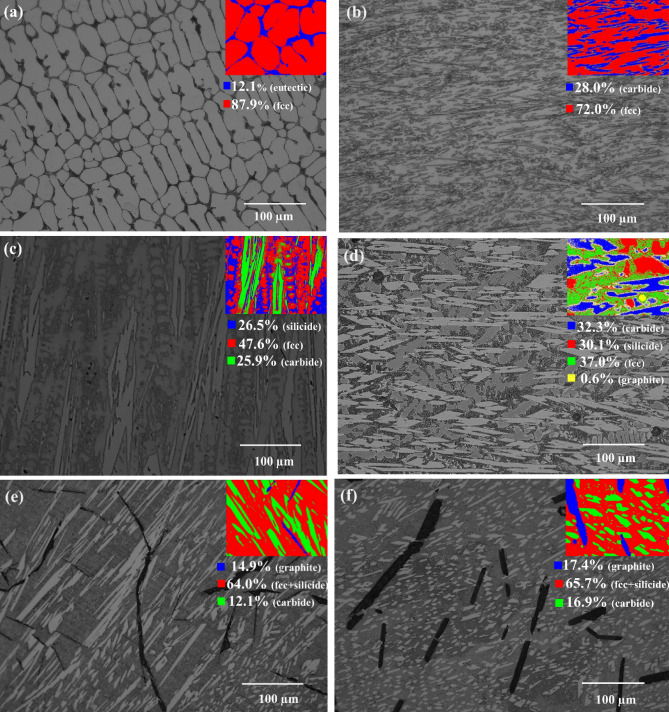
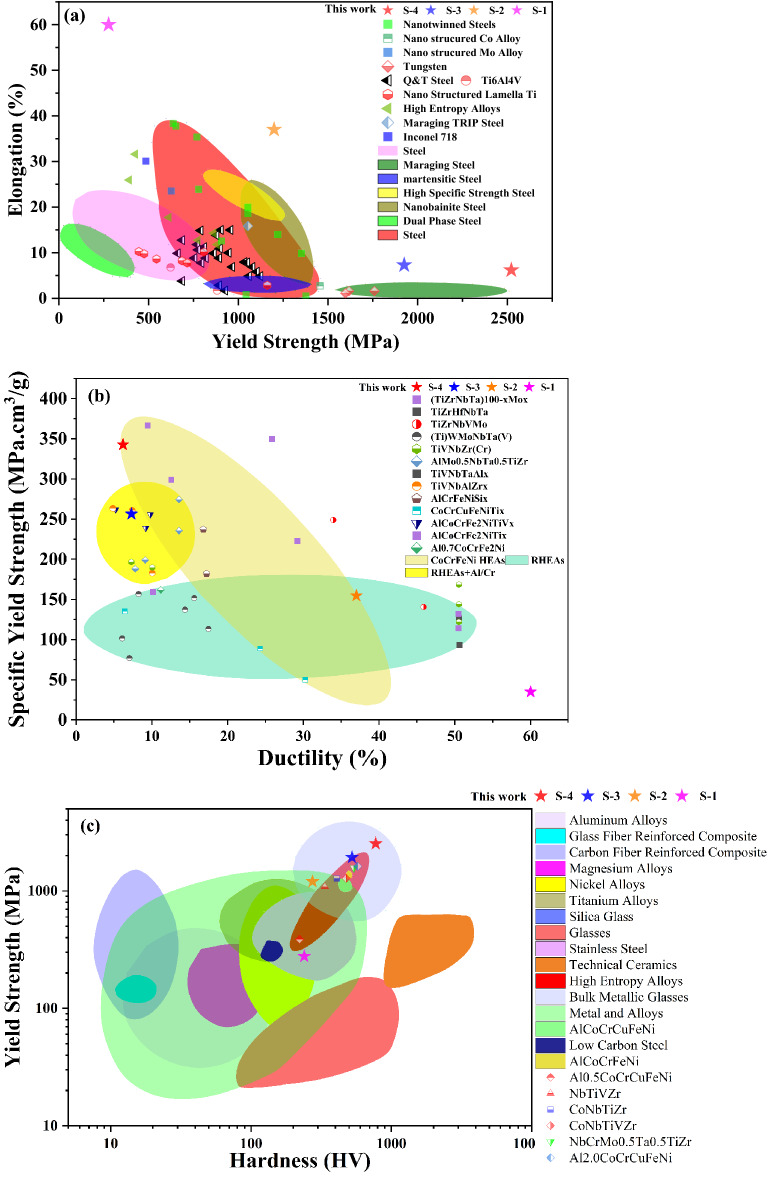
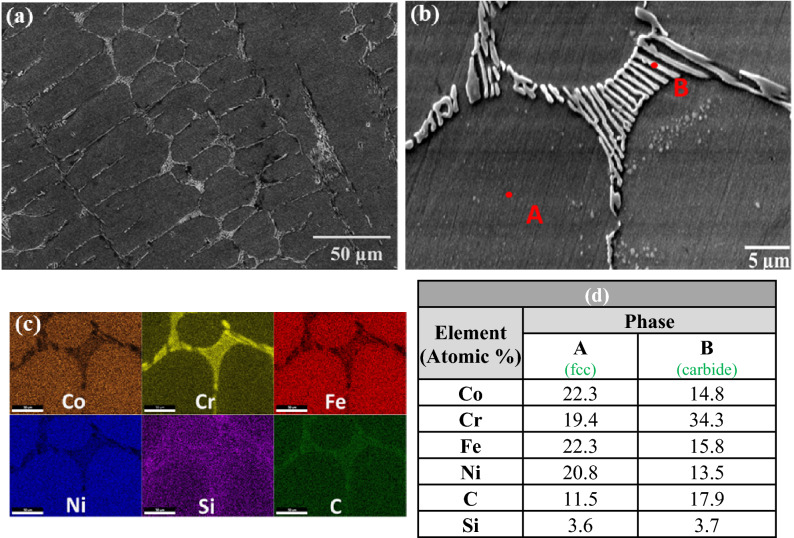
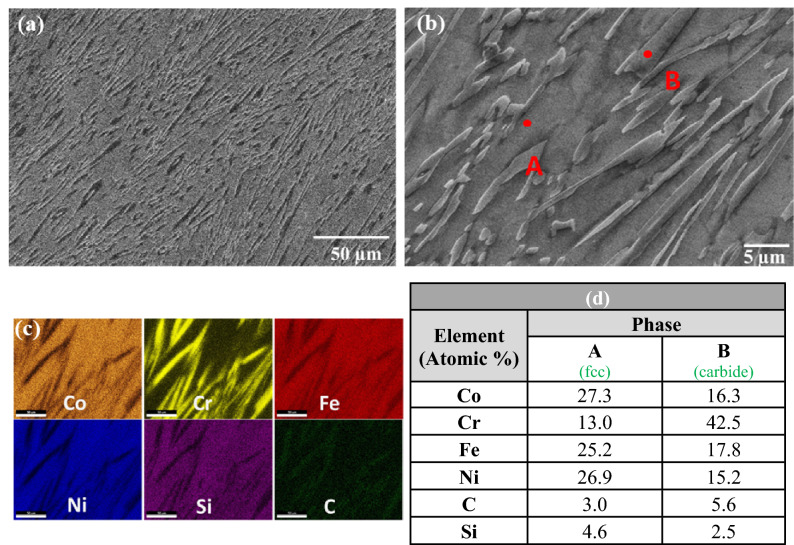
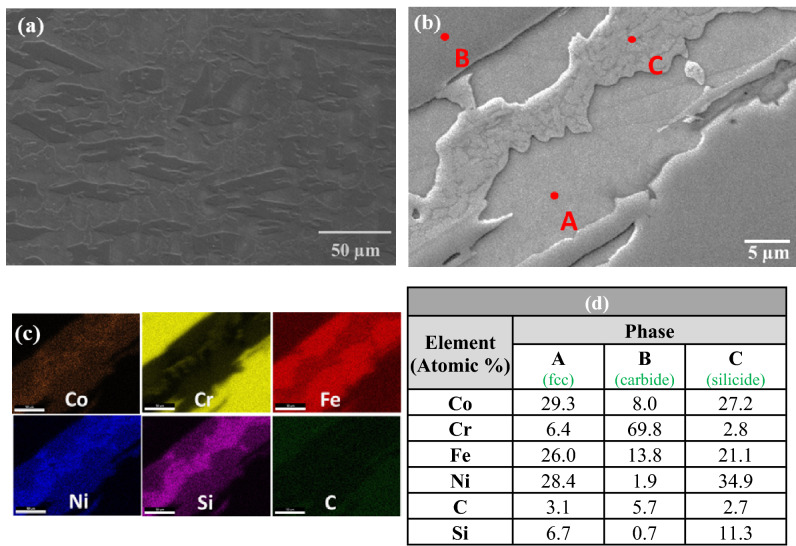
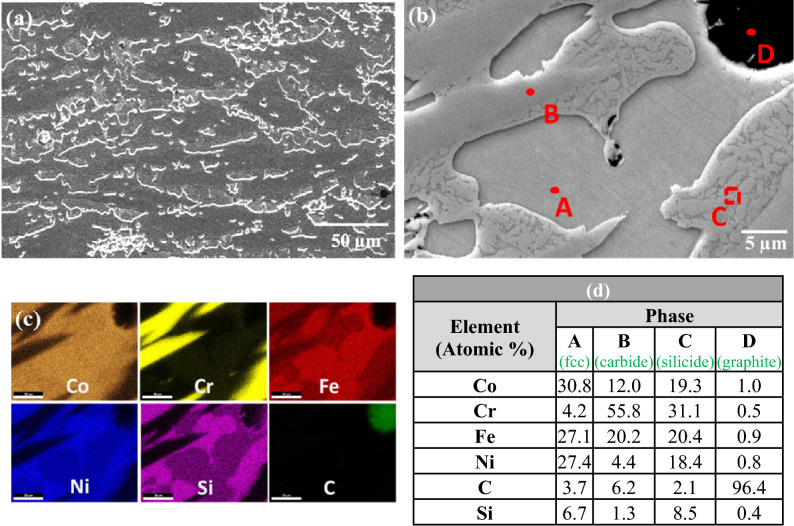
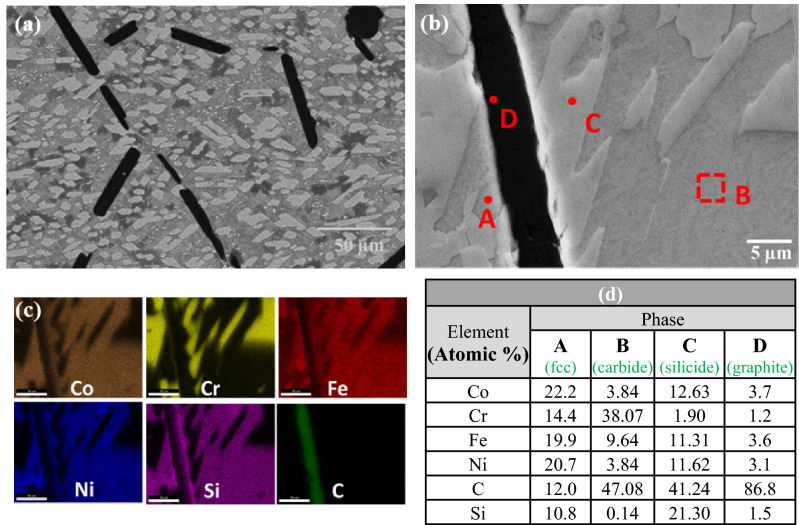
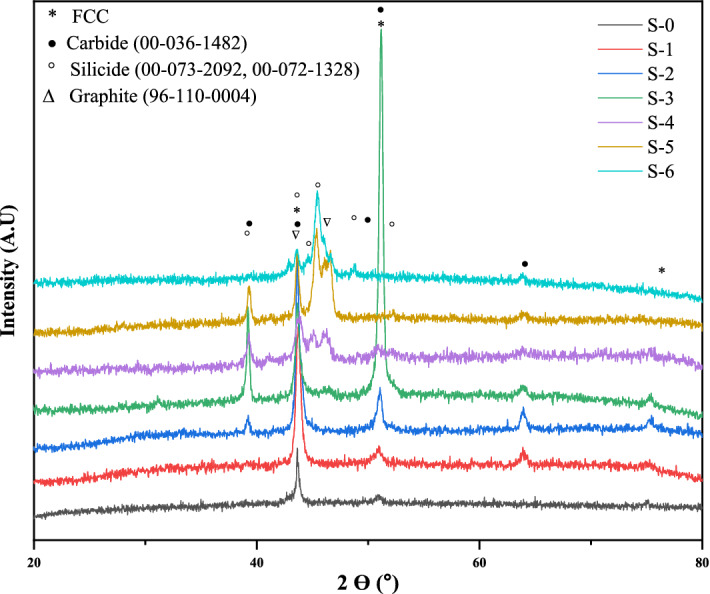
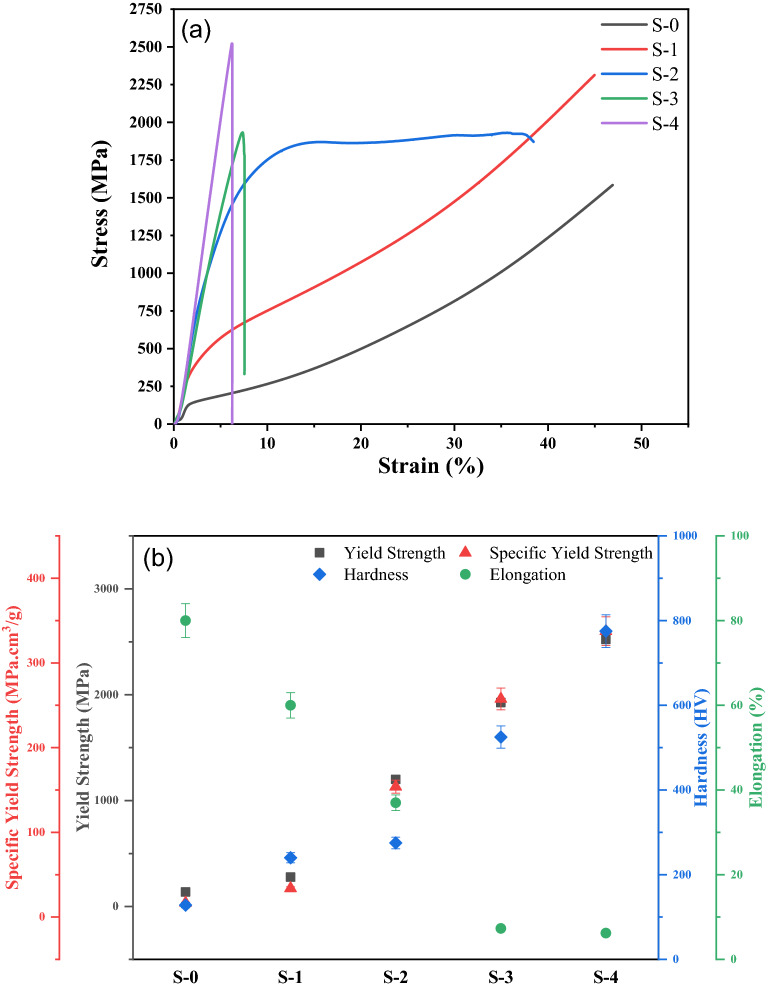
CoCrFeNi is a well-studied face centered cubic (fcc) high entropy alloy (HEA) that exhibits excellent ductility but only limited strength. The present study focusses on improving the strength-ductility balance of this HEA by addition of varying amounts of SiC using an arc melting route. Chromium present in the base HEA is found to result in decomposition of SiC during melting. Consequently, interaction of free carbon with chromium results in the in-situ formation of chromium carbide, while free silicon remains in solution in the base HEA and/or interacts with the constituent elements of the base HEA to form silicides. The changes in microstructural phases with increasing amount of SiC are found to follow the sequence: fcc → fcc + eutectic → fcc + chromium carbide platelets → fcc + chromium carbide platelets + silicides → fcc + chromium carbide platelets + silicides + graphite globules/flakes. In comparison to both conventional and high entropy alloys, the resulting composites were found to exhibit a very wide range of mechanical properties (yield strength from 277 MPa with more than 60% elongation to 2522 MPa with 6% elongation). Some of the developed high entropy composites showed an outstanding combination of mechanical properties (yield strength 1200 MPa with 37% elongation) and occupied previously unattainable regions in a yield strength versus elongation map. In addition to their significant elongation, the hardness and yield strength of the HEA composites are found to lie in the same range as those of bulk metallic glasses. It is therefore believed that development of high entropy composites can help in obtaining outstanding combinations of mechanical properties for advanced structural applications.
CoCrFeNi 是一种经过充分研究的面心立方(fcc)高熵合金(HEA),具有优异的延展性,但强度有限。本研究通过电弧熔炼路线在这种 HEA 中添加不同量的 SiC,重点提高其强韧性的平衡。研究发现,基础 HEA 中存在的铬会导致 SiC 在熔化过程中分解。因此,游离碳与铬相互作用会导致铬碳化物的原位形成,而游离硅则保留在基础 HEA 中或与基础 HEA 的组成元素相互作用形成硅化物。随着 SiC 含量的增加,微观结构相的变化被发现遵循以下顺序:fcc→fcc+共晶→fcc+铬碳化物片→fcc+铬碳化物片+硅化物→fcc+铬碳化物片+硅化物+石墨球/薄片。与传统合金和高熵合金相比,所得复合材料表现出非常广泛的机械性能(屈服强度从 277 MPa,伸长率超过 60%到 2522 MPa,伸长率 6%)。一些开发的高熵复合材料表现出出色的机械性能组合(屈服强度 1200 MPa,伸长率 37%),并在屈服强度与伸长率图中占据了以前无法达到的区域。除了具有显著的伸长率外,HEA 复合材料的硬度和屈服强度与块状金属玻璃的硬度和屈服强度相当。因此,人们相信开发高熵复合材料可以帮助获得先进结构应用中出色的机械性能组合。