Key Laboratory of Oasis Ecology of Education MinistryCollege of Ecology and Environment, Xinjiang University, Urumqi, 830017, People's Republic of China.
Xinjiang Jinghe Observation and Research Station of Temperate Desert Ecosystem, Ministry of Education, Urumqi, 830017, People's Republic of China.
Sci Rep. 2022 Dec 12;12(1):21448. doi: 10.1038/s41598-022-25879-8.
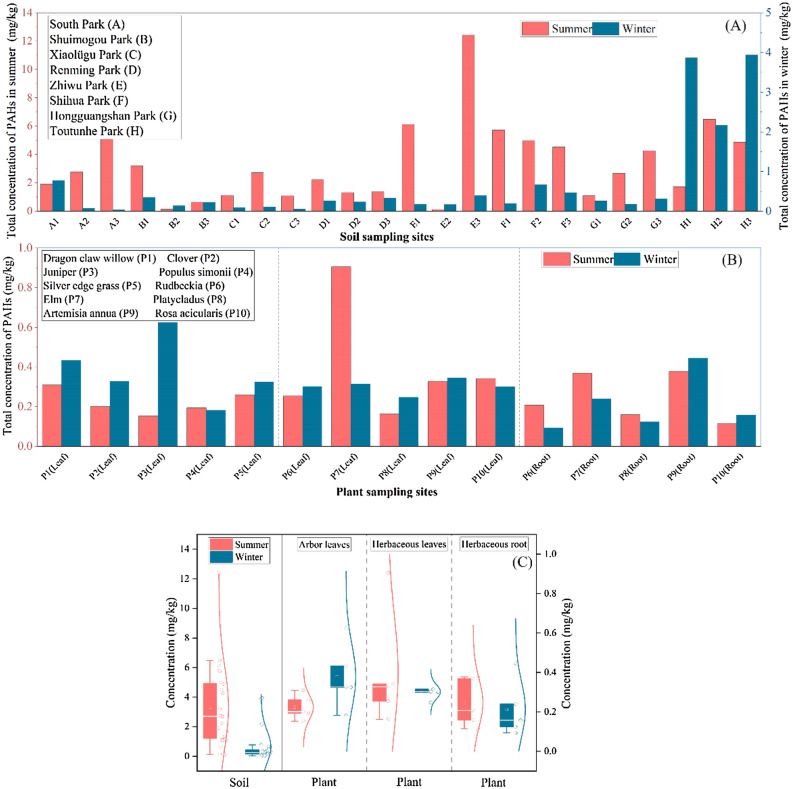
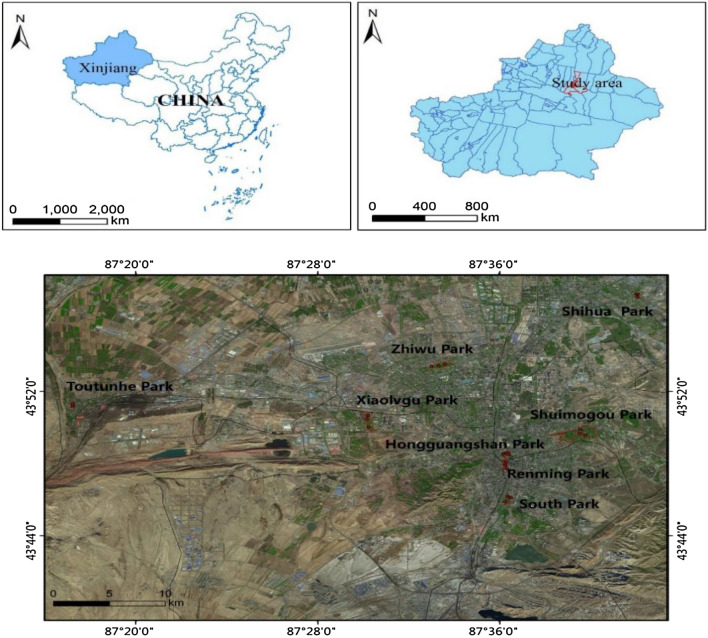
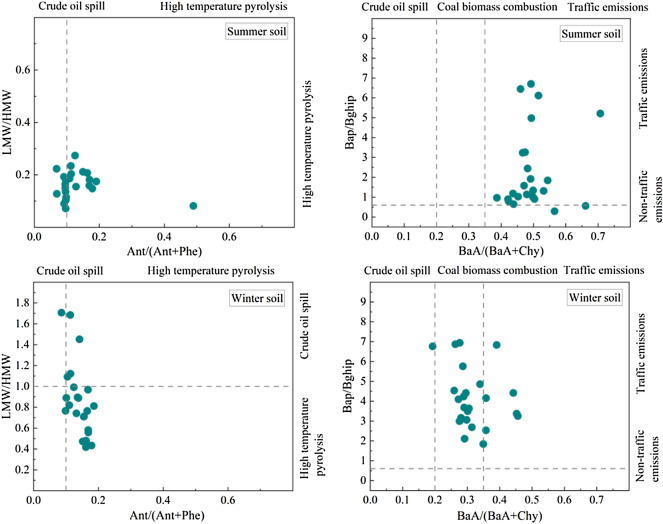
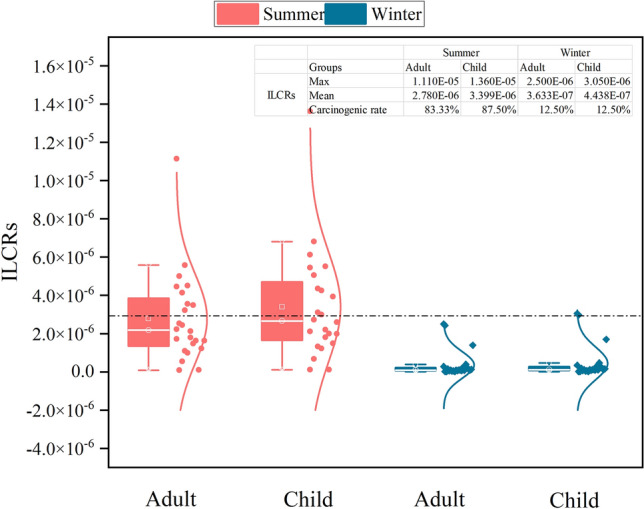
Polycyclic aromatic hydrocarbons (PAHs) will be ingested by people through different ways to threaten their health during play, so the environmental quality of the park directly affects the health of tourists and residents. Using eight typical parks in Urumqi in Northwest China as the study area, we used GC-MS to detect the PAHs content in the park surface soil and 10 common plants in the park in different seasons. The results showed that the content of PAHs in park soil in the summer was 5-6 times that in the winter, and the monomer PAHs in some park soil sampling points were higher than the soil pollution risk screening value. And the contamination level at these sampling sites was also higher compared to other sampling sites. In summer, the plants with high PAHs content in leaves are short herbs, while in winter, they are tall arbors. The PAHs of the park soil are mainly composed of high-cyclic aromatic hydrocarbons, and are mainly of traffic origin. The proportion of low-ring aromatic hydrocarbons in the winter was significantly higher than that in the summer. The source of PAHs in plants in summer is similar to that in soil, but the source of PAHs in plants in winter is more complex. The toxicity equivalent concentration method values of soil PAHs in South Park, Zhiwu Park, Shihua Park and Toutunhe Park were higher than that in other parks. The lifetime carcinogenic risk (ILCRs) values of some sampling points in these four parks in the summer were relatively high. The average ILCRs of adults and children in all parks reached a low-risk level in summer. The carcinogenic risk in children is much higher than that of adults.
多环芳烃(PAHs)会通过不同的途径被人们摄入,从而对其健康造成威胁,因此公园的环境质量直接影响游客和居民的健康。本研究以中国西北乌鲁木齐市的 8 个典型公园为研究区,采用 GC-MS 检测了公园表层土壤和 10 种常见植物在不同季节的 PAHs 含量。结果表明,公园土壤中 PAHs 的含量夏季是冬季的 5-6 倍,部分公园土壤采样点的单体 PAHs 高于土壤污染风险筛选值,且污染水平高于其他采样点。夏季叶片中高 PAHs 含量的植物为矮小草本,冬季则为高大乔木。公园土壤中的 PAHs 主要由高环芳烃组成,主要来源于交通源。冬季低环芳烃的比例明显高于夏季。夏季植物中 PAHs 的来源与土壤相似,但冬季植物中 PAHs 的来源更为复杂。南公园、植物园、石化公园和头屯河公园土壤 PAHs 的毒性等效浓度法值高于其他公园。这四个公园的部分采样点在夏季的终生致癌风险(ILCRs)值相对较高。在夏季,所有公园的成年人和儿童的平均 ILCRs 均达到低风险水平。儿童的致癌风险远高于成年人。